

CHINA J-VALVES Offers Various High-quality I ndustrial Ball Valves
J-VALVES, a distinguished professional ball valve manufacturer rooted in China, takes pride in its extensive product portfolio. Our offerings span a wide range, including trunnion-mounted ball valves, floating ball valves, high-temperature ball valves, high-pressure ball valves, metal-sealed ball valves, ultra-low temperature ball valves, DBB ball valves, Three-way And Four-way Ball Valve, and fully welded ball valves. Each product is a testament to our commitment to precision engineering and reliable performance. Meticulously crafted, they are designed to not only meet but exceed the most stringent industrial demands, ensuring stable operation even under extreme conditions. This enables us to provide our clients with high-value services and makes our valves widely sought-after in industries.
Product Category
Contact Us

Pressure Rating:1000 psi WOG (68.9 bar at 38 °C)
Body Construction:Two piece, investment cast
Body Material:Stainless steel CF8M, CF8; carbon steel WCB
Ball:CF8M or F316, mirror polished
Stem:F316, blowout proof, anti-static
Seat:PTFE, RPTFE, PPL, PEEK
Bore:Full port, reduced port on request
Thread:NPT to ASME B1.20.1, BSPT to ISO 7-1, BSPP to ISO 228-1
Design Standard:ASME B16.34, MSS SP-110
Test Standard:API 598, 100 % shell and seat
Temperature Range:-20 to 200 °C with PTFE seat
Operation:Lever with locking device, ISO 5211 pad optional
-
Q11F-1000WOG
-
J-VALVES
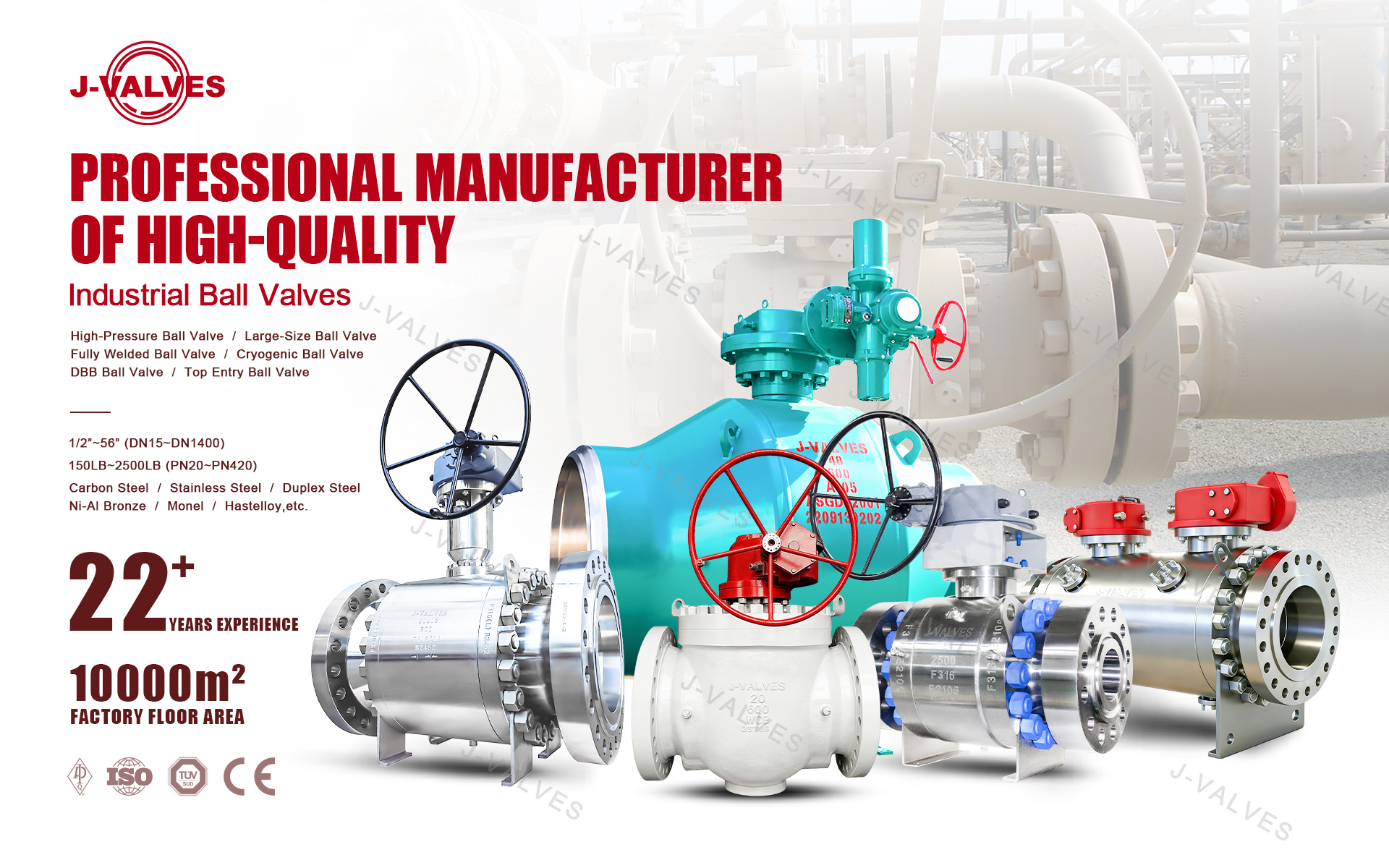
A 2 piece screwed ball valve is a small quarter-turn isolation valve with threaded ends, a body split once for assembly, and a floating ball. It is the standard isolation device on instrument air, small water branches, dosing lines and packaged equipment, and it is the size range where the flange has not yet become necessary.
J-VALVES builds the type from 1/4 inch to 4 inch at 1000 psi WOG, full port, in CF8M, CF8 and WCB, with NPT, BSPT and BSPP threads, lever or locking handle, and an optional ISO 5211 pad. Three things decide whether it works: what 1000 WOG actually rates, which thread standard the pipe has, and how much torque the body will take. All three are covered below, in the order they cause failures.

1000 WOG Is Not a Class
WOG is a cold working pressure for water, oil and gas, written in psi. 1000 WOG is 68.9 bar at about 38 °C. It is not an ASME class, it carries no temperature derating curve, and it is not interchangeable with Class 600 even though the ambient numbers are close.
| Rating | Cold pressure | Temperature curve | Where it is used |
|---|---|---|---|
| 1000 WOG | 68.9 bar at 38 °C | None published by the standard | Screwed and socket weld small valves |
| Class 600 | 102.1 bar at 38 °C | Yes, to ASME B16.34 | Flanged valves, all sizes |
| PN40 | 40 bar at 20 °C | Yes, to EN 1092-1 material group | European flanged valves |
The absence of a curve is the point. A 1000 WOG valve at 150 °C is not a 1000 psi valve at 150 °C, and there is no standard table to look it up in: the manufacturer has to state the figure. Ask for it, and if the answer is "1000 psi", the valve is being sold by somebody who has not read the requirement.
Three Threads, Two of Which Almost Fit
| Thread | Standard | Form | How it seals | Common market |
|---|---|---|---|---|
| NPT | ASME B1.20.1 | 60° taper | Flank interference as it tightens | North America, Japan, oil and gas |
| BSPT (R) | ISO 7-1 | 55° taper | Flank interference, same principle | Europe, Asia, water and steam |
| BSPP (G) | ISO 228-1 | 55° parallel | Face seal: washer or O-ring, thread does not seal | Europe, pneumatics, instrumentation |
NPT and BSPT look alike and are not. At 1/4 inch, NPT has 18 threads per inch and BSP has 19; the thread angle is 60 degrees against 55. The two will engage for two or three turns by hand, which is exactly enough to make somebody believe it fits, and then they either cross-thread or weep. On a stainless valve the damage is to the valve, and the valve is the expensive part.
BSPP is a different animal again: the thread is parallel and does nothing to seal. The seal is made by a washer or an O-ring compressed against a flat face, so an NPT valve cannot substitute and a BSPP valve needs the right washer to be present. A missing washer looks like a failed valve.
How Much Torque the Body Will Take
A screwed body is an investment casting with a wall thickness set by the thread depth, not by the pressure. The hex or the wrench flats are there to be held, not to be leaned on.
Over-torque ovalises the port. The ball no longer sits square between the seats, contact stress goes to one side, and the valve leaks at the seat within a few cycles. The thread is usually fine, which is why the failure gets blamed on the seat material.
Sealant enters the line. Tape or paste applied to the first threads is cut off by the engagement and carried to the seat, where it holds the ball off the seat at exactly the point where it matters. Two threads bare, and paste on the male thread only.
Holding the body in a vice. Clamping the body across the ball chamber distorts it before the pipe is even tightened. Hold the hex end that the pipe enters, with soft jaws.
Water hammer on a small branch. A 1 inch screwed valve at the end of a fast-closing solenoid sees a pressure spike several times line pressure. The body survives; the seat does not. Fit a slow-closing solenoid or an accumulator.

The Body Split and What It Buys
The two piece split is at one end cap, either threaded or bolted into the main body. It lets the ball and both seats come out for cleaning or replacement, which on a small valve is the difference between a repair and a replacement. The joint is sealed either by an O-ring or by a PTFE gasket depending on the pattern, and on reassembly the O-ring is replaced rather than reused.
Compare the alternatives honestly. A one piece body has no joint and no way in, and it is the cheapest and the most compact; a three piece has two joints and lets the centre section be removed without disturbing either pipe, which matters where the pipe is welded. At 1 inch and below, the two piece is normally the best compromise.

What to Put on the Purchase Order
Size in inch and the DN equivalent, because 1/4 inch is DN8 and 1 inch is DN25.
Thread standard and type: NPT, BSPT or BSPP, not "BSP".
Port: full or reduced, and the Cv if pressure drop matters.
Body and seat material separately, with the design temperature.
Whether a locking handle and an ISO 5211 pad are needed.
Test requirement: API 598 seat test at 1.1 times, and whether a certificate per valve is needed.
Add the fluid and whether the valve will be opened daily or left alone. On a valve that is cycled daily, the seat and the stem packing are consumables and the order should include a spare set; on one that is set and left, the seat material matters far less than the thread and the body.
2 Piece Screwed Ball Valve FAQ
What does 1000 WOG mean in bar?
WOG stands for water, oil and gas, and 1000 is the cold working pressure in psi, which is 68.9 bar at about 38 °C. It is a cold rating with no temperature curve attached, unlike an ASME class, so it must not be used above roughly 38 °C without asking the manufacturer for the derated figure. In practice a 1000 WOG valve with a PTFE seat is limited by the seat to 180 °C and by pressure to about 40 bar at that temperature, depending on size.
Can I use an NPT valve on a BSP pipe?
No. NPT is a 60 degree taper thread to ASME B1.20.1 and 1/4 inch NPT has 18 threads per inch; BSP is a 55 degree thread and 1/4 inch BSP has 19 threads per inch. They will start to engage by hand, which is what makes the mistake so common, and then either cross-thread or leak. The sealing mechanism differs too: NPT seals on the flanks of the taper, BSPT seals the same way, but BSPP is parallel and needs a washer or an O-ring to seal against a face.
How tight should the pipe be tightened into the valve?
Two to three turns past hand tight with a wrench on the hex, and never by holding the valve body in a vice and swinging on a pipe wrench long enough to distort it. An investment cast body has thin walls at the port; over-torque ovalises the bore, the ball can no longer sit square, and the leak appears at the seat rather than at the thread, so the cause is misdiagnosed. Use a thread sealant rated for the fluid, apply it to the male thread only, and leave the first two threads bare so none of it enters the line.
Why is there a full port and a reduced port version of the same size?
A full port valve has a bore equal to the pipe ID, so the Cv is high and the valve can be pigged or rodded through. A reduced port has a bore one nominal size smaller, so the body is smaller, lighter and cheaper, at the cost of pressure drop. On a 1 inch line the difference is roughly 40 Cv against 25 Cv, which matters on gravity feed and does not matter on a short branch with pressure to spare.
What temperature can the seat take?
PTFE to about 180 °C, RPTFE to about 200 °C, PPL to about 240 °C and PEEK to about 260 °C, all at reduced pressure as the temperature rises. The body is not the limit in any of those cases. Above 260 °C the answer is a metal seated valve, and a metal seat does not give bubble tight shutoff, so the acceptance criterion changes with it.
Does the valve need a strainer upstream?
On any line where debris can reach it, yes. A screwed valve is usually the smallest bore in the branch, so scale and weld spatter collect at the seat and score the ball on the first cycle. A Y-strainer with a 40 mesh screen upstream costs less than one seat kit and removes the most common cause of a screwed valve failing to seal.
Hot Products


News
Stainless Steel Ball Valve Grades: 304, 316 And 316L, And What Actually Decides
Molybdenum is the difference that decides the duty, carbon is the difference that gets missed, and the chloride in the line matters more than the price.
Read More
Ball Valve Spare Parts for Overseas Projects: The Wear Part List, The Quantity Math, And Four Traps
Why isolation valves fail on calendar time, not cycles. Wear part lists, Poisson stock maths, seat kit traps and the clauses that decide year six.
Read More
Ball Valves On A Bottom Loading Gantry: Creep, Dry Break And The Test That Proves Neither
A loading gantry cycles a ball valve far more than it is designed for and still cannot prove shut-off. Where creep starts, and what to specify.
Read More
Lined Ball Valves in Acid Service: The Liner Does Not Fail, The Steel Behind It Does
The valve came out of the line looking better than most valves that come out of a hydrochloric acid line. Three inch, PFA lined, cast body, Class 150, fourteen months in service on a 32 percent acid transfer duty at 55 to 60 degrees C, about forty open and close cycles a week. The paint was intact.
Read More