

CHINA J-VALVES Offers Various High-quality I ndustrial Ball Valves
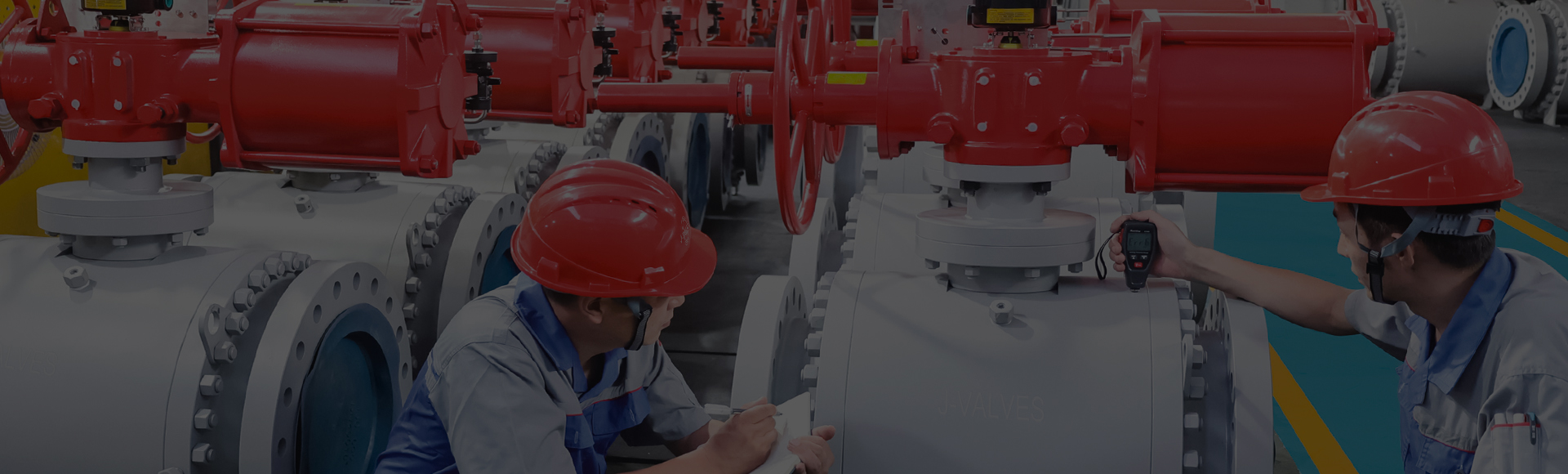
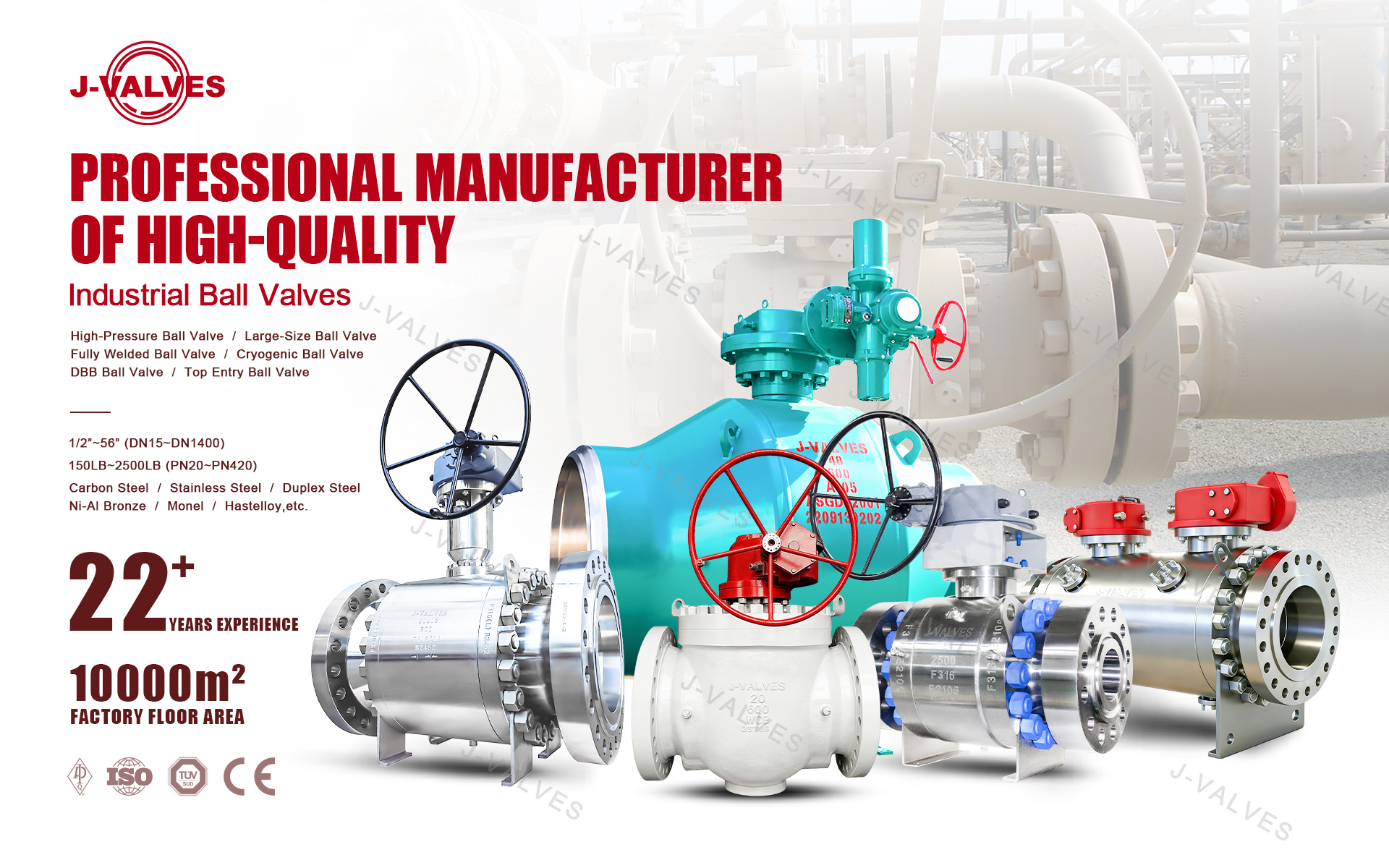
J-VALVES, a distinguished professional ball valve manufacturer rooted in China, takes pride in its extensive product portfolio. Our offerings span a wide range, including trunnion-mounted ball valves, floating ball valves, high-temperature ball valves, high-pressure ball valves, metal-sealed ball valves, ultra-low temperature ball valves, DBB ball valves, Three-way And Four-way Ball Valve, and fully welded ball valves. Each product is a testament to our commitment to precision engineering and reliable performance. Meticulously crafted, they are designed to not only meet but exceed the most stringent industrial demands, ensuring stable operation even under extreme conditions. This enables us to provide our clients with high-value services and makes our valves widely sought-after in industries.
Product Category
Contact Us


Pressure Designation: JIS 10K / 20K (0.98 / 1.96 MPa)
Body Material: SCS13, SCS13A, SCS14, SCS14A
Flange Standard: JIS B2220, 10K RF
Face to Face: JIS B2002
Design Standard: JIS B2071
Test Standard: JIS B2003
Seat: PTFE, RPTFE, PPL
Port: Full port
Temperature Range: -29°C to 220°C depending on seat
Fire Safe: API 607 on request
Operation: Lever, gear, ISO 5211 pad
-
Q41F-10K
-
J-VALVES
A JIS 10K ball valve is a flanged floating ball valve built to Japanese Industrial Standards: JIS B2071 for design, JIS B2220 for the flange, JIS B2002 for face-to-face, and JIS B2003 for test. The 10K in the name is a pressure designation of 10 kgf/cm², about 0.98 MPa, and the body is normally SCS13 (CF8) or SCS14 (CF8M) from 1/2 to 8 inch. It looks like an ANSI Class 150 valve and it does not interchange with one.
J-VALVES supplies this valve to shipyards, water utilities and Japanese-owned plants in Southeast Asia, where the piping is JIS throughout and an ANSI valve would need adaptors at every joint. The two-piece split body, full port bore and RPTFE seat are the same as any floating valve; what makes the product is the flange and the face-to-face dimension, and those are where most purchase errors happen.

What 10K Actually Means
JIS pressure designations are metric and round: 5K, 10K, 16K, 20K, 30K, 40K, 63K. The number is kgf/cm² at the reference temperature, so 10K is 10 kgf/cm² or 0.98 MPa, roughly 9.8 bar. Compare that with ANSI Class 150, which is 19.6 bar at ambient on a group 2.2 stainless body, and the two are clearly not the same rating even though they are used for similar duties.
In practice a JIS 10K valve is specified for lines that run at 6 to 8 bar, with the margin absorbed by the casting and the seat rather than by the flange rating. That is why a 10K valve is often lighter than a Class 150 valve of the same bore, and why it must not be substituted on a line designed to ANSI where the flange rating is part of the pressure envelope.

JIS 10K Flange Is Not an ANSI Class 150 Flange
Both are four-bolt flanges at small sizes, both are raised face, and both will sit against each other. They will not bolt up. The bolt circle, the bolt diameter and often the bolt count differ, and the difference grows with size.
| Nominal size | JIS 10K flange | ANSI Class 150 flange | Result |
|---|---|---|---|
| DN15 to DN40 (1/2 to 1-1/2 inch) | 4 bolts, M12 to M16, JIS B2220 bolt circle | 4 bolts, 1/2 to 5/8 inch, B16.5 bolt circle | Close but not interchangeable; bolt holes do not line up |
| DN50 (2 inch) | 4 bolts, M16, 120 mm bolt circle | 4 bolts, 5/8 inch, 120.7 mm bolt circle | 0.7 mm offset; will not assemble cleanly |
| DN80 (3 inch) | 8 bolts, M16 | 4 bolts, 5/8 inch | Bolt count differs; no adaptor works without drilling |
| DN100 (4 inch) | 8 bolts, M16, 175 mm bolt circle | 8 bolts, 5/8 inch, 190.5 mm bolt circle | Different bolt circle; spool piece required |
| DN150 (6 inch) | 8 bolts, M20, 240 mm bolt circle | 8 bolts, 3/4 inch, 241.3 mm bolt circle | Different bolt size; reaming or adaptor |
The table is a warning, not a dimension table. Before an order, the buyer should confirm the mating flange on the pipe against JIS B2220 for the specific nominal size, because the standard has more than one pressure series and older plant may carry 5K or 16K flanges that look similar.
Face-to-face is the second trap. JIS B2002 dimensions for a 10K ball valve are generally shorter than ASME B16.10 for the same bore, typically 150 mm against 178 mm at DN50. Dropping a JIS valve into an ANSI pipe run leaves a gap that has to be filled with a spool, and putting an ANSI valve into a JIS run pushes the pipe apart. Neither is a field fix.

SCS13 and SCS14: Reading the Japanese Material Code
Japanese cast stainless grades carry SCS numbers rather than A351 letters, and the mapping is direct once it is written down.
| JIS grade | ASTM equivalent | Common name | Where it is used |
|---|---|---|---|
| SCS13 | A351 CF8 | 304 cast | Water, air, general service; the default body for 10K |
| SCS13A | A351 CF3 | 304L cast | Welded fabrication, low carbon requirement |
| SCS14 | A351 CF8M | 316 cast | Chemical, marine atmosphere, chloride above 200 mg/L |
| SCS14A | A351 CF3M | 316L cast | Welded 316 service, pharmaceutical |
| SCS16 | — | 316 with niobium | Rare; high temperature creep resistance |
The ball and stem follow the body: SS304 with an SCS13 body, SS316 with SCS14. Mixing them is a false economy, because a 316 ball in a 304 body gives no more corrosion resistance at the seat pocket, which is where pitting actually starts.
Japanese specifications often ask for the material certificate to JIS G5121 rather than to ASTM A351, with the SCS designation on it. A certificate issued only to A351 will usually be rejected by a Japanese inspector even though the heat is the same. J-VALVES issues both formats on request.

10K, 20K and 40K: Where the Series Changes
The JIS series is not a linear scale, and the construction changes at 20K rather than only the wall thickness.
| Designation | Reference pressure | Typical body | What changes |
|---|---|---|---|
| 10K | 0.98 MPa | SCS13 / SCS14, 2 piece | Standard floating valve, PTFE seat, lever |
| 16K | 1.57 MPa | SCS13 / SCS14 | Thicker flange, same internals |
| 20K | 1.96 MPa | SCS14 usually | Heavier body, higher bolt grade, often gear above 6 inch |
| 40K | 3.92 MPa | SCS14 forged or heavy cast | Not normally a floating design above 4 inch |
Above 20K the floating ball starts to work against itself: the seat load comes from line pressure, so the torque and the seat stress both climb with the rating, and above about 4 inch the stem and the seat pocket have to grow faster than the bore. That is the point where a trunnion mounted valve becomes the cheaper answer, even though it is a more expensive valve.
Seat and Temperature in a JIS Valve
The JIS valve is usually quoted with a PTFE or RPTFE seat and a temperature range of -29°C to 250°C, which is the range of the body rather than the seat. The seat is the real limit: PTFE to about 180°C, RPTFE to about 200°C, PPL to about 220°C. At 250°C the specification is already asking for a PPL or a metal seat and the torque has risen by half.
Steam is the common request and the common mistake. A 10K valve with an RPTFE seat will hold saturated steam at 10 bar for a while, then the seat takes a compression set and the valve passes on the second shutdown. For continuous steam above 180°C, a PPL seat, a graphite packing and a graphite body gasket should be specified together, not one at a time.
Cold service is the mirror case. The 10K casting is austenitic and has no ductile-brittle transition, but a PTFE seat at -29°C is at its limit, and the packing needs to be graphite before the valve is used on a cold line.
Where This Valve Belongs, and Where It Does Not
It belongs wherever the piping is JIS: Japanese shipyards and marine engine rooms, Korean and Taiwanese water treatment, Japanese-owned chemical plants in Thailand and Vietnam, and any plant built to a Japanese engineering contractor's standard. In those projects the flange is the specification, and an ANSI valve creates a purchasing problem rather than a technical one.
It does not belong on an ANSI line, on a line above 8 bar continuous without checking the derating, on steam above 220°C, or on a 40K duty where the floating design runs out of seat load. It is also the wrong choice for a buried line, because the two-piece body joint cannot be inspected and the flange bolts cannot be retightened under insulation.
Ordering Details That Avoid a Return
Five lines on the enquiry settle the configuration: nominal size in A or DN, 10K or 20K, body grade in SCS notation, seat material, and the end connection with the flange standard named. Add the face-to-face dimension if the valve goes into an existing run, and add the handle orientation if it is a marine installation with a walkway above.
Two documents should be requested with the quotation: the JIS G5121 material certificate and the JIS B2003 pressure test record. The test standard is not the same as API 598, and a Japanese inspector will ask for the JIS record even when the test pressures are identical.
Delivery is typically 4 to 6 weeks for SCS13 in stock sizes and 6 to 8 weeks for SCS14 or a 20K body. Drawing approval is issued before machining whenever the face-to-face or the flange drilling is non-standard.
FAQ
Is a JIS 10K valve the same as an ANSI Class 150 valve?
No. 10K is 0.98 MPa, about 9.8 bar, while Class 150 is 19.6 bar at ambient on a stainless body. The flanges also differ in bolt circle, bolt size and sometimes bolt count, and the face-to-face dimension is shorter to JIS B2002. The two are used for similar duties but do not interchange.
What does SCS13 mean?
SCS13 is the JIS cast stainless designation for the grade equivalent to ASTM A351 CF8, which is the cast version of 304. SCS14 is CF8M, the 316 equivalent. Japanese specifications usually want the SCS designation on the certificate, issued to JIS G5121 rather than to A351.
Can a JIS 10K valve take 16 bar?
Not as a rated pressure at temperature. The 10K designation is 0.98 MPa at the reference temperature, and the allowable falls as temperature rises. A short hydrostatic proof test at 1.5 times the rating is a test, not a licence to run at 16 bar.
What is the maximum temperature of a 10K ball valve?
The body is good to well above 300°C, but the seat decides the answer. PTFE is limited to about 180°C, RPTFE to 200°C, PPL to 220°C. Above that a metal seated valve is required, and the torque rises enough that actuation should be reviewed.
Which flange standard should be stated on the order?
JIS B2220, with the pressure series and the nominal size. Stating only 10K is not enough, because the same nominal size exists in 5K and 16K with different drilling, and older plant may not be to the current edition of the standard.
Hot Products


News
Ball Valves in Amine CO2 Capture: Heat Stable Salts, Rich Amine, And The Three Places The Body Thins
Rich amine at 110 C with heat stable salts is where capture plant ball valves fail. Materials, velocity limits, cavity gas and seat choice, with numbers.
Read More
Fail-Safe Ball Valve Actuators: Spring Return, Stored Air, And The Torque Nobody Checks
Spring return or stored air? The answer is a torque curve, not a datasheet box. Sizing, receiver volume, closing time and four silent failures.
Read More
Ball Valve Stem Leak: The Gland, The Backseat And The Repair That Cannot Be Done Live
A stem leak on a quarter turn valve is four different failures. What gland tightening buys you, why the backseat is usually absent, and what needs a shutdown.
Read More
Ball Valves in A Kraft Pulp Mill: Black Liquor, Green Liquor And The Cost of Choosing The Alloy by Habit
White liquor at pH 14 cracks carbon steel welds, black liquor sets solid below 100 C, green liquor dregs grind seats: alloy choice and torque in a kraft mill.
Read More