

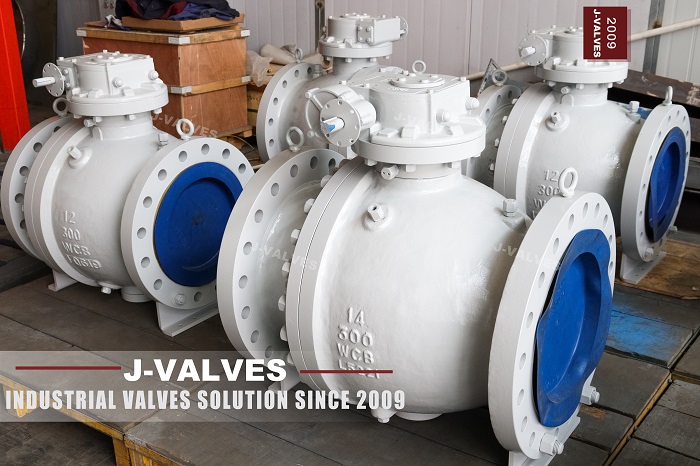
In high-pressure and large-diameter pipeline systems, valve stability and long-term sealing reliability are critical factors that directly affect operational safety and maintenance costs. Among various ball valve designs, WCB Trunnion Mounted Ball Valves have become a preferred solution in demanding industrial applications due to their robust structure and superior pressure-handling capability.
This article explores the key features, practical advantages, and suitable working conditions of WCB trunnion ball valves to help engineers and procurement teams make informed decisions.
What Is a WCB Trunnion Ball Valve?
A WCB Trunnion Ball Valve is a fixed-ball valve where the ball is mechanically supported by upper and lower trunnions rather than being free-floating. The valve body is commonly manufactured from ASTM A216 WCB carbon steel, a material known for its excellent strength, toughness, and cost-effectiveness under medium to high temperature and pressure conditions.
Unlike floating ball valves, trunnion-mounted designs minimize operating torque and improve sealing performance, especially in large-size or high-pressure systems.
Key Features of WCB Trunnion Ball Valves
1. Trunnion-Mounted Ball Design
The ball is fixed in position by trunnion shafts, allowing it to withstand high line pressure without excessive movement. This design significantly reduces stress on the valve seats.
2. Low Operating Torque
Because the ball does not float under pressure, seat load is controlled by springs or pressure-assisted sealing. This results in smoother operation and makes the valve suitable for manual, gearbox, pneumatic, or electric actuation.
3. Double Block and Bleed Capability
Many WCB trunnion ball valves support double block and bleed (DBB) functionality, enabling isolation of both upstream and downstream pressure while allowing cavity pressure relief—an important safety feature in critical pipelines.
4. Fire-Safe and Anti-Static Design
Metal-to-metal secondary seals and anti-static devices help meet fire safety requirements and reduce electrostatic discharge risks in flammable media applications.
5. Durable Carbon Steel Construction
ASTM A216 WCB provides a good balance of mechanical strength and weldability, making it suitable for demanding industrial environments while maintaining cost efficiency.
Advantages in Industrial Applications
Enhanced Sealing Reliability
The controlled seat loading mechanism ensures consistent sealing performance, even under fluctuating pressure conditions.
Extended Service Life
Reduced wear on seats and stem components leads to longer operational life and lower maintenance frequency.
Improved Safety Performance
Features such as cavity pressure relief and fire-safe design enhance operational safety in high-risk installations.
Cost-Effective for Large Sizes
For medium to large diameters, trunnion-mounted ball valves offer better long-term value compared to floating ball valves due to reduced torque and maintenance requirements.
Suitable Working Conditions
WCB trunnion ball valves are well-suited for a wide range of industrial services, including:
Oil and Gas Transmission Pipelines
Petrochemical and Refining Systems
Power Generation Facilities
Industrial Water and Utility Networks
Steam and Non-Corrosive Process Media
Typical Operating Parameters:
Pressure Rating: 150LB ~ 2500 LB (PN20 ~ PN420)
Temperature Range: Approximately -29°C to +425°C
Media: Natural gas, crude oil, refined products, steam, water, and other non-corrosive or mildly corrosive fluids
For highly corrosive environments or extreme temperatures, alternative materials such as stainless steel or alloy steel may be recommended.
Why Choose a WCB Trunnion Ball Valve?
When system reliability, safety, and long-term operational efficiency are priorities, WCB trunnion ball valves provide a balanced solution. Their robust construction, stable sealing performance, and adaptability to automated control systems make them an ideal choice for critical pipeline infrastructure.
Selecting the correct valve design not only improves system performance but also reduces downtime and total lifecycle costs—key considerations for modern industrial projects.


