

CHINA J-VALVES Offers Various High-quality I ndustrial Ball Valves
J-VALVES, a distinguished professional ball valve manufacturer rooted in China, takes pride in its extensive product portfolio. Our offerings span a wide range, including trunnion-mounted ball valves, floating ball valves, high-temperature ball valves, high-pressure ball valves, metal-sealed ball valves, ultra-low temperature ball valves, DBB ball valves, Three-way And Four-way Ball Valve, and fully welded ball valves. Each product is a testament to our commitment to precision engineering and reliable performance. Meticulously crafted, they are designed to not only meet but exceed the most stringent industrial demands, ensuring stable operation even under extreme conditions. This enables us to provide our clients with high-value services and makes our valves widely sought-after in industries.
Product Category
Contact Us


-
J-VALVES-Q347F
-
J-VALVES
Overview of the J-VALVES 6x4 Inch 2500LB Stainless Trunnion Ball Valve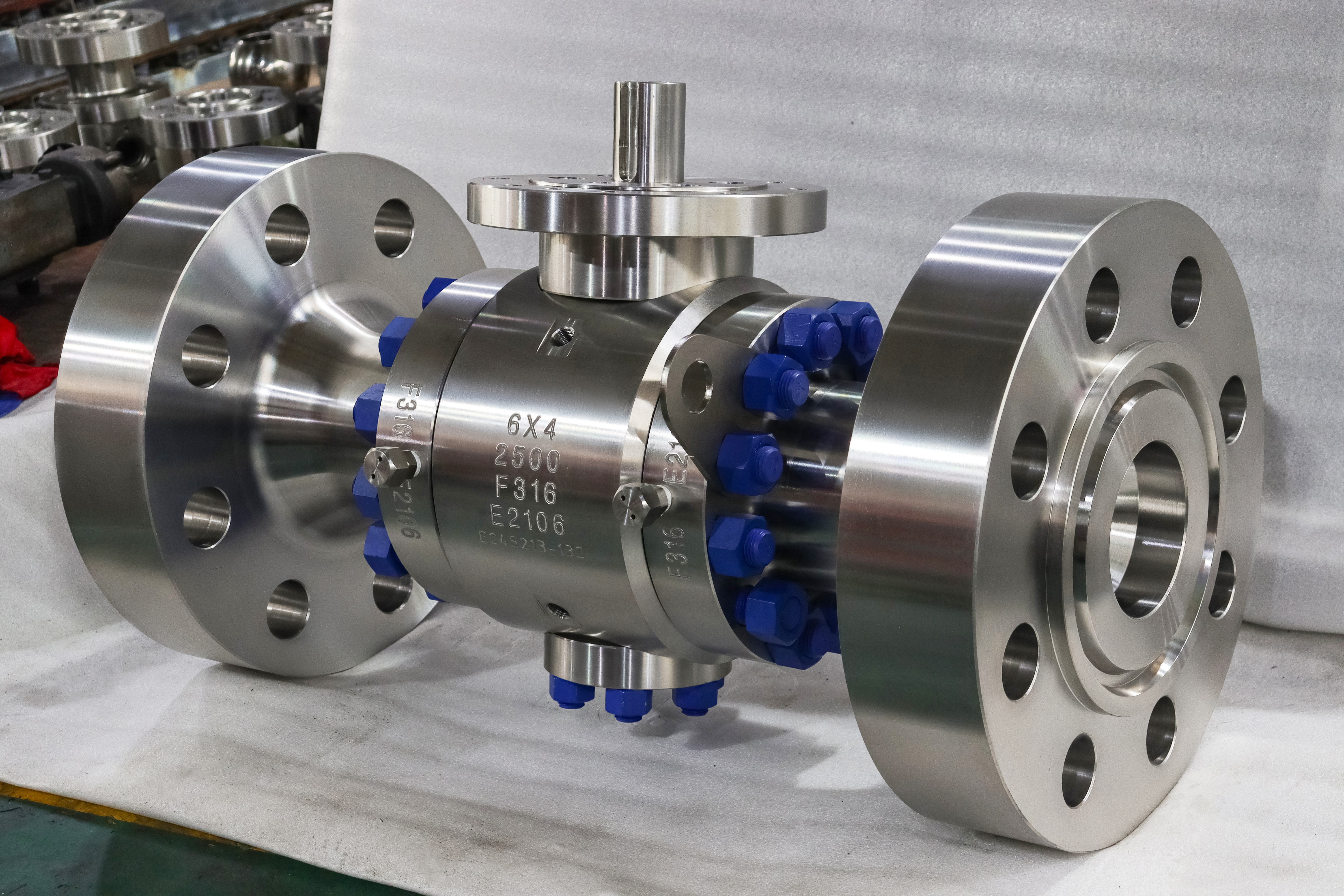
The title of this page says full bore, and the size it gives is six by four. Those two statements cannot both be true. Six by four means a six inch end and a four inch bore, which is the definition of a reduced bore valve, and the page then goes on to say the passage matches the pipeline inner diameter and allows unrestricted passage of pigs. A four inch passage does not match a six inch line and a six inch pig will not pass it.
The passage can match a pipeline, but only a four inch one. That is the sentence the page should have written, and it changes what the valve is for. If both ends of the valve go onto six inch pipe, this is a reduced bore valve on a six inch line and the bore is a restriction the buyer has chosen. If one end bolts to a four inch line and the other to six inch equipment, the valve is a transition piece and the step is the point of it rather than a compromise.
So the first question on this valve is not how big the bore is. It is which end faces the pipe. This page answers that question, sets out what each answer implies for the flange, the ring and the cleaning routine, and says plainly that a full bore six inch valve is a different valve rather than a version of this one. Everything else on the page follows from that answer, including the gasket, the cleaning routine and the parts that have to be kept in the store.
Design and Construction
The body is three pieces: a centre section carrying the stem and both seats, and an end cap bolted to each side on a ring of studs. The middle section is sized around the four inch ball, while the end caps carry six inch flanges, so the step from one size to the other happens inside the caps. That is why the weight and the bolt circle belong to the six inch valve while the trim belongs to the four inch one, and why a quotation that compares this valve with a four inch valve will always show it as heavier.
The ball runs on an upper and a lower trunnion in bearing blocks, which is how a ball of this diameter is carried at class 2500. The trunnions take the side load from line pressure so that the stem turns the ball instead of holding it, and the bearings are what keep the torque predictable as the pressure rises. At this class the bearings are load carrying parts rather than a pivot, which is why they are named on the drawing and not left to the assembly floor.
The stem is separate from the ball, retained by the body cover with an anti blowout shoulder, and the gland and packing sit above that shoulder. Both seat rings are separate assemblies with their own spring sets, and the space between them is the body cavity, which is where the drain, the vent and any injection fitting connect. The valve is gear operated as standard at this class, because the torque is past what a lever should be asked to deliver.

Material Options
The body is forged austenitic stainless, F316 as standard, with F304 and the low carbon and stabilised variants offered as alternatives. The plate carries one code and the certificate follows the plate; where the medium needs a family the plate does not name, the answer is a certificate at the grade the order asks for. The ball is the same family as the body, the trunnions are a surface hardened stainless or a precipitation hardening grade, and the stem is a precipitation hardening grade because it carries load rather than resists corrosion.
The seat is PEEK or a metal seat with a graphite seal, and the two set different ceilings below the one printed for the body. The choice follows the temperature and the medium rather than the pressure, because at class 2500 both are capable of holding. The joint gasket is a ring joint in a soft iron, low carbon or stainless grade, and the ring is a consumable that is renewed every time a joint is opened.
| Component | Standard Material | Optional Upgrade | Service Notes |
|---|---|---|---|
| Body | forged austenitic stainless, F316 | F304, low carbon or stabilised grades | code on the plate |
| Body joints | two bolted joints with ring gaskets | soft iron, low carbon or stainless ring | renewed at every break |
| Ball | F316 | same family as the body | four inch, inside a six inch cap |
| Trunnion | surface hardened stainless or 17-4PH | runs in bearing blocks | takes the side load |
| Stem | precipitation hardening stainless | anti blowout shoulder | gland sits above the shoulder |
| Seat | PEEK | metal with a graphite seal | sets the temperature ceiling |
| Ring gasket | soft iron | low carbon steel or a stainless grade | one use only |
| Bolting | B8M studs with 8M nuts | B7 studs with 2H nuts | pair the nut to the stud |
| Operator | gear operator | pneumatic, electric or hydraulic | standard at this class |
Technical Specifications
The valve is class 2500, written as PN 420 in the API 6D pressure code list, with six inch ends and a four inch bore. The flange is a ring joint to ASME B16.5, which covers six inch at this class, and the groove is cut in the flange face rather than added at site. The face to face length is the one ASME B16.10 gives for six inch at class 2500, and it is a six inch length, since that is the size of the flanges that set it.
The bore is a separate dimension and is not implied by the size designation. API 6D prints the bore for each size and class in its table, and the full bore and reduced bore values are different rows in that table. A 6x4 valve sits at the reduced bore figure for a six inch valve, which is why the two numbers on the name are both needed: one comes from the flange table and one from the bore table, and neither can be derived from the other.
The temperature range is minus 29 to plus 425 Celsius measured as metal temperature, and the top of it is reached only by the metal seat with a graphite seal. The ratings behind that range come from the pressure boundary table for the material group of the body, read as a table rather than converted from the class number, and the seat and the packing narrow the range below what the body allows.
| Item | Value |
|---|---|
| Nominal size | 6x4 inch, six inch ends with a four inch bore |
| Pressure class | class 2500, written as PN 420 in the API 6D code list |
| Body style | three piece, two bolted body joints |
| Ball support | trunnion mounted in bearing blocks |
| Bore | reduced bore, four inch inside six inch ends |
| Body material | forged austenitic stainless, F316, code as stamped |
| Body options | F304, low carbon or stabilised grades |
| Ball material | F316 |
| Ball surface | plain, or a nickel or chrome deposit on request |
| Trunnion material | surface hardened stainless or 17-4PH |
| Stem material | precipitation hardening stainless |
| Seat material | PEEK as standard |
| Seat options | metal with a graphite seal |
| Ring gasket | soft iron, low carbon steel or a stainless grade |
| Bolting | B8M studs with 8M nuts, or B7 studs with 2H nuts |
| End connection | ring joint flange to ASME B16.5, six inch |
| Face to face | ASME B16.10, the six inch length for this class |
| Bore reference | the reduced bore row for a six inch valve in the API 6D table |
| Design standard | API 6D, with ASME B16.34 and API 608 underneath |
| Test standard | API 598 or API 6D |
| Shell test | one and a half times the rating |
| Seat test | one and a tenth times the rating, both directions |
| Temperature range | minus 29 to plus 425 Celsius, metal temperature |
| Temperature ceiling | set by the seat and the packing, not by the body |
| Operation | gear operator as standard at this class |
| Pigging note | a four inch bore does not pass a six inch pig |
| Order note | name the bore and the end size separately |
Standards and Compliance
The page names the pipeline specification, the pressure boundary standard and the general ball valve standard, and all three apply in part. The pipeline specification governs the design, the marking and the test; the pressure boundary standard supplies the rating and the minimum wall; the general standard overlaps both. An order citing all three should say which one prevails, because a certificate written to one is not evidence for the others.
Fire safe is a type test and the procedures are separate: API 607, API 6FA and ISO 10497 are not interchangeable, and a page listing all three has to say which was run and on which size. Low emission is a different claim again, tested to ISO 15848 on the stem arrangement, and neither certificate says anything about seat tightness in normal service, which is what the seat test covers.
| Requirement | Standard | What J-VALVES Supplies |
|---|---|---|
| Pipeline valve | API 6D | design, marking, bore table and test |
| Pressure boundary | ASME B16.34 | rating, minimum wall, material group |
| General ball valve | API 608 | overlapping requirements |
| Flange | ASME B16.5 | ring joint, six inch at class 2500 |
| Face to face | ASME B16.10 | the six inch length, set by the flanges |
| Bore | API 6D table | full and reduced bore are different rows |
| Testing | API 598 or API 6D | 1.5 times shell, 1.1 times seat |
| Fire test | API 607, 6FA or ISO 10497 | named, and not interchangeable |
Manufacturing Process
The body starts as a forging, is cleaned, and is machined from the flange faces inward so that the bore, the seat pockets and the trunnion bores come off one reference. On this valve the step from the six inch end to the four inch bore is machined rather than formed, because a rough step is where the flow turns and where debris collects, and a machined step is also the surface a gauge is run against when the bore is checked.
Assembly puts the ball into the centre section, fits both seats and the trunnions, and closes each joint on a new ring gasket with the studs taken down in a cross pattern. The joint is a metal to metal seal on a ring, so the groove finish and the condition of the ring decide whether it holds, and both are checked before the joint is closed rather than after it leaks.

Quality Control and Testing
The certificate is written against the heat number stamped on the plate, and a material identification report is issued against the same heat when the order asks for one. Two austenitic grades can leave the works looking the same after passivation, so the plate is read at goods in and the certificate follows it. This is the check that settles an argument about what arrived, and it is cheaper than the argument.
The shell test runs at one and a half times the rating with both body joints assembled, and the seat test follows at one and one tenth times in both directions with the cavity monitored. On a metal seat the acceptance is a permitted rate rather than no visible leakage, and the rate is written on the record. A seat that leaks into the cavity has failed the seat test even though the body held.
The dimensional check is where a valve with two sizes in it is either right or wrong. The flange is measured against the six inch table, the face to face against the six inch length, and the bore against the four inch dimension and the standard it is ordered to. A valve that is correct on the flange and wrong on the bore will fit the line and not do the job, which is why both numbers are on the record and not only the size designation in the title.
| Step | What Is Checked | Standard or Acceptance |
|---|---|---|
| Forging | heat number and certificate | read against the plate code |
| Material identity | report against the same heat | quoted when the order asks |
| Bore | measured to the four inch dimension | the step is machined, not formed |
| Flange | measured to six inch class 2500 | ring groove included |
| Face to face | measured to the six inch length | set by the flanges, not the bore |
| Shell test | wall and both joints at 1.5 times | run with the joints assembled |
| Seat test | both directions at 1.1 times | cavity monitored, rate recorded |
| Marking | plate, certificate and drawing | both dimensions on the record |

Applications and Industry Service
The usual duty for a 6x4 valve is a four inch line that has to mate with six inch flanges, or a six inch line where the flow does not justify the full bore and the pressure drop across a reduced bore is acceptable. The first case is a transition and the step is intended; the second is a compromise that buys a smaller ball, a smaller seat and a lower torque at the cost of a restriction. Both are legitimate and they are not the same purchase.
It is the wrong valve where the line has to be pigged with a tool sized for six inch pipe, because the tool will not pass a four inch bore, and where the pressure drop has to be kept to what a full bore valve would give. It is also the wrong valve where the two ends have to be interchangeable with an existing six inch full bore valve, since the trim inside is four inch and the parts will not swap.
Installation, Operation and Maintenance
Before installation, confirm which end goes to the pipe and which to the equipment, because that decides the gasket, the bolting and the cleaning routine. A valve used as a transition has a step on one side only and the flow direction matters; a valve used as a restriction on a six inch line has a step on both sides and the direction does not. Neither arrangement is wrong, but a line that was designed for one and received the other will show it at the first pig run.
In service the valve is opened or closed rather than throttled, because a partly open ball puts the seat on the edge of the port. A seat change needs the line isolated, the cavity vented, both joints released and the centre section taken out, and the joints go back on new ring gaskets. The drain plug in the lower body empties and samples the cavity, which is how a passing seat is proved before the line is opened.
How to Specify and Order
The order has to name the bore and the end size separately, because the size designation alone does not say which is which to everyone who reads it. Write six inch ends, four inch bore, class 2500, ring joint facing, body code, seat, packing, operator, test standard and certificate grade. If the intention is a full bore six inch valve, that is a different valve and it should be ordered as one rather than as a variation of this.
Then say which end faces the pipe and whether the line is pigged. Those two answers decide the gasket, the cleaning routine and whether this valve is the right one at all. Where weight or torque matters, ask for it on the approved drawing rather than accepting a figure in a quotation, and where the bore is critical, ask for the measured bore on the test record so that the valve can be checked against the table it was ordered to.
FAQ
Q: Is a 6x4 valve a full bore valve?
A: No. Six by four means a six inch end and a four inch bore, which is a reduced bore valve. A full bore six inch valve has a six inch bore and is a different valve. The passage of this one matches a four inch line, and on a six inch line it is a restriction that the buyer has chosen rather than a characteristic of the size.
Q: Can a pig pass through it?
A: A pig sized for a four inch line can. A tool sized for six inch pipe cannot, because the bore is four inch and the step at each end is a face the tool would hit. The page claims unrestricted passage of pigs, and that claim only holds if the line is four inch and the valve is being used as a transition to six inch equipment.
Q: So which end faces the pipe?
A: That is the question the order has to answer. If both ends go to six inch pipe, this is a reduced bore valve on a six inch line and the restriction should be accepted on purpose. If one end goes to a four inch line and the other to six inch equipment, the valve is a transition and the step is the point of it. The gasket, the bolting and the cleaning routine follow from the answer.
Q: What is the face to face length measured against?
A: The six inch length in ASME B16.10 for this class, because the flanges are six inch and the length is set by the flanges rather than by the bore. A reduced bore valve is not shorter than a full bore valve of the same end size, and assuming that it is has put more than one valve back on the truck.
Q: Why is the bore not simply half the size?
A: Because the bore is not derived from the size designation at all. API 6D prints the bore for each size and class in its own table, with full bore and reduced bore as different rows, and a six by four valve sits at the reduced bore figure. That is why both numbers belong on the order and on the test record: they come from two different tables.
Q: Can it be supplied with a six inch bore instead?
A: Yes, as a different valve. A full bore six inch class 2500 trunnion valve is its own product with its own drawing, its own ball and seats and its own face to face length. Ordering it as a variation of this page is how a project ends up with a valve that has the right flanges and the wrong bore.


Hot Products


News
Ball Valve Spare Parts for Overseas Projects: The Wear Part List, The Quantity Math, And Four Traps
Why isolation valves fail on calendar time, not cycles. Wear part lists, Poisson stock maths, seat kit traps and the clauses that decide year six.
Read More
Ball Valves On A Bottom Loading Gantry: Creep, Dry Break And The Test That Proves Neither
A loading gantry cycles a ball valve far more than it is designed for and still cannot prove shut-off. Where creep starts, and what to specify.
Read More
Lined Ball Valves in Acid Service: The Liner Does Not Fail, The Steel Behind It Does
The valve came out of the line looking better than most valves that come out of a hydrochloric acid line. Three inch, PFA lined, cast body, Class 150, fourteen months in service on a 32 percent acid transfer duty at 55 to 60 degrees C, about forty open and close cycles a week. The paint was intact.
Read More
Ball Valves in Amine CO2 Capture: Heat Stable Salts, Rich Amine, And The Three Places The Body Thins
Rich amine at 110 C with heat stable salts is where capture plant ball valves fail. Materials, velocity limits, cavity gas and seat choice, with numbers.
Read More