
CHINA J-VALVES Offers Various High-quality I ndustrial Ball Valves
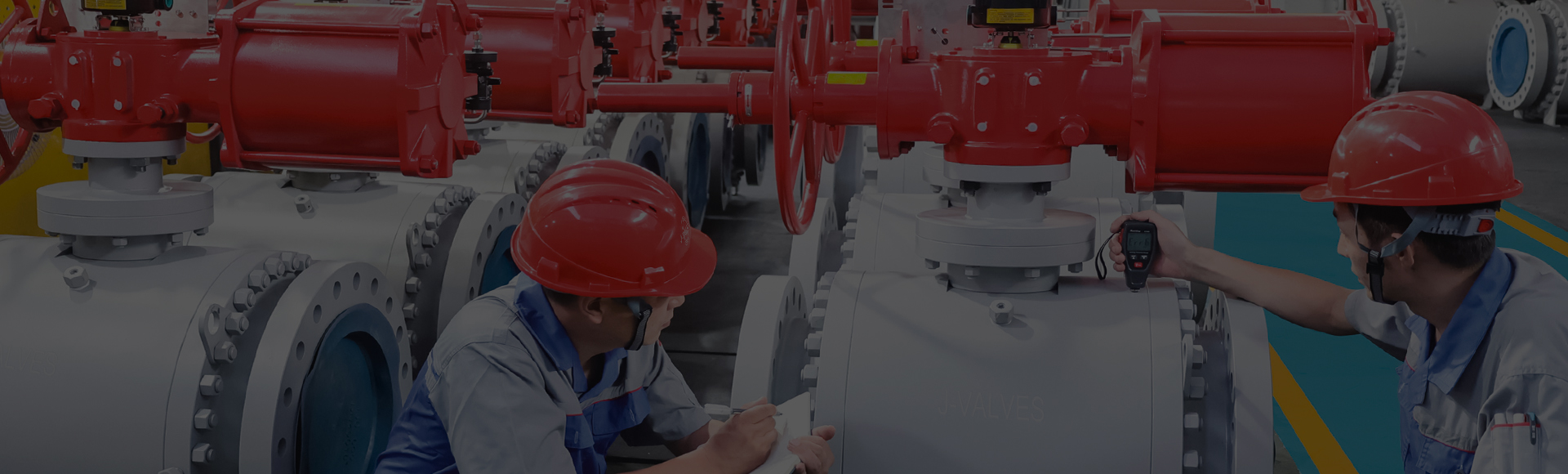
J-VALVES, a distinguished professional ball valve manufacturer rooted in China, takes pride in its extensive product portfolio. Our offerings span a wide range, including trunnion-mounted ball valves, floating ball valves, high-temperature ball valves, high-pressure ball valves, metal-sealed ball valves, ultra-low temperature ball valves, DBB ball valves, Three-way And Four-way Ball Valve, and fully welded ball valves. Each product is a testament to our commitment to precision engineering and reliable performance. Meticulously crafted, they are designed to not only meet but exceed the most stringent industrial demands, ensuring stable operation even under extreme conditions. This enables us to provide our clients with high-value services and makes our valves widely sought-after in industries.
Product Category
Contact Us


Pressure Class: ASME Class 2500 / PN420
Rating at 38°C: 425.5 bar
Body Material:Forged F316, A105N, F51 or F55
Body Construction: Forged, two-piece or three-piece, trunnion mounted
Ball: F316 forged, hard chrome or tungsten carbide on request
Seat: PEEK or metal seated, self-relieving
Stem: F316, blowout proof, anti-static
Packing: Flexible graphite
End Connection: RTJ to ASME B16.5, butt weld on request
Design Standard: ASME B16.34, API 6D, ASME B16.10
Test: Shell 638 bar, seat 468 bar, API 598 / API 6D
NDE: Ultrasonic on forging, PMI, hardness survey
Operation: Gear standard, pneumatic or electric actuator
-
Q347F
-
J-VALVES
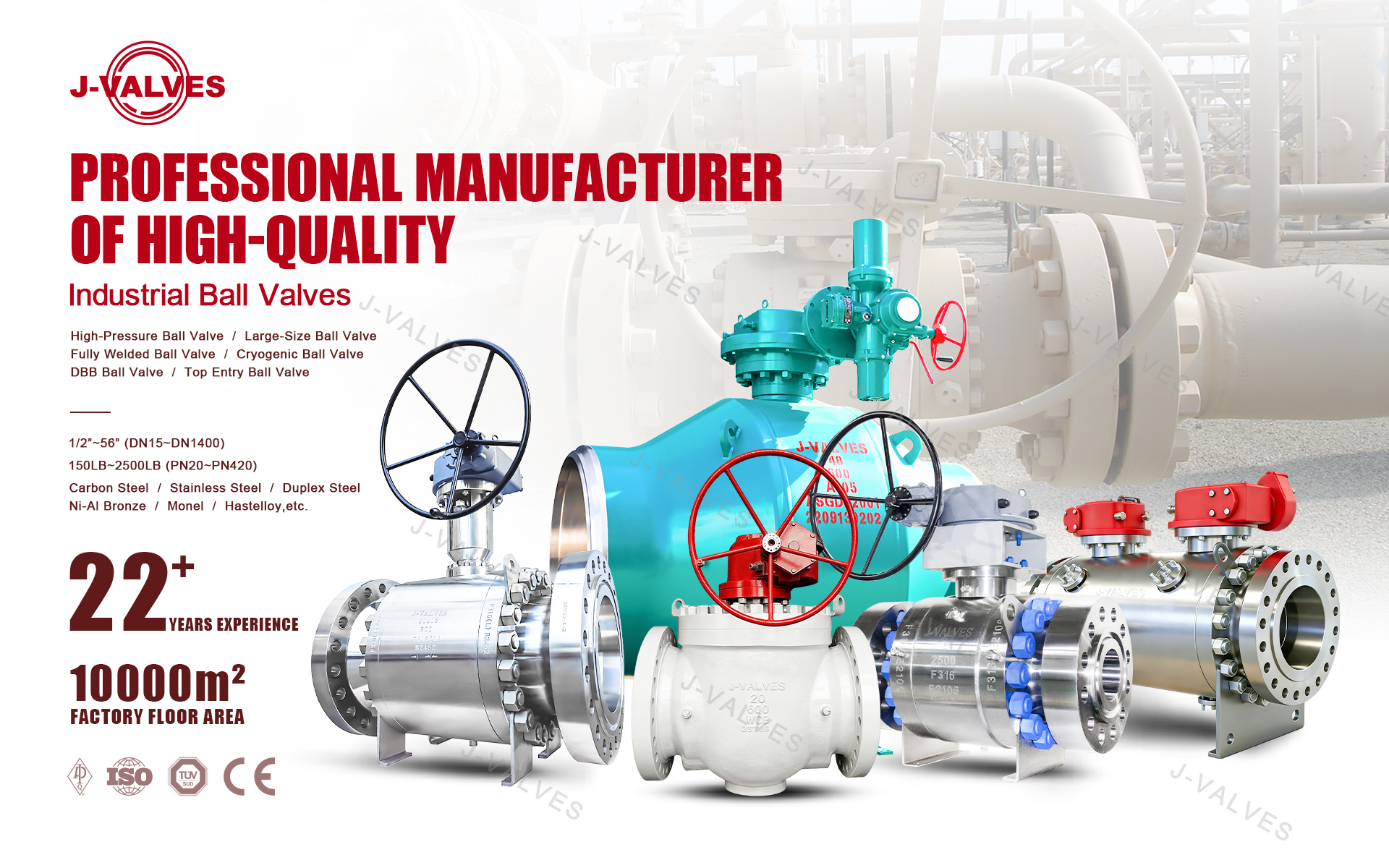
An 8 inch Class 2500 trunnion ball valve is a forged body isolation valve rated 425.5 bar at 38°C, with the ball carried on trunnion bearings and a body that is a forging rather than a casting because at this class the wall thickness makes casting soundness difficult to guarantee. In F316 austenitic stainless it is chosen for high pressure gas, injection, wellhead test and hydrogen service where a carbon steel body would corrode or embrittle. It is the top of the ASME B16.34 pressure range and one of the few ball valve products where the engineering is dominated by structural load rather than by sealing.
J-VALVES builds Class 2500 trunnion valves from 2 inch to 12 inch in forged A105N, F316, F51 and F55, with RTJ ends as standard, metal or PEEK seats, and gear or actuator operation. The buyers are gas processing contractors, injection packagers and high pressure test loop designers. This page sets out the load path at 425 bar, the reason the body is forged, and the point at which F316 stops being the right material.

What 425 Bar Does to the Ball
The single most useful number for this valve is the axial load on the ball. An 8 inch bore has an area of 0.0314 square metres. At 425.5 bar, which is 42.55 MPa, the load is 1.34 meganewtons, or about 137 tonnes. That load does not disappear because the ball is on trunnions; it is simply redirected. On a floating valve it would land on the seat and the stem, and no stem of practical size survives it. On a trunnion valve it goes into two journals and the body ribs that support them.
Class | Rating at 38°C | Load on an 8 inch ball | What it forces |
|---|---|---|---|
Class 600 | 102.1 bar | 321 kN | Trunnion, cast or forged body |
Class 900 | 153.2 bar | 481 kN | Trunnion, forged ends, gear operation |
Class 1500 | 255.3 bar | 801 kN | Trunnion, forged body, gear standard |
Class 2500 | 425.5 bar | 1336 kN | Trunnion, forged body, actuator normally required |
Two consequences follow. The first is that the trunnion journals and the body ribs around them become the critical section, and they are checked by finite element analysis rather than by a wall thickness formula, because the load is concentrated and the geometry is not a simple cylinder. The second is that the seat is deliberately not asked to carry this load: it is loaded by springs and by a small controlled piston area, so the sealing stress stays in the range where the seat material survives. This is the whole point of the design, and it is why a trunnion valve at 425 bar can still be turned by a gear while a floating valve at the same pressure could not be turned at all.

Why the Body Is Forged at This Class
ASME B16.34 sets a minimum wall for each size and class, and at Class 2500 the wall for an 8 inch bore is thick. A casting of that section is difficult to feed, and the regions that are hardest to feed are exactly the ones that matter: the transition from the bore to the body cavity, and the boss around the trunnion. Radiography finds gross shrinkage but does not reliably find fine porosity in a 100 mm section, and a pressure test finds it only if the pore connects to a surface.
A forging has no shrinkage cavity by construction. The billet is worked, the grain flows around the bore, and the material is sound through the section. The cost is machining: a forged body at this size is machined from a block with a large amount of material removed, and the lead time is longer because the forging itself has to be ordered. That is the real reason a Class 2500 valve is expensive, and it is not a marketing point.
Forgings for this service should arrive with ultrasonic examination to ASME A182 supplementary requirements, a hardness survey and positive material identification. At 425 bar a subsurface defect is not a nuisance, it is a starting point for a fatigue crack.
F316, A105N, F51: Choosing at This Class
Material | Minimum yield | Use at Class 2500 | Limit to watch |
|---|---|---|---|
A105N forged carbon steel | 250 MPa | Sweet gas, water injection, test loops, the economical choice | -29°C, and no chloride resistance at all |
F316 forged austenitic | 205 MPa | Corrosive gas, hydrogen, low temperature to -196°C | Lower yield means thicker wall, and chloride SCC above 60°C |
F51 duplex | 450 MPa | Sour and chloride service where the temperature allows | 300°C ceiling, ferrite balance, sour region limits |
F55 super duplex | 550 MPa | Severe sour and seawater injection | Higher cost, tighter welding control |
F316 is the right choice when the fluid is corrosive and the temperature is moderate, and it is the wrong choice when the priority is strength, because its 205 MPa yield forces a thicker wall than A105N and a heavier valve. On a hydrogen line, F316 is common because the austenitic structure is resistant to hydrogen embrittlement compared with carbon and low alloy steels; the design then follows the relevant hydrogen code rather than B16.34 alone. On a warm chloride line, F316 is a stress corrosion risk and F51 or F55 is the answer, which is the same trade as on the small duplex valve but at a much higher consequence.
Seats at 425 Bar
A soft seat at this pressure is not simply a PTFE ring. The seat has to be supported so that it cannot extrude into the clearance between the seat carrier and the ball, and the support is a metal backing ring with a small clearance. PEEK is the usual soft choice because it has the compressive strength to survive the seating stress and does not creep as much as PTFE. Above about 200°C, or where fire survival and abrasive trace are both present, a metal seat with a lapped ball and a Stellite or tungsten carbide face is used, and the leak rate is agreed to ISO 5208 rather than assumed to be zero.
The second seat issue is cavity pressure. At 425 bar a cavity full of liquid that warms and expands will generate a pressure far above the line pressure, and the seat has to relieve it or the body will be overstressed. Self-relieving seats are standard; a double piston seat at this class requires an external relief device and a documented set pressure.
Testing at 425 Bar
The shell test is 1.5 times the rating, which is 638 bar. That is a serious test and it limits which shops can do it: the test bench, the blind flanges and the instrumentation all have to be rated for it, and a shop whose press is limited to 400 bar cannot test this valve at all. This is worth asking about, because a certificate that says the shell test was done at a lower pressure is not a certificate for a Class 2500 valve.
The seat test is at 1.1 times, 468 bar, with the leak rate to API 598 or API 6D depending on the order. For a metal seat the acceptance rate is agreed in writing before the test, because a metal seat at 468 bar will pass a measurable amount and a buyer who expects zero leakage will reject a valve that is entirely normal. The documentation package includes the shell and seat records, the forging certificates with ultrasonic results, hardness, PMI and the heat numbers matched to the body stamping.

Dimensions, Weight and Installation
Class 2500 flanges to ASME B16.5 are heavy and the standard end for this class is a ring joint, because a raised face gasket at 425 bar is not a reliable seal. Face-to-face follows ASME B16.10 and is long, and the valve weighs well over a tonne at 8 inch, which means the pipe design has to carry it: a support under the valve body or a rigid anchor on both sides is normal, not optional. An unsupported Class 2500 valve on a line with thermal movement will load its own body joints.
Operation is by gear or actuator. The torque at 425 bar with a metal seat is beyond what a lever can deliver by a comfortable margin, and the gear ratio should be chosen on the break-to-open torque at the worst condition, not on the running torque. For actuator sizing the same rule applies with a factor of 1.5 to 2.0, and the actuator mounting flange should be to ISO 5211 with a stem that can take the full output torque without twisting.

What to Put on the Enquiry
Size, class, body forging grade, seat type, design temperature and minimum temperature, fluid and whether hydrogen or sour, end connection and ring joint number, face-to-face, whether the shell test will be witnessed, the leak rate acceptance for a metal seat, actuation and fail position, and the non-destructive examination requirements for the forging. On a Class 2500 valve the NDE and the test witness are a larger share of the price than on any other product in the range, and they should be settled before the forging is ordered.
Frequently Asked Questions
What is the pressure rating of a Class 2500 valve?
425.5 bar at 38°C, about 6170 psi, for a carbon or austenitic steel body to ASME B16.34. It is the highest standard class in B16.34. The rating falls with temperature, and the seat, packing and bolting rather than the shell usually set the real limit of the assembled valve.
Why is the body forged instead of cast at 8 inch Class 2500?
Because the wall is thick enough that casting soundness is difficult to guarantee in the sections that matter, particularly the bore to cavity transition and the trunnion boss. A forging has no shrinkage cavity, the grain flows around the bore, and ultrasonic examination is meaningful. The cost is machining time and forging lead time, which is a large part of why the valve is expensive.
Can a floating ball valve be used at Class 2500?
Not at 8 inch. The axial load on the ball at 425.5 bar is about 1.34 MN, and on a floating design that load lands on the seat and the stem. No practical stem carries it and no seat survives it. Trunnion mounting redirects the load into journals and body ribs; it is the only workable arrangement above about 6 inch at this class.
Is F316 suitable for Class 2500 hydrogen service?
F316 is commonly selected for hydrogen because the austenitic structure is more resistant to hydrogen embrittlement than carbon and low alloy steels, but the design then follows the applicable hydrogen code for material qualification and stress limits rather than ASME B16.34 alone. The grade, the hardness and the pressure boundary design all have to be assessed together.
How is an 8 inch Class 2500 valve tested?
Shell test at 1.5 times the rating, which is 638 bar, and seat test at 1.1 times, 468 bar, per API 598 or API 6D. Both require a test bench rated above the test pressure, which not every shop has. Forging certificates with ultrasonic results, hardness, PMI and heat number traceability complete the documentation.
Hot Products


News
Ball Valves in Geothermal Brine: Silica Scale, Chloride Cracking And The Cooling Trap
Why geothermal brine destroys ball valves: retrograde silica scale, calcite at the flash point, chloride cracking above 60 C and the 250 C seat limit.
Read More
Ball Valve Face To Face Dimensions: Why A Correctly Ordered Replacement Still Does Not Fit
A 6 inch Class 150 ball valve can be 267 or 305 mm face to face and both are compliant. How B16.10, EN 558 and flange drilling decide whether it fits.
Read More
Ball Valve Stem Key And Keyway: What Gives Way First, And What The Handle Cannot Tell You
Between the handle and the ball there are four fits. Which one shears, which one cracks, and how a few degrees of lost motion hides a valve that never seated.
Read More
Ball Valve Datasheet: Six Blocks That Decide Whether Two Quotes Are Comparable
A ball valve datasheet only works when six blocks are fixed: pressure basis, bore, temperature ceiling, test, end connection, operator. How each is written.
Read More