

Ball Valve News & Technical Insights from J-VALVES

Trunnion Ball Valve Selection And Failure Avoidance — What It Actually Costs When A Floating Ball Valve Is Specified for High-Pressure Or Large-Bore Isolation
Trunnion ball valve selection is not about size alone — it is about what happens when the seat configuration is wrong. This guide gives API 6D-based rules you can put in a datasheet: when trunnion construction is mandatory above NPS 6 or Class 600, how single vs double piston effect seats decide whether an external cavity relief valve is required, what goes wrong when a DIB-2 valve is installed backwards, and the 12 RFQ items that prevent most field failures. Includes a failure-mode table and extractable if-then decision rules.

Bronze Floating Ball Valves in Machining Workshops: Selection, Materials And Testing Boundaries
How to specify bronze floating ball valves for machining workshop compressed air, coolant and wash water: materials, ports, ratings and standard boundaries.

WCB Floating Ball Valve: ASTM A216 Limits, Offshore Failure Modes & Selection Boundaries
Where do WCB floating ball valve limits actually sit? This guide covers the ASTM A216 −29°C to 425°C window, offshore external corrosion failure mechanisms, soft seat P–T derating, and an explicit list of services where WCB must be replaced with LCC, duplex, or aluminium bronze.

C95800 Nickel Aluminium Bronze Floating Ball Valves in Offshore Seawater Service: Selection Boundaries And Failure Avoidance
Where C95800 nickel aluminium bronze floating ball valves actually work in offshore seawater: ASTM B148 data, torque and seat-load limits, the DN80 / Class 300 decision line, and how to avoid selective-phase attack and cavitation failures.

DN50 PN63 F304L Stainless Steel Trunnion Mounted Ball Valve: Structure, Selection Criteria And Application Limits
DN50 PN63 F304L trunnion mounted ball valve guide: forged A182 F304L body, PN63 meaning, trunnion vs floating design, test limits and 304L boundaries.

Cryogenic Ball Valves Across The LNG Value Chain: Selection, Failure Modes And Field Practice From −162°C Liquefaction To Vaporizer Send-Out
How cryogenic ball valves behave across LNG liquefaction, storage, loading and send-out — extended bonnet design, PCTFE vs PTFE seating, BS 6364 testing and the three failures seen most in the field.
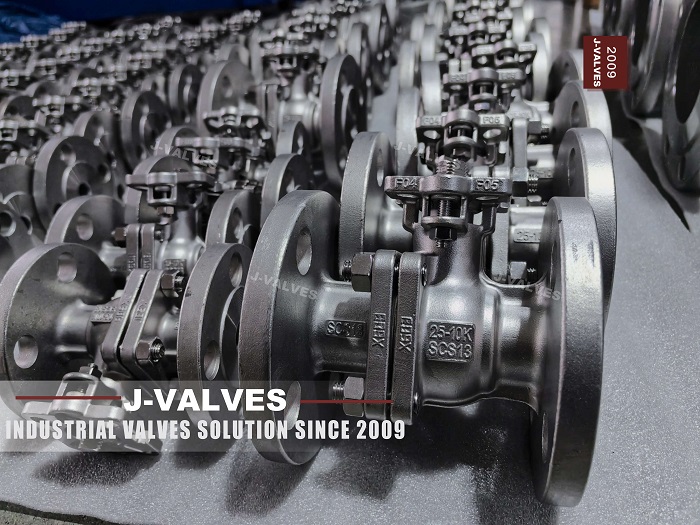
Floating Ball Valve Applications: Working Principle, Selection Guide & Typical Services
Learn how a floating ball valve works, where it's used in oil & gas, chemical and offshore service, and how to choose between a floating and a trunnion ball valve.

Trunnion Ball Valves in Natural Gas Service: How They Work And How To Specify Them
How trunnion-mounted ball valves work in natural gas pipelines: full bore design, double block and bleed, API 6D and EN 14141 compliance, plus sizing tips.
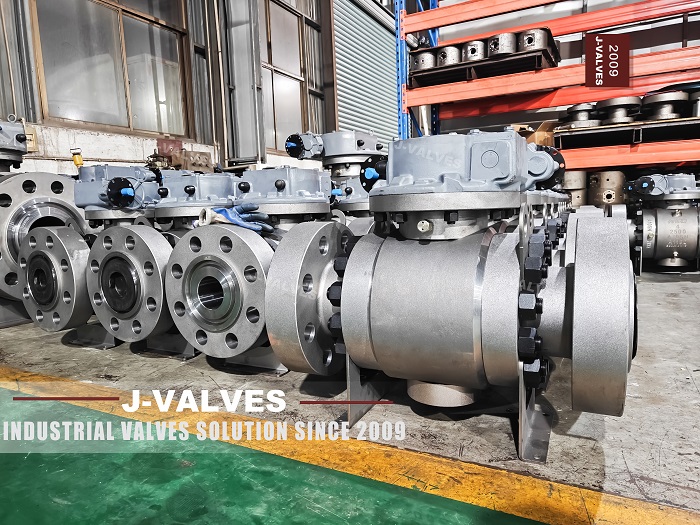
Trunnion Mounted Ball Valves in Offshore Service: How Fixed-Ball Design Handles FPSO, Subsea and High-Pressure Duty
Trunnion ball valves for offshore service: how fixed-ball design manages FPSO, subsea and high-pressure duty, plus material, standard and RFQ selection tips.

Inside The Valve Factory: 3PC Trunnion Ball Valve Manufacturing
Step‑by‑step factory tour of 3‑piece trunnion mounted ball valve production. Manufactured per API 6D, for oil & gas, chemical high‑pressure pipeline projects. Contact J‑VALVES for quotes.