


CHINA J-VALVES Offers Various High-quality I ndustrial Ball Valves
J-VALVES, a distinguished professional ball valve manufacturer rooted in China, takes pride in its extensive product portfolio. Our offerings span a wide range, including trunnion-mounted ball valves, floating ball valves, high-temperature ball valves, high-pressure ball valves, metal-sealed ball valves, ultra-low temperature ball valves, DBB ball valves, Three-way And Four-way Ball Valve, and fully welded ball valves. Each product is a testament to our commitment to precision engineering and reliable performance. Meticulously crafted, they are designed to not only meet but exceed the most stringent industrial demands, ensuring stable operation even under extreme conditions. This enables us to provide our clients with high-value services and makes our valves widely sought-after in industries.
Product Category
Contact Us


-
J-VALVES-Q47F
-
J-VALVES
Overview of the J-VALVES Three Piece Stainless Steel Metal Seated Ball Valve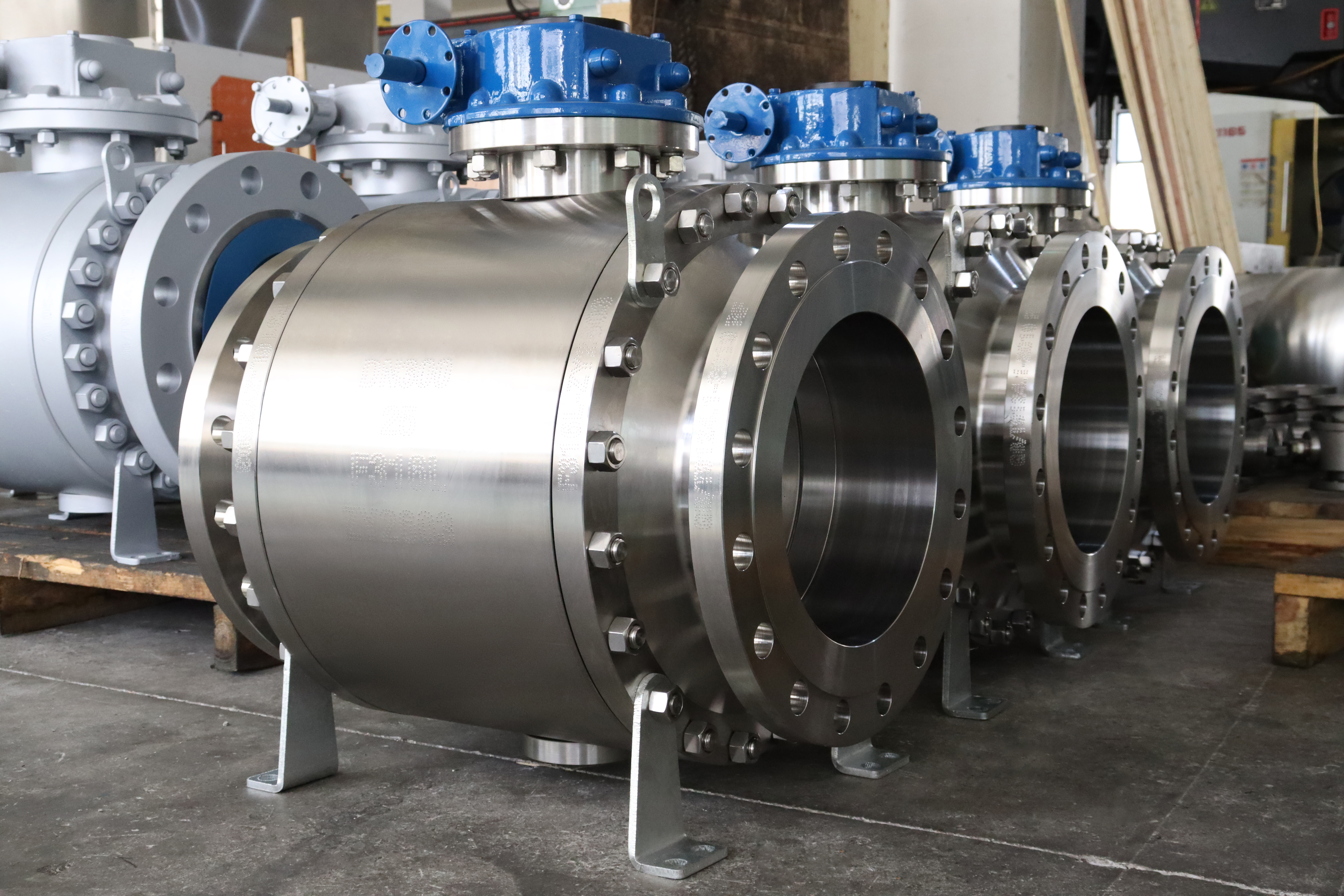
This is a family page rather than a single size. The valve is a three piece stainless steel ball valve in which the seat is metal instead of polymer, built from half an inch to fifty six inches and from Class 150 to Class 2500, with the body in F304, F316, CF8M or a duplex grade depending on the medium. The range is deliberately wide because the product is sold as a family: the size and the class are chosen first, and the body grade follows from the medium.
The reason to choose a metal seat is almost always temperature or abrasion. A PTFE seat stops at about 150 degrees, RPTFE at about 180 and PPL at about 280, and above that no polymer will survive; where the medium carries sand, catalyst fines or scale, a polymer seat is cut away in weeks. A metal seat answers both, at the cost of a higher operating torque and a leakage rate that is measured rather than assumed to be zero.
That last point is the one buyers most often miss. A metal seated valve is not a soft seated valve that has been made more expensive; it is a different sealing principle. The seal is a lapped metal to metal contact loaded by the pressure and by the seat spring, and it is judged against a leakage rate rather than against bubble tightness. Written into a specification that asks for zero leakage, it will fail acceptance every time.
Design and Construction
In a metal seated valve the ball and the seat ring are both hard, both lapped, and pressed together by the line pressure plus whatever spring load the seat carrier provides. There is no elastomer to conform to a scratch, so the quality of the two surfaces is the seal: a lapped pair with a contact band a fraction of a millimetre wide, held square to the ball axis by the seat pocket.
Because both parts are metal, temperature changes the fit. The ball and the body expand at different rates when the material differs and even when it does not, the temperature gradient across a valve in a hot line is not uniform. The design allowance for that is a clearance and a seat travel that keep the contact band loaded without crushing it, which is why a metal seated valve is specified for a temperature range rather than a single temperature.
The three piece body is what makes the valve maintainable. The two end caps come off and the ball and both seats come out with the pipe left in place, so a lapped pair can be replaced or re lapped without cutting the line. On a valve that is bought precisely because the duty is severe, that access is not a convenience, it is the reason the body is built this way rather than welded.
Behind the metal seat there is usually a secondary seal in flexible graphite, which keeps the valve from leaking to atmosphere when the metal contact is momentarily unloaded, for example during a thermal transient or when the valve is moved. That graphite element is what makes the difference between a metal seated valve that survives a fire and one that merely survives the process. Where that element is missing, the valve relies on the metal contact alone, and it will show a leak to atmosphere the first time the seat is unloaded.

Material Options
The body grade follows the medium. CF8M and F316 are the default stainless choices and cover most process duty; CF3M and F316L are the low carbon versions for welded ends; F51 or F53 duplex is chosen where chlorides and stress corrosion are both present, and a nickel alloy where neither stainless nor duplex will last. Carbon steel bodies in WCB are available where the medium allows and the temperature is inside the carbon band.
The seat and ball pairing is the engineering decision. The two surfaces need a hardness difference or they gall, so a hardfaced seat runs against a ball that is either softer or differently hardened, and the pair is matched rather than picked separately. Options include cobalt alloy hardfacing, tungsten carbide coating, ion nitrided stainless and solid carbide inserts for the most abrasive duty. Both parts of the pair are specified together on the order because the surface finish and the hardness have to suit each other, not just the medium. Catalogues write metal sealed as often as metal seated; both describe the same construction, and neither says anything about the leakage rate, which is the number that actually matters.
| Component | Standard Material | Optional Upgrade | Service Notes |
|---|---|---|---|
| Body and end caps | ASTM A351 CF8M or A182 F316 | CF3M, F316L, F51, F53, nickel alloy, WCB | three pieces, two bolted joints |
| Ball | F316 with a hardened surface | tungsten carbide, ion nitrided stainless, cobalt alloy | lapped to its own seat ring |
| Seat ring | F316 with cobalt alloy hardfacing | solid carbide insert, nitrided stainless | hardness differs from the ball to avoid galling |
| Secondary seal | Flexible graphite | Not applicable | keeps the valve tight to atmosphere during transients |
| Stem | F316 | F304, 17-4PH | blowout proof, anti static |
| Body gasket | Graphite spiral wound with stainless hoop | Metal ring gasket | new gasket at every joint opening |
| Packing | Flexible graphite with wire reinforcement | Not applicable | fire safe configuration |
| Body bolts | ASTM A193 B8M with A194 8M nuts | B7 with A194 2H nuts | cross pattern to the specified torque |
| Operator | Lever or worm gear | pneumatic, electric, hydraulic | sized on the hot torque, not the cold one |
Technical Specifications
The envelope is a three piece body from half an inch to fifty six inches, Class 150 to Class 2500, ends in butt weld, socket weld, threaded or flanged, and an operator that can be a lever, a worm gear, a pneumatic or electric actuator, or a hydraulic actuator on the largest sizes. The seat is metal with a graphite secondary seal. The flange drilling and the face to face length follow the size and the class, and both appear on the drawing the buyer approves.
Three things have to be written into the order rather than left to the supplier. The leakage rate, because metal seats are accepted against a rate; the temperature range, because it decides the clearance and the graphite; and the medium, because it decides the hardness pair. A metal seated valve ordered without those three is a valve with an argument attached to it at commissioning.
| Item | Value |
|---|---|
| Size range | 1/2 to 56 inch (DN15 to DN1400) |
| Pressure class | Class 150 to 2500 (PN20 to PN420) |
| Body construction | three piece, two bolted joints |
| Body materials | CF8, CF8M, CF3M, A182 F304, F316, F316L, F51, F53, nickel alloy, WCB |
| Seat type | metal to metal, lapped |
| Seat material | F316 with cobalt alloy hardfacing |
| Seat option | solid carbide insert, nitrided stainless |
| Ball | F304, F316 or F316L with a hardened surface |
| Ball options | tungsten carbide, ion nitriding, cobalt alloy hardfacing |
| Secondary seal | flexible graphite |
| Stem | F304, F316 or F316L |
| Stem option | 17-4PH |
| Packing | flexible graphite with wire reinforcement |
| Body gasket | graphite spiral wound with stainless hoop |
| Body bolts | ASTM A193 B8M with A194 8M nuts |
| Temperature range | set by the body grade; the metal seat removes the polymer ceiling |
| Leakage | accepted against an agreed rate, not against zero |
| End connections | butt weld, socket weld, threaded, flanged RF or RTJ |
| Face to face | ASME B16.10 for flanged patterns |
| Design standards | ASME B16.34, API 608 and API 6D |
| Pressure testing | API 598 and API 6D |
| Fire safety | API 607 where ordered |
| Operator | lever or worm gear |
| Actuation options | pneumatic, electric, hydraulic |
| Anti static | spring loaded path from ball to stem to body |
| Hardness pairing | ball and seat differ in hardness to avoid galling |
| Maintenance | seat and ball replaced or re lapped as a pair |
| Marking | size, class, grade and heat number on the body |
| Documentation | EN 10204 3.1, test record, leakage record, general arrangement drawing |
| Typical duty | steam, hot oil, abrasive slurry, high temperature process |
Standards and Compliance
ASME B16.34 sets the wall thickness and the rating for the body, and API 608 and API 6D cover the ball valve details: the anti static path, the blowout proof stem, the cavity relief and the marking. Which material group applies depends on the body grade, which is why the grade and not just the size has to be on the order. The same test standard therefore produces different acceptance criteria on a soft seated valve and on this one, and the difference has to be written into the purchase order rather than argued afterwards.
Testing is to API 598 and, for pipeline valves, API 6D. The important difference from a soft seated valve is how the seat test is judged: a metal seat is accepted against an allowable leakage rate rather than against no visible leak, usually expressed as a rate in ISO 5208 or in the terms of the purchase specification. Fire testing, where it is required, is to API 607.
| Requirement | Standard | What J-VALVES Supplies |
|---|---|---|
| Wall thickness and rating | ASME B16.34 | material group follows the body grade |
| Ball valve specifics | API 608 | anti static, blowout proof stem, nameplate |
| Pipeline valve requirements | API 6D | cavity relief, marking, testing |
| Pressure testing | API 598 and API 6D | shell at 1.5 times, seat at 1.1 times against an agreed rate |
| Leakage rate reference | ISO 5208 | metal seats are accepted against a rate, not against zero |
| Fire safety where ordered | API 607 | fire test certificate |
| Material certificate | EN 10204 3.1 | certificate per heat |
Manufacturing Process
The ball and the seat ring are machined, hardened and then lapped as a pair. Lapping is the operation that makes the valve, because it produces the contact band that the seal depends on; a ball and a seat that have each been lapped to their own geometry but not to each other will leak, and no amount of bolt torque will close the gap.
Assembly is the centre section on the bench, the seats and their graphite secondary seals in, the lapped ball between them, the end caps on with new gaskets, and the body closed to the specified torque. The valve is then turned through a quarter turn to confirm the contact band is even, because a seat that is loaded on one side only will pass a bench test and fail in service.

Quality Control and Testing
Hardness is checked on both parts of the pair, because the hardness difference is a design requirement rather than a by product. Geometry is checked on the ball and on the seat pocket, and the contact band is inspected after assembly. For abrasive duty the coating thickness or the carbide insert is measured, since that is the wear life of the valve in one number.
Every valve is shell tested at one and a half times the rating, and seat tested at one point one times to API 598 with the leakage judged against the rate agreed on the order. Torque is measured hot and cold where the order asks for it, because a metal seated valve stiffens as it heats, and an actuator sized on the cold figure alone can stall at operating temperature.
| Step | What Is Checked | Standard or Acceptance |
|---|---|---|
| Body casting or forging | composition, mechanical properties, soundness | EN 10204 3.1 and visual or radiographic inspection |
| Ball | roundness, surface finish, hardness, coating thickness | drawing range, measured before lapping |
| Seat ring | hardness, facing flatness, carbide insert bond where used | hardness difference against the ball |
| Lapping | contact band width and position after assembly | even band, full circumference |
| Seat leakage | both directions at 1.1 times | agreed rate to API 598 and ISO 5208 |
| Shell test | body and both joints at 1.5 times | API 598 and API 6D, no leak |
| Torque | breakaway torque cold, and hot where specified | recorded and issued for actuator sizing |

Applications and Industry Service
The duty is where a polymer seat cannot go: saturated and superheated steam, hot oil and heat transfer fluids, refinery and petrochemical lines above the polymer range, abrasive slurries and catalyst service, and any line where the medium would cut or swell an elastomer. In those services the metal seat is not an upgrade, it is the only seat that survives. Those duties share one property: the seat is exposed to something a polymer cannot survive, either heat or abrasive particles, and the metal seat is the only option that lasts.
It is the wrong choice where tight shutoff matters more than temperature, such as gas metering, custody transfer or a line that must be bubble tight for safety. In those duties a soft seated valve is the correct answer, and specifying metal because it sounds stronger is how a project ends up arguing about leakage rates at handover. That is not a compromise on quality, it is choosing the right tool: the two seat types solve different problems and neither replaces the other.

Installation, Operation and Maintenance
Keep the bore clean during installation. A metal seat has no elastomer to swallow a weld bead or a piece of grit, and a single particle trapped between ball and seat at the closed position leaves a mark that becomes a leak path. Flush the line before the valve is closed for the first time, and do not use the valve as a shutoff while the line is being cleaned.
Operate fully open or fully closed, and expect a heavier lever than a soft seated valve of the same size. On thermal cycling duty, work the valve through a cycle after the line reaches temperature, because the clearance changes with temperature and a valve that has been left closed through a heat up can take a set on the contact band. Re lapping or replacing the pair is the repair, not tightening.
How to Specify and Order
Write the size, the class, the body grade, the ball and seat pairing, the leakage rate, the end connection, the temperature range and the operator. A typical line reads: four inch, Class 300, body CF8M, ball F316 with tungsten carbide, seat F316 with cobalt alloy hardfacing, leakage to the agreed rate, raised face flanges, worm gear. If the valve is for a replacement, send the old nameplate and the leakage requirement, because those two decide the seat pair and the acceptance test.
Send the medium with its solids content, the operating and design temperatures, and whether the valve will be cycled often. Solids decide the hardness pair, temperature decides the clearance and the graphite, and cycling decides whether an actuator is needed and how it should be sized. Those three answers are what separate a metal seated valve that works from one that is argued about. Both of those belong on the enquiry rather than on a drawing revision after the valve has been assembled.
FAQ
Q: When should a metal seat be specified instead of PTFE?
A: When the temperature is above what the polymer can take, roughly 280 degrees for PPL and less for PTFE or RPTFE, or when the medium is abrasive enough to cut a polymer seat. Those are the two honest reasons. A metal seat is not better in general: it costs more, it needs more torque, and it leaks more than a soft seat by definition.
Q: Will a metal seated valve be bubble tight?
A: No, and a specification that demands it will fail at acceptance. A metal seat is judged against an allowable leakage rate, usually expressed to ISO 5208 or in API 598 terms, and that rate is agreed before the order. If the duty needs zero visible leakage, the correct answer is a soft seated valve or a different valve type, not a metal seat pushed beyond what it does.
Q: How much more torque does it need?
A: Enough more that the operator and the actuator have to be sized on the metal seated figure rather than on a soft seated one, and enough that a valve which was a lever valve in soft seat may need a gearbox in metal seat at the same size. The measured torque is issued with the valve, and on hot duty it should be measured hot as well as cold.
Q: Which ball and seat pairing should be used?
A: A pair with a hardness difference, matched rather than picked separately. Common combinations are a hardfaced seat against a through hardened or coated ball, and a carbide insert against a tungsten carbide coated ball for abrasive duty. Two surfaces of the same hardness will gall and tear rather than lap, which is why the pair is a design choice.
Q: Can it be used on steam?
A: Yes, and steam is one of the main reasons the product exists, because no polymer seat survives saturated steam at temperature. The body grade sets the ceiling: a carbon steel body stops at the carbon band, F316 goes higher, and the graphite packing and secondary seal are what make the gland and the seat survive the same temperature as the body.
Q: Why a three piece body for this valve?
A: Because the seat and ball are a lapped pair that wears, and the pair has to be replaceable. A three piece body lets both come out with the pipe in place, so the repair is a trim change rather than a pipeline cut. On a valve bought for severe duty, that access is the difference between maintenance and replacement.


Hot Products


News
Ball Valves in Geothermal Brine: Silica Scale, Chloride Cracking And The Cooling Trap
Why geothermal brine destroys ball valves: retrograde silica scale, calcite at the flash point, chloride cracking above 60 C and the 250 C seat limit.
Read More
Ball Valve Face To Face Dimensions: Why A Correctly Ordered Replacement Still Does Not Fit
A 6 inch Class 150 ball valve can be 267 or 305 mm face to face and both are compliant. How B16.10, EN 558 and flange drilling decide whether it fits.
Read More
Ball Valve Stem Key And Keyway: What Gives Way First, And What The Handle Cannot Tell You
Between the handle and the ball there are four fits. Which one shears, which one cracks, and how a few degrees of lost motion hides a valve that never seated.
Read More
Ball Valve Datasheet: Six Blocks That Decide Whether Two Quotes Are Comparable
A ball valve datasheet only works when six blocks are fixed: pressure basis, bore, temperature ceiling, test, end connection, operator. How each is written.
Read More