

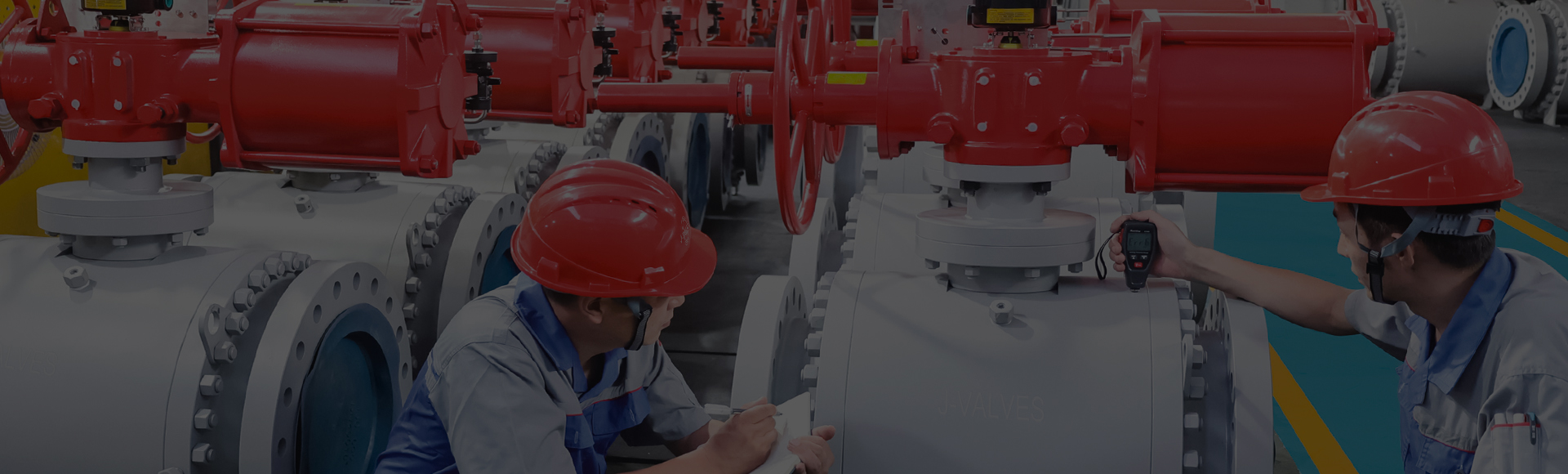
CHINA J-VALVES Offers Various High-quality I ndustrial Ball Valves
J-VALVES, a distinguished professional ball valve manufacturer rooted in China, takes pride in its extensive product portfolio. Our offerings span a wide range, including trunnion-mounted ball valves, floating ball valves, high-temperature ball valves, high-pressure ball valves, metal-sealed ball valves, ultra-low temperature ball valves, DBB ball valves, Three-way And Four-way Ball Valve, and fully welded ball valves. Each product is a testament to our commitment to precision engineering and reliable performance. Meticulously crafted, they are designed to not only meet but exceed the most stringent industrial demands, ensuring stable operation even under extreme conditions. This enables us to provide our clients with high-value services and makes our valves widely sought-after in industries.
Product Category
Contact Us


Pressure Class ASME Class 150 to 2500 / PN20 to PN420
Service Temperature -50°C to -196°C
Body Material CF8M, CF3M, F316, F304, A350 LF2
Ball F316 / CF8M, hard chrome or ENP plated
Seat PCTFE, PEEK, or metal seated
Stem F316 or 17-4PH, extended for cryogenic service
Packing Flexible graphite
End Connection Flanged RF/RTJ, butt weld, socket weld
Design Standard API 6D, ASME B16.34, ISO 28921-1
Cryogenic Test BS 6364 low temperature test, API 598 shell and seat
Fire Safe API 607 available
Operation Lever, gear, pneumatic or electric
-
DQ47F
-
J-VALVES
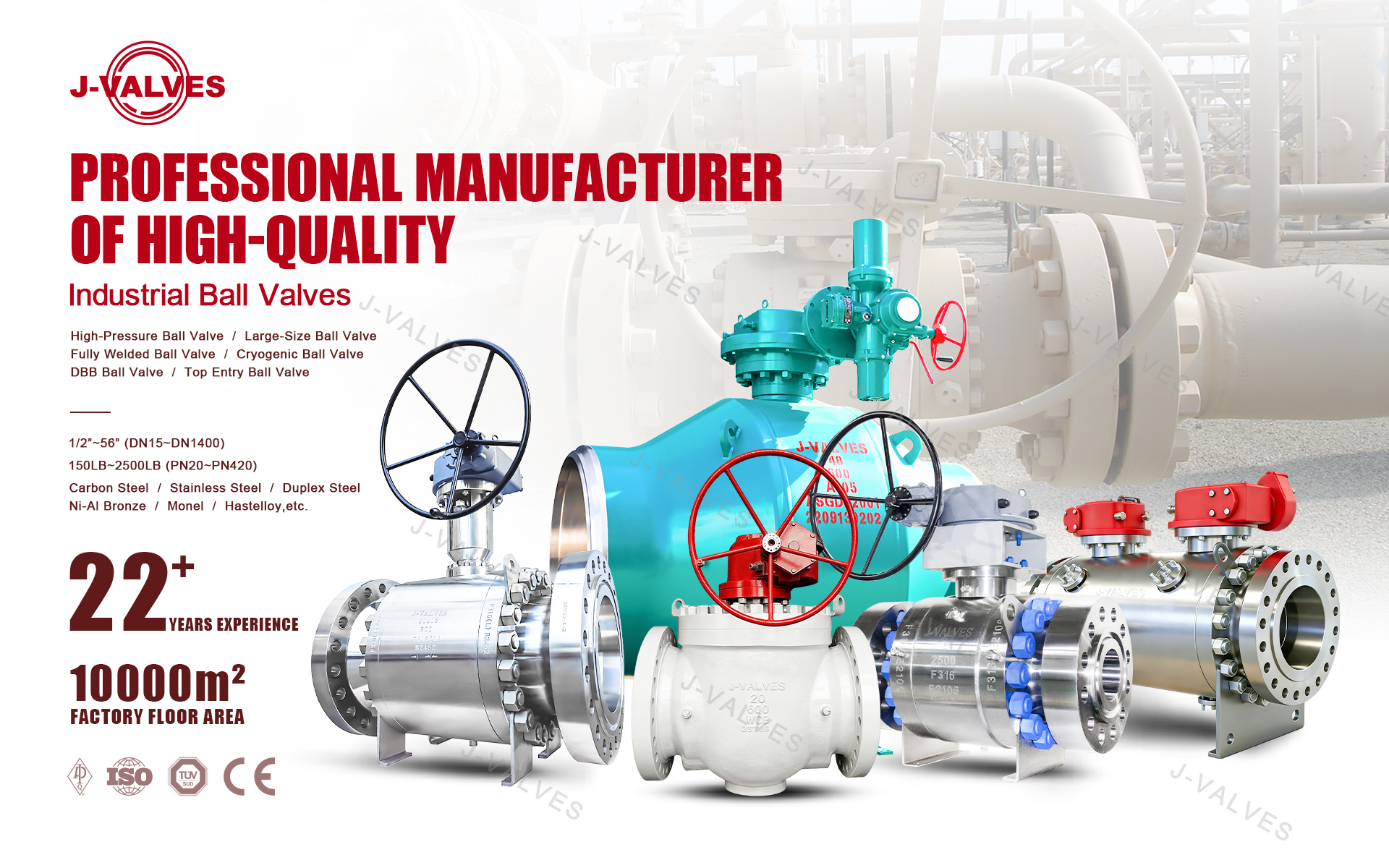
A low temperature ball valve is a quarter-turn isolation valve qualified for -29°C to -50°C service, built from impact-tested A350 LF2 or A352 LCC, with a PTFE-based or PEEK seat, low temperature bolting, and Charpy records for every heat used. Below -50°C the duty becomes cryogenic and changes design.
J-VALVES builds this range from 1/2 to 56 inch in ASME Class 150 to 900 in Wenzhou, Zhejiang. Buyers are LPG terminal contractors, refrigeration packagers and cold-climate pipeline operators who need a carbon steel valve that holds its certificate at -46°C.

What Counts as Low Temperature Service
Two code rules meet inside this band. ASME B16.34 carbon steel ratings stop being usable without impact testing at -29°C, and BS 6364 with ISO 28921-1 begin at -50°C. Between them a low temperature ball valve is still a carbon steel valve with a soft seat, but every pressure-boundary part carries a recorded toughness test.
ASME B31.3 settles the exemption. Figure 323.2.2A holds four curves and carbon steel sits on Curve D: enter with nominal wall thickness and read the lowest temperature at which impact testing is still waived. At 25 mm that line is roughly -29°C; at 6 mm it is roughly -46°C. Thick sections need the test sooner because they hold more restraint at a crack tip.
Three consequences follow. An 8 inch Class 300 body has a wall thick enough that -46°C falls outside the waiver, while the same grade in 2 inch may stay inside it. And a purchase order that says impact tested without a temperature has said nothing.
Band | Design minimum | Impact test | Seat | Bonnet | Test basis |
|---|---|---|---|---|---|
Standard carbon steel | -29°C and above | Not required by B16.34 | PTFE, RPTFE | Standard | API 598 |
Low temperature, this page | -29°C to -50°C | Charpy at or below design minimum | RPTFE, TFM, PEEK | Standard, extended if insulated | API 598 plus impact records |
Cryogenic, separate page | -50°C to -196°C | Charpy plus lateral expansion | PCTFE, spring loaded | Extended, sized to insulation | BS 6364, ISO 28921-1 |
What does not change is more than buyers expect: the seat stays soft, spring loading is not used, and the bonnet stays standard unless the line is insulated. What changes is fracture toughness and the paperwork behind it.
The -46°C Line and Why It Is a Hard Number
The figure comes from the material specification, not from thermodynamics. ASTM A350 requires a Charpy test on LF2 at -46°C and A352 asks the same of LCC: an average of 20 J over three specimens, no single value below 16 J, and 0.38 mm lateral expansion. A heat that misses any of the three is not LF2.
Carbon steel is body-centred cubic, and dislocation mobility in that lattice falls steeply as temperature drops. At some point yield stress rises above cleavage stress, the steel stops yielding before it breaks, and Charpy energy drops from a shelf of 100 J to single figures across 30 to 50 K. Austenitic stainless is face-centred cubic and has no such cliff, which is why CF8M carries -196°C.
-46°C is a qualification temperature, not a service limit. A low temperature ball valve does not fail at -47°C; the certificate stops covering it and the purchaser carries the risk. Margin is handled by setting the design minimum 5 to 10 K below the coldest expected metal temperature, and by asking whether the process chills itself: propane at -42°C that blows down to atmosphere pulls the body 20 to 30 K colder through Joule-Thomson cooling.
Body Materials: LF2, LCC, CF8M and When Each Applies
Four grades cover almost every low temperature ball valve enquiry, and the choice between the two carbon steels is made by casting route and size rather than by metallurgy.
Grade | Specification | Minimum service temperature | Minimum yield | Impact requirement | Typical use |
|---|---|---|---|---|---|
A350 LF2 | ASTM A350, forged | -46°C | 250 MPa | 3 Charpy at -46°C, 20 J average, 0.38 mm | Forged bodies 1/2 to 12 inch, Class 300 to 900 |
A352 LCC | ASTM A352, cast | -46°C | 275 MPa | 3 Charpy at -46°C, 20 J average, 0.38 mm | Cast bodies 14 to 36 inch, Class 150 to 600 |
A352 LCB | ASTM A352, cast | -46°C | 240 MPa | As LCC | Cost-driven Class 150 and 300 bodies |
A352 LC1 | ASTM A352, cast | -59°C | 240 MPa | 3 Charpy at -59°C | Design minimum below -46°C |
A351 CF8M | ASTM A351, cast | -196°C | 205 MPa | Lateral expansion at design temperature | Wet CO2, stainless piping |
A182 F316 | ASTM A182, forged | -196°C | 205 MPa | As CF8M | Forged stainless bodies, Class 600 and above |
LF2 and LCC share the -46°C qualification, so the split is commercial. A forging is worked from a bloom, has no pattern cost and is economic to about 12 inch; above that, billet weight and machining stock make a casting cheaper. LCC also yields 275 MPa against 250 MPa.
CF8M is not the default and should not be sold as one. It costs 1.6 to 2.2 times an LF2 body, machines more slowly and brings galling risk. It earns its place when the fluid is wet CO2, when the pipe is stainless and a carbon body would create a galvanic couple, or when the specification demands it. If the design minimum lands between -46°C and -60°C, the honest answer is A352 LC1 rather than LF2 offered on the strength of one good Charpy result.
Seat and Seal Selection Between -29°C and -50°C
PTFE still works in this band, and that is the difference from the -50°C design: the seat is not spring loaded, the pocket is the standard pattern, and the seal is proved by the ordinary seat test.
Seat material | Practical lower limit | Compression set at -46°C | Cold flow | Use in this band |
|---|---|---|---|---|
Virgin PTFE | -29°C | High, 8 to 12 percent after 24 h | High above Class 300 | Class 150 and 300, low cycle count |
RPTFE, 15% glass | -40°C | Moderate, 5 to 8 percent | Moderate | Standard choice to -40°C |
TFM modified PTFE | -50°C | Low, 3 to 5 percent | Low | Preferred to -46°C on cycling duty |
PCTFE | -196°C | Low | Very low | When the spec asks, higher torque |
PEEK | -60°C | Very low | Very low | Class 900 and abrasive trace, 1.4 times PTFE torque |
Stellite faced metal | Below -100°C | Not applicable | Not applicable | Fire case or solids, leak rate agreed |
The arithmetic explains why a plain seat survives at -46°C. PTFE moves about seven times as much as steel, so interference changes with temperature. Over 66 K the differential is about 0.68 percent, roughly 0.04 mm on a 6 mm seat section, comfortably inside the squeeze of a standard seat. Over 182 K it reaches 1.9 percent, or 0.11 mm, which exceeds it.
Spring loading is still specified here for three reasons, none of them temperature: Class 900 seat loads are high enough that relaxation shows as a leak rate change, duties cycling more than about 50 times a year take cumulative set, and PEEK recovers less than PTFE even at -40°C.
Packing follows a different rule. Flexible graphite is the default and is required where fire survival or ISO 15848-1 tightness is specified. PTFE packing is acceptable to -40°C only if the gland stays above freezing, which on an insulated line means an extension; a cold gland grows ice in the packing and scores the stem.
Bolting and the Body Joint
A320 L7 covers the bolting on a low temperature ball valve with room to spare. The grade is impact tested at -101°C at 27 J average, so a -46°C duty uses less than half its qualified range. A320 L7M suits -196°C and is not needed here. A193 B7 looks identical on a drawing but is tested at room temperature and is the wrong fastener below -29°C.
Preload loss on cool-down is smaller than at -100°C but not zero. Bolt and flange contract by about 0.11 percent over 66 K, and because both are steel the differential is small; the loss comes from gasket creep and from the bolt running colder than the insulated flange. Expect 8 to 15 percent of preload to disappear, more with a PTFE-filled gasket.
The gasket decides that number. A 316L spiral wound gasket with flexible graphite filler and an inner ring is standard to Class 600; above that, or under thermal cycling, a ring joint to ASME B16.5 tolerates the flange rotation that cooling produces. PTFE-filled spiral wound and sheet gaskets have no place in a -46°C joint.
Assembly is where the calculation is delivered. Bolts are tightened in a star pattern to a torque taken from a table for that gasket and lubricant, with a calibrated wrench, and the joint cannot be retightened in service because it sits under insulation.
Insulation, Cold Boxes and Stem Extension
At -46°C a stem extension is an access decision, not a thermal one. The packing still works and the gland does not have to be held above freezing. The extension exists because the body of a low temperature ball valve sits under 50 to 150 mm of PIR and the handwheel has to come out of it.
The working rule is insulation thickness plus 100 mm from body centre to gland face. A line with 80 mm of insulation takes a 180 mm extension; a valve in a 200 mm cold box wall takes 300 mm, and the dimension goes on the drawing for approval before machining. Undersizing fouls the cladding, oversizing loads the body joint in bending.
Two details decide whether it works. Stem up is the default, because a downward extension collects condensate and a horizontal one bends the joint. The vapour barrier must be continuous around the stem, or moist air reaches cold metal inside the insulation and the ice stays invisible until the gland is torn.
An uninsulated body at -46°C grows frost within a few hundred millimetres of the flange, and that frost line is the practical check on the detail. Cold boxes and buried lines are where an extension is unavoidable; an indoor line at chest height often needs only a standard bonnet.
Where -46°C Duty Actually Appears
Most low temperature ball valve orders come from six duties, and each has a temperature and a size that repeat often enough to tabulate.
Duty | Metal temperature | Typical size | Class | Note |
|---|---|---|---|---|
LPG and propane storage, transfer | -42°C to -45°C | 2 to 12 inch | 300, 600 | Design for auto-refrigeration on blowdown |
Ammonia refrigeration, cold stores | -33°C to -40°C | 1 to 6 inch | 300 | No copper alloy trim, dry ammonia |
Refrigerated propylene | -45°C to -47°C | 4 to 16 inch | 300, 600 | Trunnion, gear above 8 inch |
CO2 liquefaction and storage | -46°C at 7.5 bar | 2 to 8 inch | 300 | Wet CO2, stainless trim preferred |
Cold climate above-ground piping | -45°C ambient | 1/2 to 24 inch | 150 to 900 | Ambient, not fluid, sets the minimum |
Brine and glycol chillers | -35°C to -40°C | 2 to 10 inch | 150, 300 | Calcium chloride brine, corrosion allowance |
LPG is the largest source. Commercial propane sits near -42°C in a refrigerated tank and the transfer line runs within a few degrees of it. The design minimum should not be set at -42°C, because a blocked outlet drops pressure and the liquid flashes, taking the metal 20 to 30 K colder for a few minutes.
Ammonia is the second. A single-stage plant runs an evaporator at -33°C, a two-stage plant at -40°C, and cold store pipework sits at the same figures. The trap is trim: brass and copper alloys embrittle in ammonia, so a valve with a bronze seat carrier fails while the body is sound.
Propylene and CO2 fill the rest. Refrigerated propylene at -47°C sits two degrees outside the LF2 rating and forces LC1 or stainless, which buyers miss regularly. CO2 at 7.5 bar and -46°C is inside the band, but wet CO2 forms carbonic acid, so a carbon body needs a corrosion allowance and a stainless ball. Ethylene at -103°C and LNG at -162°C belong to the -50°C to -196°C range.

Torque and Actuation at Low Temperature
Break-to-open torque on a low temperature ball valve rises in a way that can be sized for. Grease in the stem bearing thickens, seat and ball contract into slightly more interference, and packing friction climbs as the rings stiffen. The combined factor is commonly 1.5 to 2 times ambient, and up to 2.5 times on a Class 900 valve with a PEEK seat.
Size and class | Torque at 20°C | Torque at -46°C | Factor | Actuator output selected |
|---|---|---|---|---|
4 inch Class 150 | 110 Nm | 190 Nm | 1.7 | 280 Nm |
6 inch Class 300 | 320 Nm | 560 Nm | 1.75 | 900 Nm |
8 inch Class 600 | 780 Nm | 1350 Nm | 1.73 | 2000 Nm |
10 inch Class 900, PEEK seat | 1600 Nm | 3900 Nm | 2.4 | 5600 Nm |
Take the measured cold torque where a cold test has run, or twice the ambient figure where it has not, then apply 1.5 on the actuator output. A double-acting unit is sized on that number; a spring-return unit must deliver it on the air-failure stroke too, and the spring side is usually the limit.
Accessories matter as much. Instrument air at -40°C must be dried below the coldest surface temperature or it freezes in the tubing, and the solenoid with its limit switches goes in a heated enclosure. Actuator and stem bearing grease is a low-temperature synthetic.

Testing to API 598 plus Impact Records
The pressure test on a low temperature ball valve is ordinary. API 598 requires a shell test at 1.5 times the 38°C rating and a seat test at 1.1 times, with leakage read against an ISO 5208 rate: rate A for soft seated valves, rate B where the order allows it. None of that changes at -46°C, and it is done at ambient because water is the practical medium.
What changes is drying. Water left in the cavity freezes in the plant, expands by about nine percent and jams the ball or cracks the body at the seat pocket. After the hydrostatic test the cavity is drained, blown through with dry air or nitrogen, and the ends capped with desiccant.
The impact record is what separates this page from an ambient order. Three Charpy specimens per heat and heat-treatment lot are tested at or below the design minimum, and the individual values appear on an EN 10204 3.1 certificate with heat numbers traceable to body, closure and ball. A 3.1 certificate with chemistry and tensile results but no Charpy values is not evidence of low temperature suitability.
A full cold test is not normally required at -46°C. BS 6364 and ISO 28921-1 are written around -50°C and below, where the seat is unproven and only a valve that held helium at temperature counts as proof. At -46°C the design is a standard valve with qualified steel, so ambient shell and seat tests plus certified Charpy results are the accepted evidence. If a project asks for the cold test, it is a dry ice and methanol bath near -72°C, with a helium seat test and cold torque recorded.
Optional evidence is quoted separately: API 607 fire test, ISO 15848-1 emission class, NACE MR0175 hardness control, and a dimensional report for stem length. Delivery is 4 to 8 weeks.
What to Send with an Enquiry
Nine items resolve almost every quotation here. Missing any of the first three usually produces a valve that is correct on paper and wrong in the plant.
Size, ASME class and end connection, with the face-to-face dimension to B16.10 or the project standard.
Design minimum temperature as metal temperature, and whether it comes from the fluid, the ambient, or a blowdown case.
Fluid and concentration, including whether auto-refrigeration can occur and how cold the metal goes during it.
Body material: A350 LF2, A352 LCC, A352 LC1 or stainless, and whether the piping is carbon or stainless.
Seat material preference, and whether the duty cycles more than about 50 times a year.
Insulation thickness and whether the valve sits in a cold box, a pit or an exposed rack, which fixes the stem length.
Actuation: lever, gear, pneumatic or electric, with air supply pressure and whether spring return is required.
Test and certification: Charpy records, EN 10204 3.1, API 607, ISO 15848-1, NACE MR0175, cold test if wanted.
Quantity, required delivery date, and any marking or painting specification.
A line class sheet answers all nine at once and cuts the review to a day. An enquiry that says only low temperature ball valve, 6 inch, Class 300 will get a question back, because the gap between an LF2 and an LCC body, or a 180 and a 300 mm stem, decides whether the valve fits.
Low Temperature Ball Valve FAQ
What is the difference between a low temperature and a cryogenic ball valve?
Low temperature covers about -29°C to -50°C, where the valve is a standard carbon steel design with impact-tested material and a PTFE-based or PEEK seat. Cryogenic covers -50°C and below, where the seat becomes PCTFE and is spring loaded, the stem is extended to protect the packing, and the valve is proved by a cold test to BS 6364 rather than by an ambient test plus Charpy records.
Can WCB be used at -46°C?
No. ASTM A216 WCB is not impact tested as a grade and has no qualified minimum below -29°C. At -46°C its Charpy energy is unpredictable from heat to heat and can fall into single figures. A352 LCC or A350 LF2 is specified instead: same carbon steel family, but with a mandatory Charpy test at -46°C and 20 J average as the acceptance criterion.
Why is an impact test mandatory in this temperature range?
Carbon steel has a ductile-to-brittle transition. As temperature falls, yield strength rises faster than cleavage strength, and the fracture mode changes from yielding to sudden brittle failure with almost no energy absorbed. The Charpy test measures the energy left at the design temperature. Below the ASME B31.3 Curve D waiver line, which depends on wall thickness, three specimens per heat are required.
Is PTFE still acceptable at -46°C?
Yes, with the right grade. Virgin PTFE is limited to -29°C because it takes a compression set and does not recover through a thermal cycle. RPTFE with glass filler is used to -40°C, and TFM modified PTFE holds to about -50°C with lower set. The seat stays unspring here because the contraction differential is only about 0.04 mm on a 6 mm seat section.
When does it need an extended stem?
When the body is insulated deeply enough that the handle would sit inside the cladding, when the valve penetrates a cold box wall, or when it is buried. The working rule is insulation thickness plus 100 mm from body centre to gland face. At -46°C the extension is for access and for keeping the gland out of the cold zone; the packing does not need to be held above freezing.
Should I choose an LF2 or an LCC body?
Both are qualified to -46°C with the same Charpy acceptance. LF2 is a forging: no pattern cost, denser section, economic from 1/2 to about 12 inch. LCC is a casting with a slightly higher yield at 275 MPa and becomes cheaper above roughly 14 inch. Below -46°C, neither is correct and A352 LC1 or a stainless body takes over.
Hot Products


News
Ball Valves in Geothermal Brine: Silica Scale, Chloride Cracking And The Cooling Trap
Why geothermal brine destroys ball valves: retrograde silica scale, calcite at the flash point, chloride cracking above 60 C and the 250 C seat limit.
Read More
Ball Valve Face To Face Dimensions: Why A Correctly Ordered Replacement Still Does Not Fit
A 6 inch Class 150 ball valve can be 267 or 305 mm face to face and both are compliant. How B16.10, EN 558 and flange drilling decide whether it fits.
Read More
Ball Valve Stem Key And Keyway: What Gives Way First, And What The Handle Cannot Tell You
Between the handle and the ball there are four fits. Which one shears, which one cracks, and how a few degrees of lost motion hides a valve that never seated.
Read More
Ball Valve Datasheet: Six Blocks That Decide Whether Two Quotes Are Comparable
A ball valve datasheet only works when six blocks are fixed: pressure basis, bore, temperature ceiling, test, end connection, operator. How each is written.
Read More