

CHINA J-VALVES Offers Various High-quality I ndustrial Ball Valves
J-VALVES, a distinguished professional ball valve manufacturer rooted in China, takes pride in its extensive product portfolio. Our offerings span a wide range, including trunnion-mounted ball valves, floating ball valves, high-temperature ball valves, high-pressure ball valves, metal-sealed ball valves, ultra-low temperature ball valves, DBB ball valves, Three-way And Four-way Ball Valve, and fully welded ball valves. Each product is a testament to our commitment to precision engineering and reliable performance. Meticulously crafted, they are designed to not only meet but exceed the most stringent industrial demands, ensuring stable operation even under extreme conditions. This enables us to provide our clients with high-value services and makes our valves widely sought-after in industries.
Product Category
Contact Us


Flow Bore: About 152 mm (6 inch)
Pressure Class: ASME Class 150 / PN20
Temperature Range: -29 to 425 degrees C
Body Materia:l ASTM A105 forged carbon steel, A105N optional
Ball: A105 with ENP, F304 or F316
Stem: F6a, F304 or F316
Seat: RPTFE, Devlon, PPL, or Stellite faced metal
Bearing: PTFE lined stainless or self-lubricating RPTFE
End Connection: Flanged RF or RTJ to ASME B16.5 Class 150, 8 inch pattern
Face to Face: ASME B16.10, 8 inch Class 150 short pattern
Design Standard: API 6D, API 608, ASME B16.34
Test Standard: API 598, API 6D
Fire Safe: API 607 / ISO 10497
Operation: Lever, worm gear, pneumatic, electric
-
Q347F
-
J-VALVES
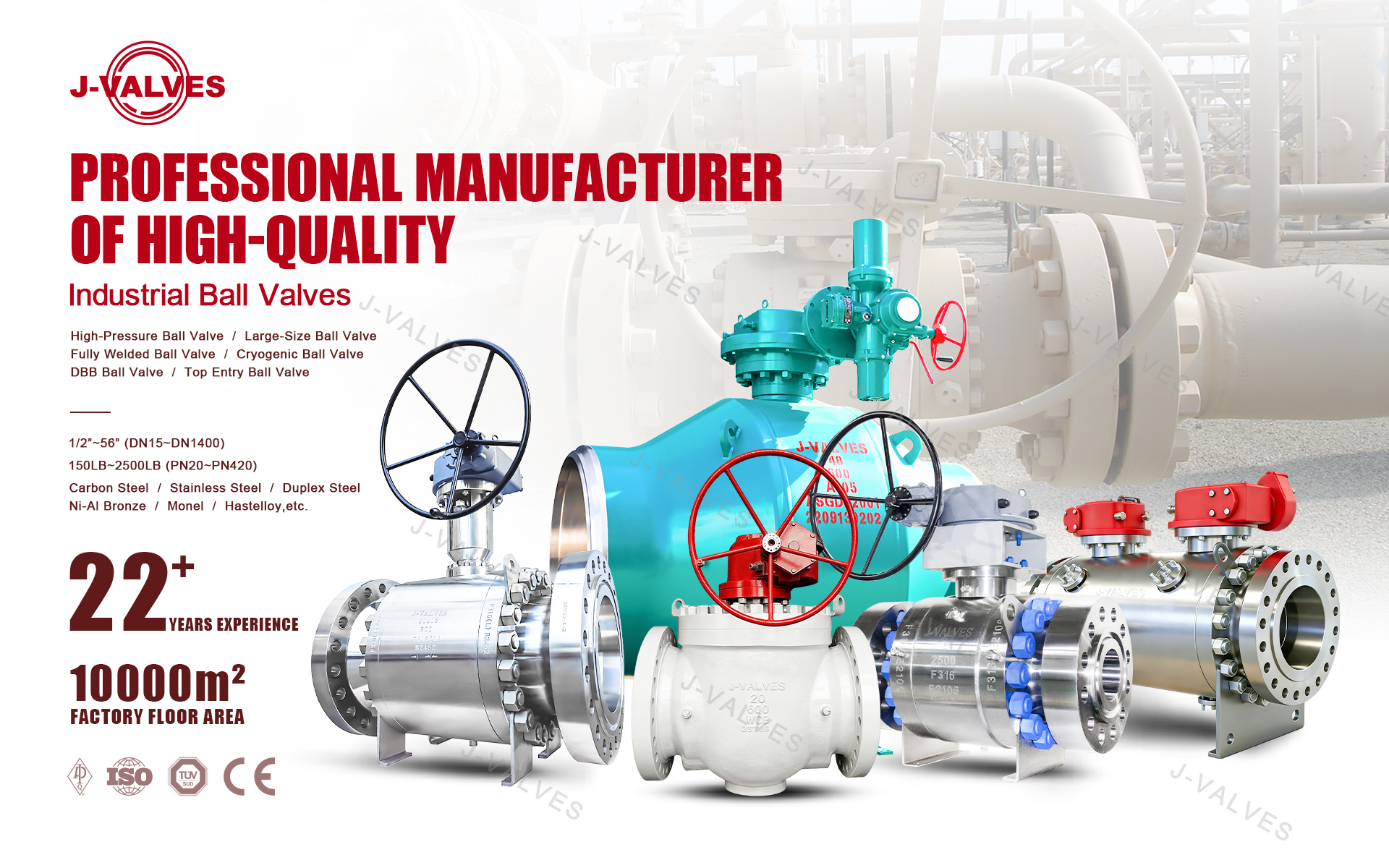
An 8x6 reduced bore ball valve has an 8 inch body and an 8 inch flange pattern, but a 6 inch flow bore. The number before the x is the nominal valve size that fixes the flange, the face-to-face dimension and the pressure rating; the number after the x is the bore that the medium actually passes through. It is a way of putting an 8 inch valve into an 8 inch flanged line while keeping the flow area matched to a 6 inch pipe run.
The configuration is common, useful, and widely misunderstood, because almost every catalogue lists it without explaining which dimension governs what. This page answers the practical questions directly: why the body is oversized, when a reduced bore is the right purchase and when it is a false economy, how the face-to-face and flange dimensions are determined, what the pressure drop penalty actually is, and why a trunnion construction is used at a class where a floating ball would also work. J-VALVES forges these valves in A105 from 2 inch upward and builds this specific size at its works in Wenzhou, Zhejiang.
What the Two Numbers Mean, and Which One Governs What
The first number governs everything that touches the pipe. The second number governs everything that touches the flow.
Item | Governed by | Value for this valve |
|---|---|---|
Flange size and bolt circle | 8 inch | ASME B16.5 Class 150, 8 inch, 8 bolts |
Face-to-face length | 8 inch | ASME B16.10, 8 inch Class 150 short pattern |
Pressure rating | 8 inch | Class 150, about 19.6 bar at 38 degrees C |
Body and ball diameter | 8 inch | Body sized to contain the trunnion and an 8 inch ball seat pocket |
Flow bore | 6 inch | About 152 mm, matching a 6 inch nominal pipe |
Flow coefficient and pressure drop | 6 inch | Essentially the same as a 6 inch full bore valve |
Pigging and cleaning | 6 inch | Passes a 6 inch pig, not an 8 inch pig |
Weight and cost | Between the two | Heavier than a 6 inch valve, lighter and cheaper than an 8 inch full bore |
This is the source of most ordering errors. A buyer who specifies "8 inch ball valve" and receives an 8x6 has received something that bolts up correctly but will not pass an 8 inch pig. A buyer who specifies "6 inch ball valve" and needs to mate to an existing 8 inch flange has received something that cannot be installed. The only unambiguous way to write the requirement is with both numbers, plus an explicit statement of whether the bore is full or reduced.
Why Bother With a Reduced Bore
Three reasons, in order of how often they apply.
The first is that the line is 6 inch and the flange standard is 8 inch. This happens at battery limits where a 6 inch process line terminates on an 8 inch vessel nozzle, at pump suction where the suction line is one size up from the discharge, and in revamps where the valve is being replaced into an existing 8 inch flange pair without changing the pipe. An 8x6 valve solves the geometry, and a 6 inch valve plus two concentric reducers solves the same geometry with two extra welds, two extra leak paths and 300 mm more length.
The second is cost and weight. A reduced bore valve uses a smaller ball, a smaller seat, a shorter body and less material. The saving is real: for an 8x6 against an 8 inch full bore, the weight falls by roughly a quarter to a third and the price by a similar proportion, because the ball and seat are the expensive parts and both shrink with the bore. On a project with forty of them, that is a line item.
The third is torque. A smaller ball means a smaller seat circumference means lower friction torque, so a reduced bore valve can often be operated with a smaller gear operator or a smaller actuator. At 8x6 Class 150 the difference is not dramatic, but on larger sizes and higher classes it decides whether a pneumatic actuator is affordable.
What it costs is flow area. The 6 inch bore in an 8 inch body gives a flow area of about 0.0182 square metres against 0.0324 for full bore, so the velocity through the valve is about 1.8 times the velocity in an 8 inch line at the same flow rate. If the line was sized for a low velocity, that is acceptable. If the line is already near its erosion or noise limit, the reduced bore valve becomes the constraint.
The Real Pressure Drop, Calculated
The pressure drop penalty of a reduced bore valve is smaller than most buyers assume, and it is worth doing the arithmetic once rather than arguing about it.
A full bore ball valve is close to a straight pipe when open, with a resistance coefficient of about 0.05 to 0.1 based on the bore velocity. A reduced bore valve has the same open-ball loss plus the loss of the contraction from 8 inch to 6 inch and the expansion back. For a tapered transition the contraction coefficient is about 0.05 to 0.1; for a sudden step it is about 0.5 times the quantity one minus the area ratio squared, which for an 8 to 6 reduction is roughly 0.22 based on the downstream velocity.
Put water through it at 2 m/s in the 6 inch bore. The dynamic pressure is about 2000 pascals. With a total coefficient of 0.15, the loss is about 300 pascals, which is 0.003 bar. Even with a poor, square-edged transition and a coefficient of 0.3, the loss is under 0.01 bar. Against a Class 150 line running at 10 bar, that is not a design issue. It becomes one only when the fluid is a gas near its capacity limit, when the line is close to cavitation, or when the valve is used for control rather than isolation.
Duty | Is reduced bore acceptable | Reason |
|---|---|---|
Water, isolation, velocity under 3 m/s | Yes | Loss is a few hundred pascals, negligible against line pressure |
Water, velocity above 4 m/s | With care | The step becomes an erosion site and a noise source |
Gas or steam, near capacity | Usually no | Compressible flow amplifies the loss and can approach choked conditions |
Slurry or solids | No | The step traps solids and the reduced bore is a wear point |
Pigging required | No | An 8 inch pig will not pass a 6 inch bore |
High cycling, clean fluid | Yes | Lower torque and a smaller seat give longer seat life |
A105 Forged Body: What the Forging Buys
ASTM A105 is a carbon steel forging grade with 0.35 percent maximum carbon, 0.60 to 1.05 percent manganese, minimum 485 MPa tensile and 250 MPa yield, and a service range of -29 to 425 degrees C. It is the forged counterpart of A216 WCB, and the reason to use it is the forging itself rather than the chemistry.
A forging is worked hot under a press or hammer, which closes internal porosity and aligns the grain with the shape of the part. The result is a body with no shrinkage cavity, no gas porosity and no cold shut, in a wall section that is thinner than a casting of the same rating would need. At 8 inch Class 150 the wall is not demanding, but the seat pocket and the trunnion bore are, because both are regions where a hidden defect would only appear after the valve has been in service for a year.
Property | A105 forging | A216 WCB casting |
|---|---|---|
Internal soundness | No shrinkage or gas porosity by the nature of the process | Requires radiography to verify |
Grain structure | Continuous flow lines following the shape | Equiaxed, with possible segregation at heavy sections |
Wall thickness for the same rating | Thinner, so the valve is lighter | Thicker to guarantee soundness |
Repair | Not permitted in the same way as castings | Weld repair permitted under A216 conditions |
Cost at 8 inch | Higher per kilogram, but the part is lighter | Lower per kilogram |
Typical use | Small and medium bore, high integrity, forged valve bodies | Large bore, complex shapes |
A105N is the normalised version, with a finer grain and better notch toughness. For an 8 inch Class 150 valve the difference is not usually decisive, but on a thick section, or where the specification calls for impact testing, A105N is the safer purchase. Neither grade should be used below -29 degrees C; for colder service the correct choice is A350 LF2, which is impact tested at -46 degrees C as part of its specification.
Class 150, 8 Inch: Is Trunnion Overkill?
This is the honest question, and the honest answer is that a floating ball valve would also work here.
The pressure force at Class 150 on an 8 inch bore is about 64 kN, roughly 6.5 tonnes, calculated from a bore area of 0.0324 square metres at 19.6 bar. A well made floating ball valve of this size can carry that, and floating 8 inch Class 150 valves are sold in large numbers for water service. So the trunnion is not required by the physics.
What the trunnion buys is everything else. The seat is spring loaded, so it seals at low pressure as well as high, which matters on a line that is drained and refilled. The ball is carried on bearings, so the operating torque stays low and predictable, which matters when the valve is gear operated or actuated and has to work after a year of standing. The two independent seats make double block and bleed possible, so the cavity can be vented and both seats verified without draining the line. There is a cavity drain and an emergency seat injection port, so a leaking seat can be temporarily sealed rather than replaced. And the body is a two piece bolted construction that can be opened for seat replacement without cutting pipe.
Requirement | Floating at 8 inch Class 150 | Trunnion at 8 inch Class 150 |
|---|---|---|
Seal at low pressure | Depends on line pressure, weak when nearly empty | Spring preload, seals at any pressure |
Operating torque | Rises steeply with pressure and with time closed | Lower and more predictable |
Double block and bleed | Not a true independent double barrier | Standard |
Emergency seat injection | Rarely available | Standard, or available as an option |
Cavity drain | Usually absent | Standard |
Seat replacement in line | Body must come out | Possible through the body closure |
Price | Lower | Higher by roughly 30 to 50 percent |
So the trunnion at this size is a reliability and maintainability choice rather than a strength requirement. It is worth the premium on a valve that must not fail, that will be actuated, or that sits in a line where isolation is a safety function. It is not worth the premium on a valve in a clean water line that is operated twice a year by hand.
Ball, Seat, Stem and Bearing Selection
Component | Options for this valve | Selection logic |
|---|---|---|
Ball | A105 with ENP, F304, F316 | ENP on carbon steel is standard and adequate; stainless for corrosive or hygienic duty |
Ball plating | Electroless nickel, 25 to 75 micrometres | Thickness and adhesion matter more than the substrate; ask for both |
Stem | F6a, F304, F316 | F6a is the 410 martensitic type, hard and cheap; F316 for corrosive duty |
Seat | RPTFE, Devlon, PPL, Stellite faced metal | RPTFE to about 180 degrees C; PPL and PEEK higher; metal for abrasion or fire survival |
Seat arrangement | SPE, DPE, or combination | SPE unless a positive double barrier is required |
Bearing | PTFE lined stainless, self-lubricating RPTFE | Self-lubricating is preferred where the valve stands closed for long periods |
Packing | PTFE V-ring, flexible graphite | Graphite where fire safe or high temperature applies |
Bolting | B7, B7M, or 316 | B7M for sour service and hardness control |
The seat is where most of the service life is decided, and the choice is a temperature and cleanliness decision rather than a preference. RPTFE is the default up to about 180 degrees C in clean service. Devlon and PPL take higher temperatures with a small torque penalty. A Stellite faced metal seat is correct for abrasive media, for fire survival beyond what a soft seat can offer, and for steam, but it will not meet the same leakage class as a soft seat and the specification should say which class is required.
Installation and the Two Dimensions That Get Confused
Two dimensions cause most of the site problems, and both come from the two-number naming.
The face-to-face length is the 8 inch Class 150 dimension, not the 6 inch one. A reduced bore 8x6 valve is 8 inch long, because the body is an 8 inch body. If a contractor orders a replacement on the assumption that it is 6 inch long, the gap in the line will be wrong and the pipe will have to be cut. This is worth stating on the purchase order, not just in the catalogue.
The flange is also the 8 inch pattern: 8 inch Class 150, with the 8 inch bolt circle and bolt count. A 6 inch Class 150 flange has a different bolt circle and will not mate. This is the reason an 8x6 valve exists at all, and it is also the reason a buyer who only needs the flow area should consider whether the money would be better spent on a 6 inch valve and two reducers.
Two further points are worth mentioning. Support the valve independently if it is horizontally installed at this size, because 100 kg hanging between two flanges puts a bending moment into a body that was not designed for it. And if the valve is insulated, the insulation has to run over the body and up to the gland, with the gland left accessible, because a buried gland turns a five minute packing adjustment into a scaffold job.

Testing and Documentation
Test | Basis for this valve | Acceptance |
|---|---|---|
Shell | 1.5 times the 38 degrees C rating, about 29.4 bar | No leak, no permanent deformation |
Seat, both directions | 1.1 times the rating, about 21.6 bar | ISO 5208 rate A or B as specified |
Cavity, if DBB | At seat test pressure | No leakage past either seat |
Torque | At the specified differential | Within the declared value, for actuator sizing |
Dimensional | Face-to-face, flange, bore diameter | Dimensional report with serial number, bore stated explicitly |
Material | EN 10204 3.1 for body, ball, stem | Heat numbers tied to the serial |
Ask for the bore diameter on the dimensional report, not just the nominal size. The whole point of this valve is that the two numbers differ, and a report that only says "8 inch" leaves the one property that matters undocumented.

How to Specify an 8x6 Reduced Bore Ball Valve
Write both numbers explicitly: 8x6, body 8 inch, bore 6 inch, reduced bore.
Class 150, with the design temperature.
Body material by standard: ASTM A105 or A105N, forged.
Construction: trunnion mounted, two piece, side entry.
Face-to-face to ASME B16.10 for the 8 inch size.
Flange to ASME B16.5 Class 150, 8 inch pattern, RF or RTJ.
Ball material and plating thickness.
Stem material, seat material, and seat arrangement (SPE or DPE).
Whether double block and bleed and cavity drain are required.
Operation: lever, gear, or actuator, with the torque basis.
Fire safe to API 607, with the certificate covering this size and class.
Dimensional report stating the actual bore diameter.
Delivery is typically 4 to 6 weeks for standard A105 in this size. Drawings are issued for approval before machining, and the bore diameter is confirmed on the drawing because it is the dimension that cannot be corrected at site.
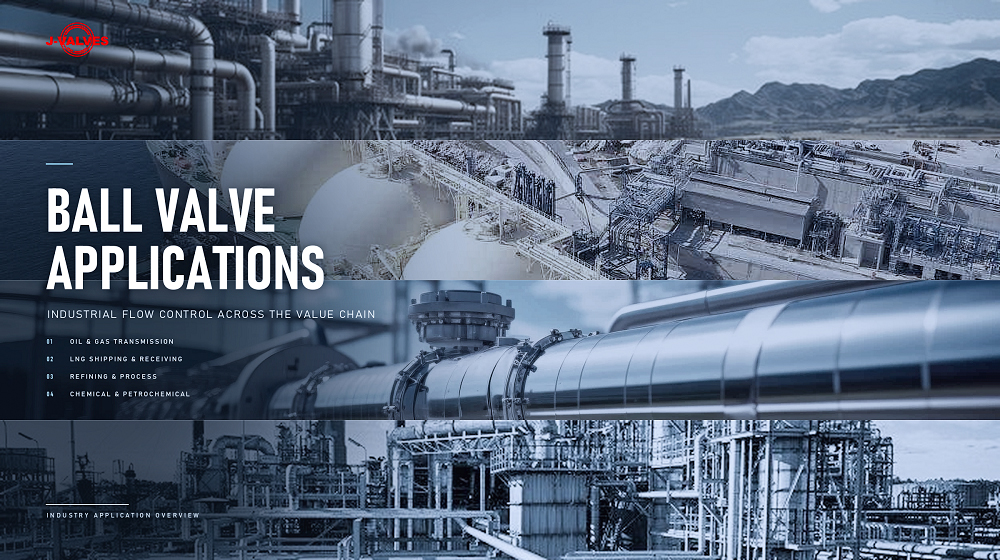
8x6 Reduced Bore Ball Valve FAQ
What does 8x6 mean on a ball valve?
The first number is the nominal valve size, which sets the flange pattern, the face-to-face dimension and the pressure rating. The second is the flow bore. An 8x6 valve has an 8 inch body and 8 inch flanges with a 6 inch bore, so it installs in an 8 inch flanged line but flows like a 6 inch valve.
Is the face-to-face dimension 8 inch or 6 inch?
8 inch. The body is an 8 inch body, so the dimension comes from the 8 inch row of ASME B16.10 for the applicable class. Ordering on the assumption that it is 6 inch long leaves a gap in the line that has to be corrected by cutting pipe.
How much pressure drop does a reduced bore add?
Less than most people expect. For water at 2 m/s, the combined loss of the open ball plus the contraction and expansion is in the region of 300 pascals, about 0.003 bar, with a good tapered transition. It becomes significant only in gas service near capacity, at high velocity, or where solids are present.
Can I pig an 8x6 reduced bore valve?
Not with an 8 inch pig. The bore is 6 inch, so only a 6 inch pig will pass. If the line is pigged, the valve must be full bore at the line size, and a reduced bore valve should not be used at all.
Why is a trunnion used at Class 150 where a floating ball would work?
For reliability rather than strength. The trunnion gives a spring loaded seat that seals at low pressure, lower and more predictable torque, true double block and bleed, a cavity drain, emergency seat injection, and the ability to replace seats through the body closure. The pressure force at this size does not require it, but the maintainability case often does.
What information do you need to quote an 8x6 valve?
Both numbers, class, design temperature, body material and forging standard, construction, face-to-face standard, flange facing, ball and stem material, seat material and arrangement, DBB requirement, operator type and torque basis, fire safe requirement, and the certification package. State the bore explicitly, because 8 inch and 8x6 are different products.
Related Ball Valve Types
Sibling pages cover the large diameter trunnion construction at 14 inch, the long stem variant for buried and insulated lines, the nickel aluminum bronze body for seawater, the jacketed body for media that solidify, and the small bore double block and bleed valve for instrument isolation.
Hot Products


News
Ball Valves in Geothermal Brine: Silica Scale, Chloride Cracking And The Cooling Trap
Why geothermal brine destroys ball valves: retrograde silica scale, calcite at the flash point, chloride cracking above 60 C and the 250 C seat limit.
Read More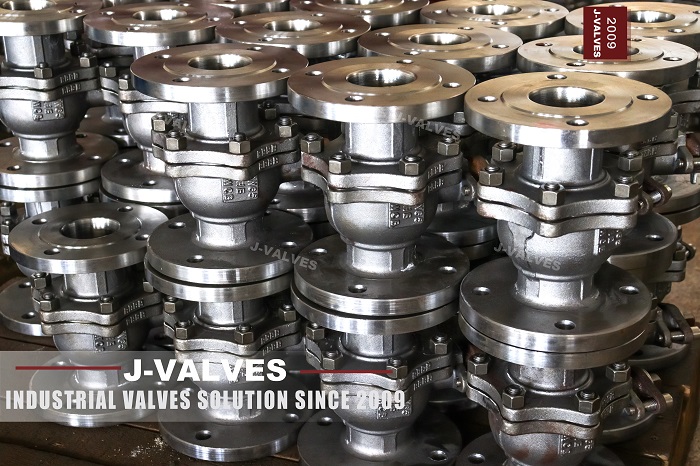
Ball Valve Face To Face Dimensions: Why A Correctly Ordered Replacement Still Does Not Fit
A 6 inch Class 150 ball valve can be 267 or 305 mm face to face and both are compliant. How B16.10, EN 558 and flange drilling decide whether it fits.
Read More
Ball Valve Stem Key And Keyway: What Gives Way First, And What The Handle Cannot Tell You
Between the handle and the ball there are four fits. Which one shears, which one cracks, and how a few degrees of lost motion hides a valve that never seated.
Read More
Ball Valve Datasheet: Six Blocks That Decide Whether Two Quotes Are Comparable
A ball valve datasheet only works when six blocks are fixed: pressure basis, bore, temperature ceiling, test, end connection, operator. How each is written.
Read More