

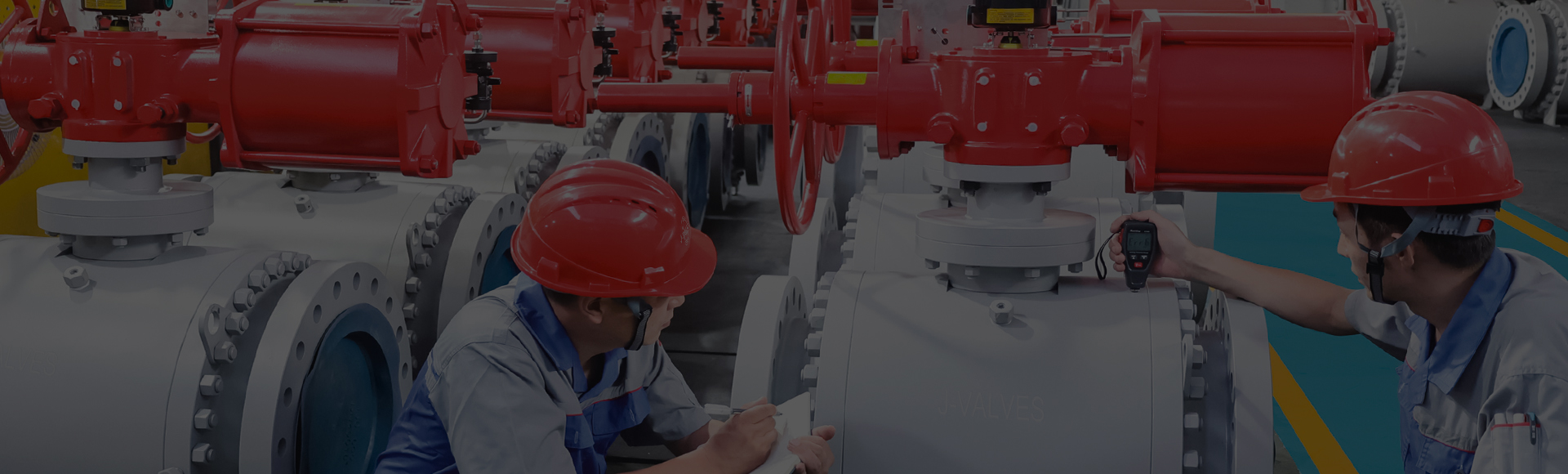
CHINA J-VALVES Offers Various High-quality I ndustrial Ball Valves
J-VALVES, a distinguished professional ball valve manufacturer rooted in China, takes pride in its extensive product portfolio. Our offerings span a wide range, including trunnion-mounted ball valves, floating ball valves, high-temperature ball valves, high-pressure ball valves, metal-sealed ball valves, ultra-low temperature ball valves, DBB ball valves, Three-way And Four-way Ball Valve, and fully welded ball valves. Each product is a testament to our commitment to precision engineering and reliable performance. Meticulously crafted, they are designed to not only meet but exceed the most stringent industrial demands, ensuring stable operation even under extreme conditions. This enables us to provide our clients with high-value services and makes our valves widely sought-after in industries.
Product Category
Contact Us


Pressure Class: 150LB (PN20)
Temperature Range: -29℃ to +425℃
Flow Pattern: L-port (90° diversion) or T-port (splitting / mixing / 180° switching)
Body / Bonnet / Center Section: Cast stainless steel ASTM A351 CF3M (equivalent to 316L)
Ball: CF3M / 316L with hard chrome plating, or CF8M (optional)
Stem: 316L or 316 stainless steel
Seat: PTFE, RPTFE, PPL (reinforced PTFE); PEEK available for hygienic service
Sealing Materials: PTFE / RPTFE / PPL (seat), flexible graphite or PTFE (stem packing)
End Connection: Flanged (RF Raised Face, conforming to ASME B16.5)
Operation: Manual (lever / worm gear), pneumatic, electric, hydraulic (direct mounting with ISO 5211 standard high platform interface)
High Platform Standard: ISO 5211 F07 / F10 / F12, etc. (matched to actuator torque)
Optional Accessories: Solenoid valve, limit switch, positioner, filter regulator, etc.
Design Standards: ASME B16.34, API 608
Testing Standard: API 598
Face-to-Face Dimension: Conforms to ASME B16.10
-
J-VALVES
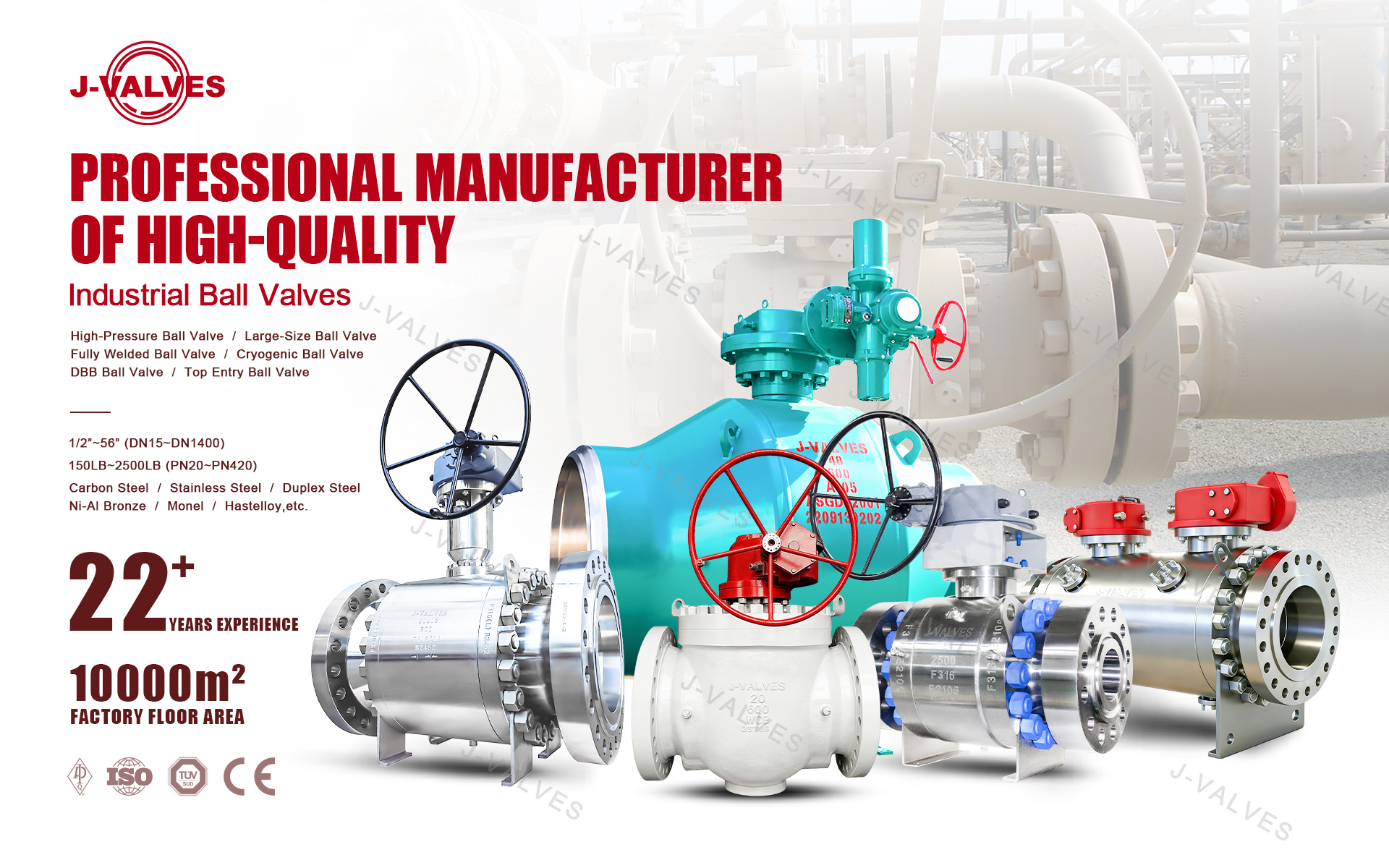
Low-Carbon Stainless Steel Construction:The valve body is made of ASTM A351 CF3M cast stainless steel (equivalent to 316L), with carbon content ≤ 0.03%. It features excellent weldability, low susceptibility to intergranular corrosion, and better pitting and crevice corrosion resistance than 304. It is suitable for chloride-containing, acidic and clean media environments requiring welding.
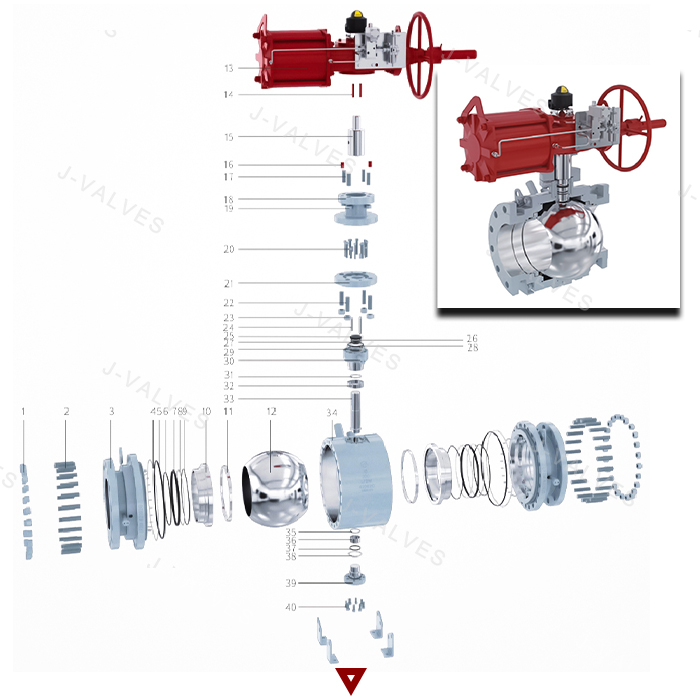
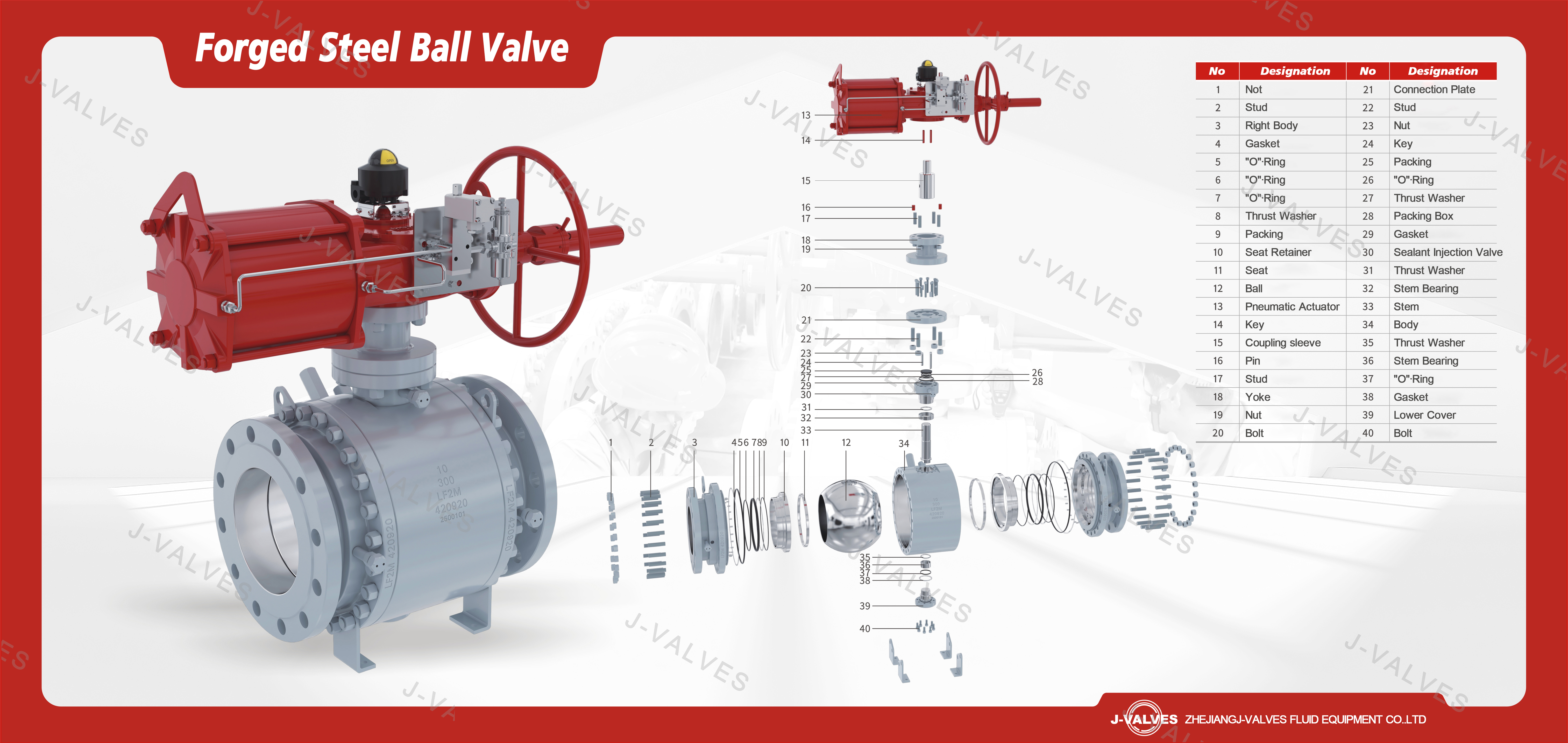
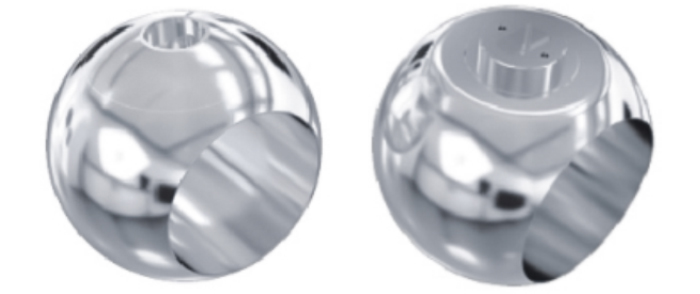
Three-Piece Body Structure:The valve body consists of a left body, a right body and a center body. The center body serves as the chamber for installing the ball and seats, allowing online removal for internal inspection, seat replacement and ball maintenance without detaching the valve from the pipeline, greatly reducing downtime losses.
L-Port:Enables 90° diversion between two pipelines, suitable for flow direction switching.
T-Port:Enables flow splitting, mixing or 180° switching among three pipelines, suitable for media distribution and blending.
High Platform Design:The top of the stem is equipped with a high-platform mounting interface in accordance with ISO 5211 standards, allowing direct mounting of pneumatic, electric, hydraulic actuators and manual worm gears without additional brackets or couplings. It features high transmission accuracy and easy installation, making it particularly suitable for automated control systems.
Flanged Connection:RF (Raised Face) flanged connection conforming to ASME B16.5, Class 150LB (PN20), providing high installation compatibility and stable sealing.
3"150LB CF3M Stainless Steel High Platform Three Way Ball Valve 3D Diagram
2-3 piece body
Full andreduced bore trunnion mounted
Double block and bleed
Single or double piston effect design anti-blow out stem
Anti-static device
Firesafe to AP1-607/6FA/IS0 10497 springloaded seats
Sealant in jection on request NACE MR-01-75
API Licenses:
API6D
API6DSS
API6A-PSL4
Pressure Class:
ASME 150-2500
API 2000-15000
Service Type:
Standard Temperature:-29℃ to 220℃/-20°F to 428°F
Low Temperature:-46℃ to 150℃/-50°F to 302°F
Cryogenic Temperature: -47℃ to -196℃/-52°F to-320°F
Subsea(Shallow &Deep Water)
Underground
High Temperature:Above 220℃/428°F
J-VALVESSPE can supply a range ofseat types and configurationsto meet specific process needs:
J-VALVES trunnion mounted ball valves standard seat ringsare soft-seated by the use of athermoplastic or elastomeric or Meta
Seats-Tungsten /Chrome carbide /ENP

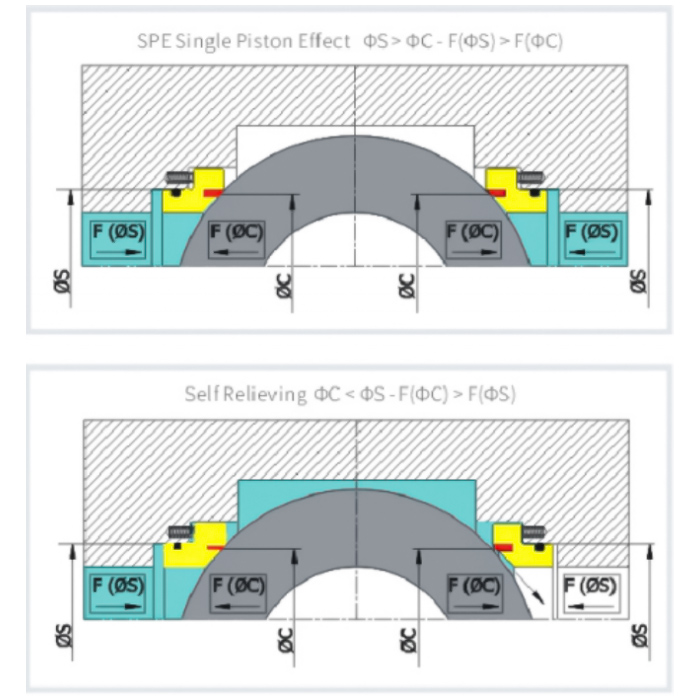
Single Piston (SPE) , Double Piston effect (DPE) and Combination (SPE x DPE) seats are available.
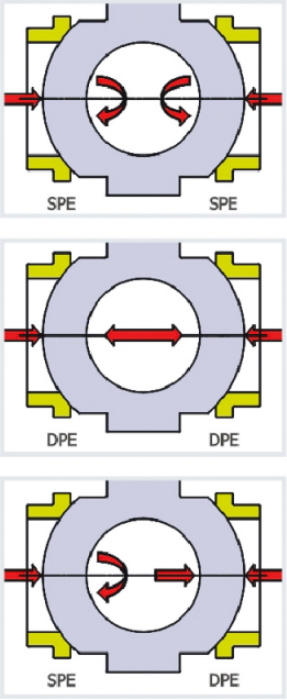
| Seat Design | Single piston effect (SPE) | Double piston effect(DPE)-DIB 1 | Combined DIB 2 |
| Bi-directional sealing | Yes | Yes | Yes |
| Body-Cavity Self relieving | Yes | No | Yes |
| Double Barrier | No | Yes | Yes (preferred direction only) |

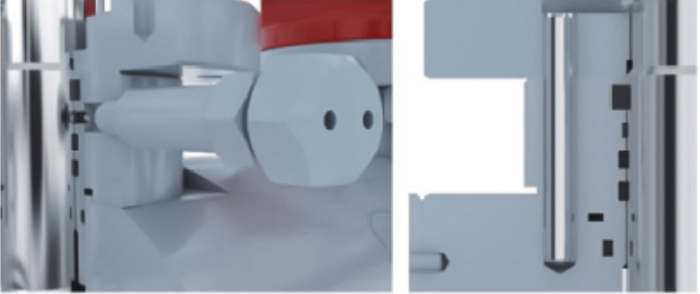
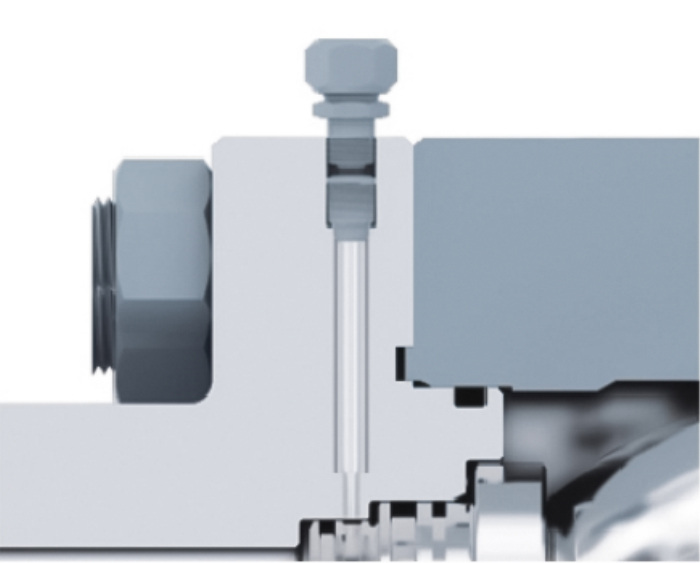
Emergency Seat Injection
Emergency grease in jection fitting forseat rings are standard for6" and larger valves and as option on sizes 2"-4".
An eedle valve, complete with non return check valve is screwed in the bodyand connected to theseatrings.
The emergency sealantinjection can temporarily solve leakage problems, seatsshall be re paired at the first opportunity.
For valves smaller than 6" seat sealant in jection fitting can beprovided in the body cavity
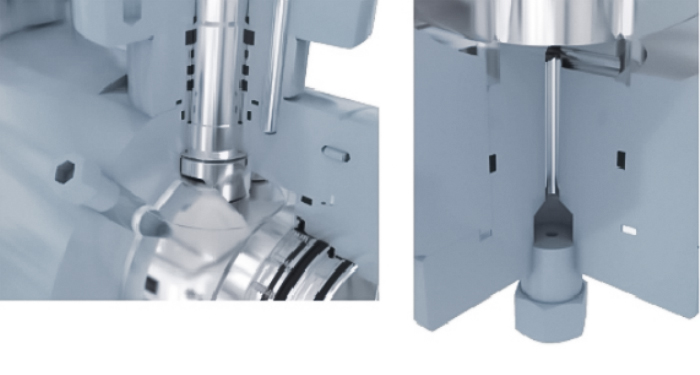
Body Vent & Drain
All J-VALVES SPE TMBV are complete with ascrewed NPT Plug, located in thelower side of the body completedraining of the body cavity.
For valves up to size 4"the drain and vent are combined in oneport.
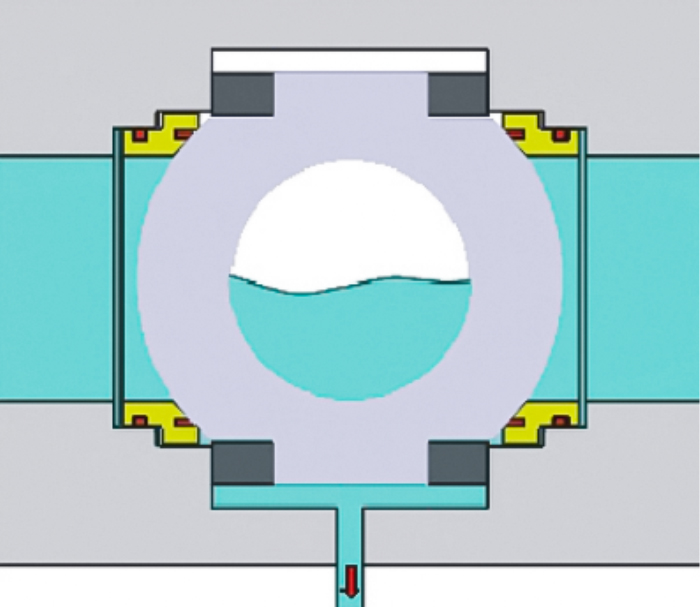
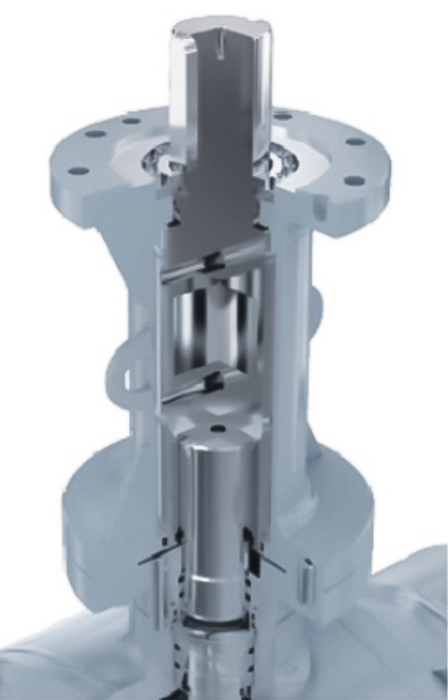
Extended Stem
Extended stem is supplied for Underground in stalla tion.
The stem seals arelocated inthe body Gland Plate.
The stem extension isnot affected by eventual stem seal failure.
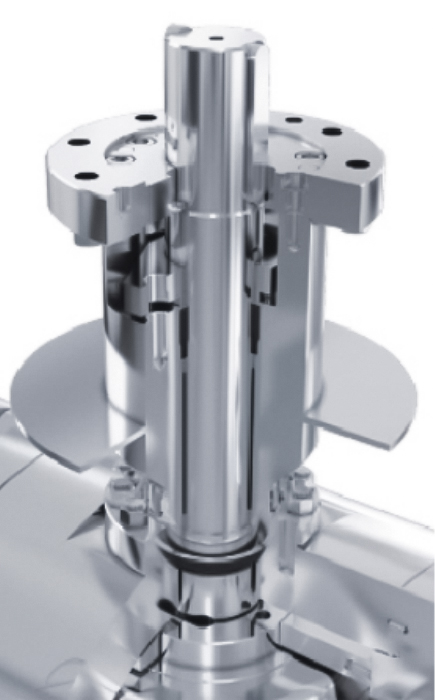
Double Piston Effect
Extended bonnets are available for Cryogenic or high temperature service or special applications requiring this facility features.





Hot Products


News
Sanitary Clamp Ball Valves: 3-A, FDA And CIP Design Requirements
A sanitary clamp ball valve is not a polished standard valve. Cavity, seat wiping, Ra, drainability and 3-A paperwork decide whether it survives CIP.
Read More
Slurry Ball Valve Selection: Wear, Velocity, Seats And Materials
1. Slurries do not wear valves out; velocity doesA ball valve in clean water service can run for twenty years. The same valve in a 30 percent solids tailings line can be scrap in four months, and the difference is almost never the pressure class or the body material. Abrasive wear scales roughly wit
Read More
Fire-Safe Ball Valve Design: The Metal Backup Seat Behind API 607
How a fire-safe ball valve survives API 607: the metal backup seat, graphite packing and body joint that keep sealing after the soft parts burn.
Read More
Metal Seated Ball Valve: Clearance, Thermal Growth And Leakage Class
Metal-seated ball valves seal on hardfaced contact, not polymer: how clearance, differential growth and seat spring load set the leakage class.
Read More