

CHINA J-VALVES Offers Various High-quality I ndustrial Ball Valves
J-VALVES, a distinguished professional ball valve manufacturer rooted in China, takes pride in its extensive product portfolio. Our offerings span a wide range, including trunnion-mounted ball valves, floating ball valves, high-temperature ball valves, high-pressure ball valves, metal-sealed ball valves, ultra-low temperature ball valves, DBB ball valves, Three-way And Four-way Ball Valve, and fully welded ball valves. Each product is a testament to our commitment to precision engineering and reliable performance. Meticulously crafted, they are designed to not only meet but exceed the most stringent industrial demands, ensuring stable operation even under extreme conditions. This enables us to provide our clients with high-value services and makes our valves widely sought-after in industries.
Product Category
Contact Us


-
J-VALVES-Q41F
-
J-VALVES
Overview of the J-VALVES 3 Inch 600LB WCB FBV Carbon Steel Floating Ball Valve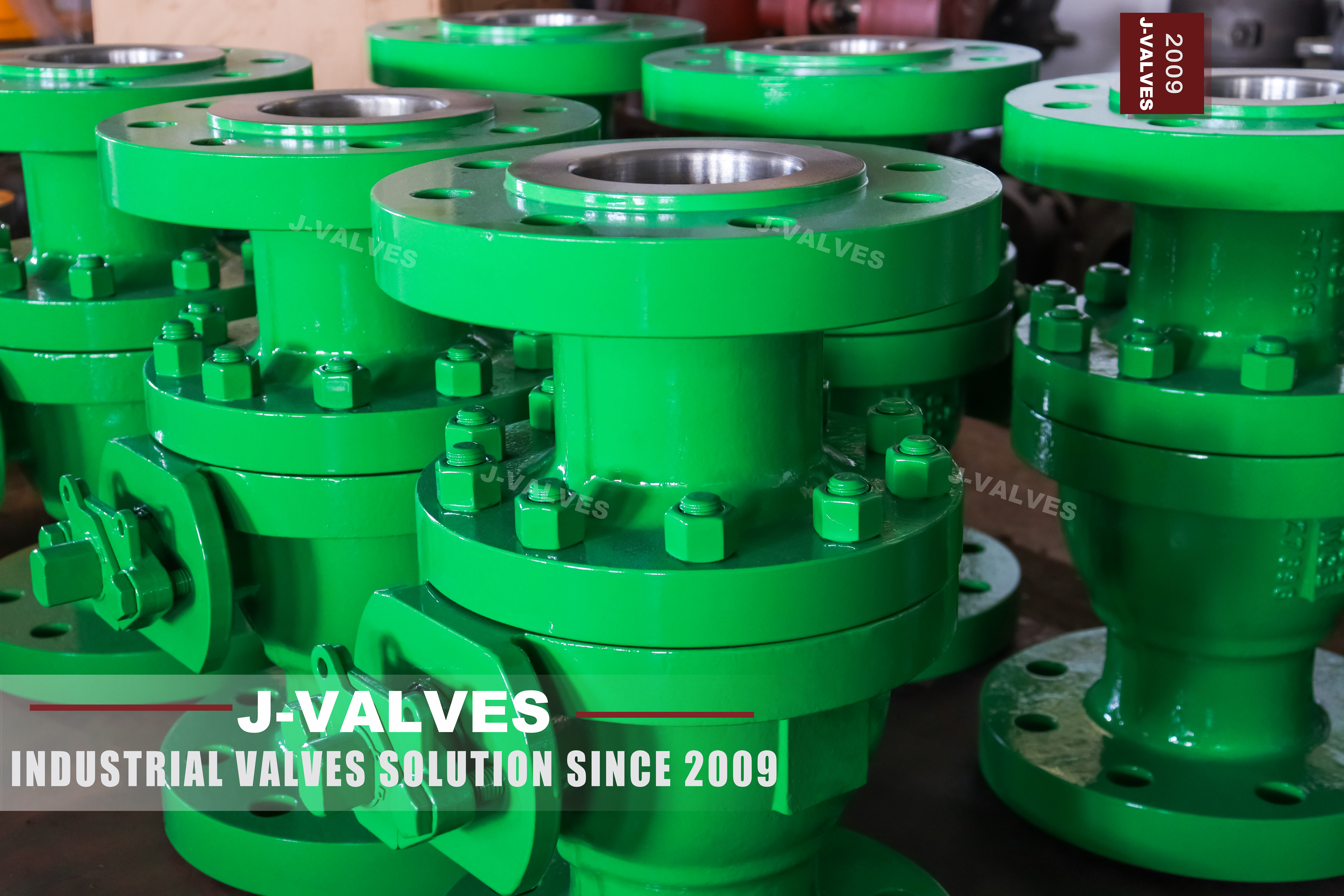
This is a three inch DN80 valve at Class 600, cast WCB body in two pieces, flanged ends, a ball floating between two seat rings, and a lever with a locking hole. In most plants it is a utility valve, bought from stock and installed without much thought. The one thing that does need thought is the number at the cold end of the temperature range, because it is the number that decides whether this valve can be used at all.
That number, minus twenty nine degrees Celsius for carbon steel, is a metal temperature, not a medium temperature. On a line that runs at ambient, the metal is at ambient; on a line that is shut down in January in a cold climate, the metal is at the ambient of that January whatever the process inside it normally is. A valve selected on the process temperature alone will be correct on paper and brittle in the ground.
Design and Construction
The body is two castings with one bolted joint, a main body carrying the stem and one seat and an end cap carrying the other seat and one flange. The ball floats and the line pressure seats it on the downstream ring, so the seal tightens with pressure and the lever effort stays within what a hand can do at three inch. At Class 600 the joint and the wall are heavier than the Class 150 equivalent, but the architecture does not change.
Nothing in that construction is what limits the cold end. The limit comes from the steel: a carbon steel casting loses toughness as it cools and changes from ductile to brittle over a transition range, and the standard sets minus twenty nine degrees as the point below which the ordinary grade is no longer accepted without further evidence. The valve does not fail because it is the wrong design; it fails because it is the wrong grade.

Material Options
WCB is the cast carbon steel grade and its accepted floor is minus twenty nine degrees Celsius. Below that, the body moves to a low temperature carbon steel: A352 LCB for a casting, or A350 LF2 where a forging is preferred, both of which are made for service down to minus forty six degrees. The trim, the seat and the packing all move with it, because a low temperature valve with a standard packing is not a low temperature valve.
Two things get confused at this point. The first is that LCB and LF2 are not simply tougher WCB: they are chemistry and heat treatment controlled for impact toughness, and their impact test is part of the grade rather than an extra. The second is that stainless, which is often suggested as the universal answer, has its own low limit and its own cost, and at three inch on a utility line it is usually the wrong trade.
| Component | Standard Material | Optional Upgrade | Service Notes |
|---|---|---|---|
| Body and end cap | ASTM A216 WCB cast carbon steel | A352 LCB below minus 29, A350 LF2 forged | two pieces, one bolted joint |
| Ball | A105N or WCB with hard chrome plating | 304, 316 stainless | floats onto the downstream seat |
| Stem | 410 or 420 stainless | 17-4PH, 316 | blowout proof, anti static |
| Seat | PTFE | RPTFE, PPL, PEEK | the first limit at the top of the range |
| Packing | PTFE | graphite, low temperature PTFE | chosen with the body grade on a cold build |
| Body gasket | PTFE or spiral wound stainless | graphite filled for the wider range | renewed at every opening |
| Bolting | A193 B7 with A194 2H | A320 L7 with A194 4 for low temperature | selected with the grade, not after it |
| End connection | RF flanged to ASME B16.5 | RTJ flanged to ASME B16.5 | Class 600 drilling |
| Operator | Lever with a locking hole | worm gear, pneumatic, electric | quarter turn, stops set |
Technical Specifications
The envelope is DN80, Class 600, two piece cast body in WCB, full bore, RF or RTJ flanges to ASME B16.5, PTFE, RPTFE or PPL seat, lever with a locking hole, face to face to ASME B16.10 and testing to API 598. The declared temperature band is minus twenty nine to plus four hundred and twenty five degrees for the body grade, narrowed at the top by the seat compound.
The figure that belongs on the enquiry is the design minimum temperature, which is the lowest metal temperature the valve will see: not the flowing temperature, not the design process temperature, but the lowest the installed valve can reach during a shutdown, a depressurisation or a cold snap. That single number decides between WCB and LCB, and it cannot be derived from the process data sheet unless the site climate is on it.
| Item | Value |
|---|---|
| Nominal bore | 3 inch (DN80) |
| Pressure class | Class 600 (PN100) |
| Body construction | two piece, one bolted joint |
| Body | ASTM A216 WCB cast carbon steel |
| Body floor temperature | minus 29 degrees Celsius for WCB |
| Low temperature body | ASTM A352 LCB, or A350 LF2 forged |
| Low temperature floor | minus 46 degrees Celsius |
| Ball | A105N or WCB with hard chrome plating |
| Ball options | 304, 316 stainless |
| Stem | 410 or 420 stainless, blowout proof |
| Stem option | 17-4PH, 316 |
| Seat | PTFE |
| Seat options | RPTFE, PPL, PEEK |
| Packing | PTFE |
| Packing option | graphite, low temperature PTFE |
| Bolting | A193 B7 with A194 2H |
| Bolting option | A320 L7 with A194 4 for low temperature |
| End connection | RF flanged to ASME B16.5 Class 600 |
| End option | RTJ flanged to ASME B16.5 Class 600 |
| Bore | full bore, DN80 |
| Face to face | ASME B16.10 for Class 600 at DN80 |
| Operator | lever with a locking hole |
| Operator options | worm gear, pneumatic, electric |
| Design standard | ASME B16.34 and API 608 |
| Pressure test | API 598, shell 1.5 times, seat 1.1 times |
| Design minimum temperature | the lowest metal temperature, stated on the order |
| Impact test | part of the LCB and LF2 grade, ordered separately on WCB |
| Insulation effect | does not raise the metal temperature during a shutdown |
| Material certificate | EN 10204 3.1 with the impact result where applicable |
| Marking | size, class, grade, heat number, temperature limits |
Standards and Compliance
ASME B16.34 sets the wall and the rating, and it is also where the minus twenty nine degree floor for carbon steel comes from, together with the impact testing that applies below it. API 608 covers the ball valve requirements and API 598 the pressure test. The piping code adds a second layer, because it imposes its own impact test requirement on carbon steel below the same temperature unless the thickness and stress conditions fall inside its exemption curve.
What that means in practice is that a valve can be compliant as a valve and still be rejected by the piping specification. The two documents are read together: B16.34 says what the material may do, the piping code says what this installation is allowed to use. On a cold site the answer is normally to change the grade rather than to argue the exemption.
| Requirement | Standard | What J-VALVES Supplies |
|---|---|---|
| Pressure boundary and rating | ASME B16.34 | group 1.1 carbon steel, floor at minus 29 degrees |
| Ball valve requirements | API 608 | stem retention, marking, testing |
| Flanges | ASME B16.5 | Class 600, raised face or ring joint |
| Face to face | ASME B16.10 | for the size and class |
| Low temperature cast steel | ASTM A352 | LCB, impact tested as part of the grade |
| Low temperature forging | ASTM A350 | LF2, impact tested as part of the grade |
| Piping code impact requirement | ASME B31.3 | applies below the same floor unless the exemption curve is met |
| Pressure testing | API 598 | shell at 1.5 times, seat at 1.1 times |
Manufacturing Process
The castings are normalised, then machined and assembled in the usual sequence, with the flange drilled from the B16.5 Class 600 table and the joint faces cut as a pair. For a low temperature build the heat treatment is the same in outline but the record matters more: the impact result belongs to the heat and to the treatment it received, so the two are kept together and issued with the certificate.
The trim changes with the body on a cold build. The seat compound is chosen for the temperature, the packing moves to graphite or to a low temperature PTFE, and the stem material is confirmed rather than assumed. Bolting is selected for the same reason: a B7 stud at low temperature is not automatically the right stud, and the A320 series exists for that duty.

Quality Control and Testing
Every valve is shell tested at one and a half times its rating and seat tested at one point one times in both directions. Casting soundness is checked on the pressure retaining areas, and a low temperature build normally carries additional non destructive testing on the body and the cap, because a cold brittle failure starts at a defect that a warm test would not open.
The material side is checked against the certificate: grade, heat number, heat treatment, and the impact result at the test temperature stated on the order. That last line is the one an inspector looks for first on a cold site valve, and a certificate without it turns a correct valve into a rejected one at goods inwards. That is also the line a warranty claim turns on, so it is filed rather than merely checked.
| Step | What Is Checked | Standard or Acceptance |
|---|---|---|
| Casting | composition, mechanical properties, soundness | 3.1 certificate against the grade ordered |
| Heat treatment | normalising record kept with the heat number | issued with the certificate |
| Impact test | Charpy energy at the stated temperature | part of the LCB and LF2 grade, optional on WCB |
| Non destructive testing | radiography or magnetic particle on pressure retaining areas | required on most low temperature builds |
| Machining | seat pocket square to the bore, joint face flatness | drawing tolerance |
| Flange | Class 600 bolt circle and facing finish | ASME B16.5 |
| Shell test | body and joint at 1.5 times | API 598, no leak |
| Seat test | both directions at 1.1 times | API 598, no visible leak |
| Marking | size, class, grade, heat number, temperature limits | read back against the certificate |

Applications and Industry Service
The duty is ordinary isolation on water, air, oil and low pressure steam, in plants that happen to be in cold places: northern terminals, mountain stations, refrigerated warehouses, winterised process units, and any outdoor line that is drained and left standing through a winter. In those places the valve is a standard product with an unstandard climate around it. In every one of those cases the plant is warm most of the year and the valve is cold for a few weeks, which is enough to make the grade the deciding factor.
It is the wrong valve where the process itself is cold, because a line at minus forty needs a different build again, with the seat, the packing and the bolting all chosen for it, and often a extended bonnet so the gland is not at the cold end. It is also the wrong valve where the cold is a transient that nobody has quantified: if the design minimum temperature has not been written down, it has not been designed.
Installation, Operation and Maintenance
Insulation and trace heating do not change the grade requirement. They keep the process warm while the line runs, and they do nothing for a shutdown in January, which is exactly when the metal reaches its lowest temperature. A carbon steel valve on an insulated line in a cold climate is still a carbon steel valve at minus thirty five degrees when the plant stops.
Operate a quarter turn, fully open or fully closed, and leave the lever locked where the valve must not be moved. On a cold site, do not force a lever that has become stiff: a ball that has iced to its seat will free with warmth, and forcing it cold is how a stem key or a seat ring is damaged. Warm the body before operating, not the handle.
How to Specify and Order
An order needs the size, the class, the body grade, the design minimum temperature, the impact test temperature where a low temperature build is required, the bore, the end facing, the seat compound, the packing, the operator and the standard. A typical line reads: three inch, Class 600, body WCB, design minimum minus thirty five, low temperature build in LCB with impact test at minus forty six, RF flanged, RPTFE seat, lever.
Write the design minimum temperature even when the answer is a standard WCB build, because it is the figure that shows the question was asked. Where the site is marginal, ask what the supplier will do at that temperature rather than accepting the catalogue band: the answer should be a grade, a test and a certificate line, not a reassurance. A supplier who answers a cold site question with a temperature band has not answered it; the answer is a grade, a test and a certificate line.
FAQ
Q: Is minus 29 degrees the medium temperature or the metal temperature?
A: The metal temperature. It is the point below which ASME B16.34 no longer accepts ordinary carbon steel without further evidence of toughness. The medium can be at ambient and the metal still be colder during a shutdown, so the figure that has to be compared with minus twenty nine is the lowest the valve itself will reach, not what flows through it.
Q: What grade is used below minus 29 degrees?
A: A low temperature carbon steel: A352 LCB for a casting, A350 LF2 for a forging, both rated for service down to minus forty six degrees with impact testing built into the grade. The seat, the packing and the bolting move with the body, because a low temperature body with standard packing is not a low temperature valve.
Q: Does insulation protect the valve in winter?
A: No. Insulation and trace heating keep the process at temperature while the line runs. When the plant shuts down in winter, the metal goes to ambient whatever the insulation is doing, and that is the moment the grade requirement applies. Insulation changes the heat loss, not the design minimum temperature.
Q: What is the design minimum temperature?
A: The lowest metal temperature the installed valve can see, which takes in shutdowns, depressurisation, cold snaps and the site climate rather than only the process data. It is the figure the body grade is chosen against, and it belongs on the purchase order even when the answer is a standard WCB build.
Q: Can WCB be impact tested instead of changing grade?
A: Sometimes, and the piping code decides. Below the floor, carbon steel is accepted only where impact testing or the code exemption curve is satisfied, and the exemption depends on thickness and stress as well as temperature. On a cold site the safer route is the low temperature grade, because it carries the test with it rather than depending on an exemption being read correctly.
Q: Does the pressure class affect the cold limit?
A: Indirectly. Class 600 puts more wall into the same bore than Class 150, and thicker sections are harder to make tough, so a high class valve at low temperature is the case where the grade and the heat treatment matter most. The temperature floor itself comes from the material group in B16.34, not from the class number.


Hot Products


News
Ball Valve Datasheet: Six Blocks That Decide Whether Two Quotes Are Comparable
A ball valve datasheet only works when six blocks are fixed: pressure basis, bore, temperature ceiling, test, end connection, operator. How each is written.
Read More
Ball Valves in Coal Gasification Black Water: Erosion, Flash And The Isolation Only Rule
The valve that stopped a gasifier train was an 8 inch Class 900 ball valve on the black water letdown, seven months into service. It had not leaked. It had stopped turning. The actuator was delivering its rated torque, the stem was intact, and the ball would not move more than a few degrees. When th
Read More
Ball Valve Sealant Injection: What The Grease Fitting Actually Connects To
A 20 inch Class 600 ball valve on a natural gas export line developed a seat leak that measured 300 parts per million by volume on the ultrasonic meter at the downstream flange. The leak was not a safety emergency and it was not going to be fixed by anything short of a shutdown, which was fourteen m
Read More
Ball Valve Condition Monitoring: Which Signals Actually Predict A Failure
Torque signatures, acoustic emission, differential pressure and digital twin residuals: which measurements find a failing ball valve early.
Read More