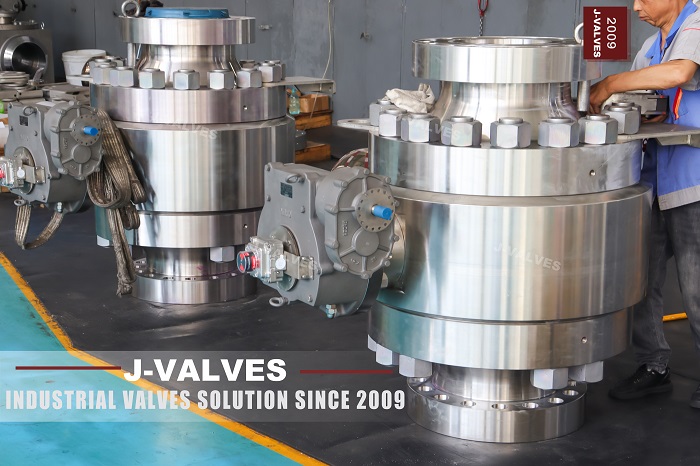
CHINA J-VALVES Offers Various High-quality I ndustrial Ball Valves
J-VALVES, a distinguished professional ball valve manufacturer rooted in China, takes pride in its extensive product portfolio. Our offerings span a wide range, including trunnion-mounted ball valves, floating ball valves, high-temperature ball valves, high-pressure ball valves, metal-sealed ball valves, ultra-low temperature ball valves, DBB ball valves, Three-way And Four-way Ball Valve, and fully welded ball valves. Each product is a testament to our commitment to precision engineering and reliable performance. Meticulously crafted, they are designed to not only meet but exceed the most stringent industrial demands, ensuring stable operation even under extreme conditions. This enables us to provide our clients with high-value services and makes our valves widely sought-after in industries.
Product Category
Contact Us


-
J-VALVES-Q41F
-
J-VALVES
Overview of the J-VALVES Three Inch Class 300 Nickel Aluminum Bronze Two Piece Floating Ball Valve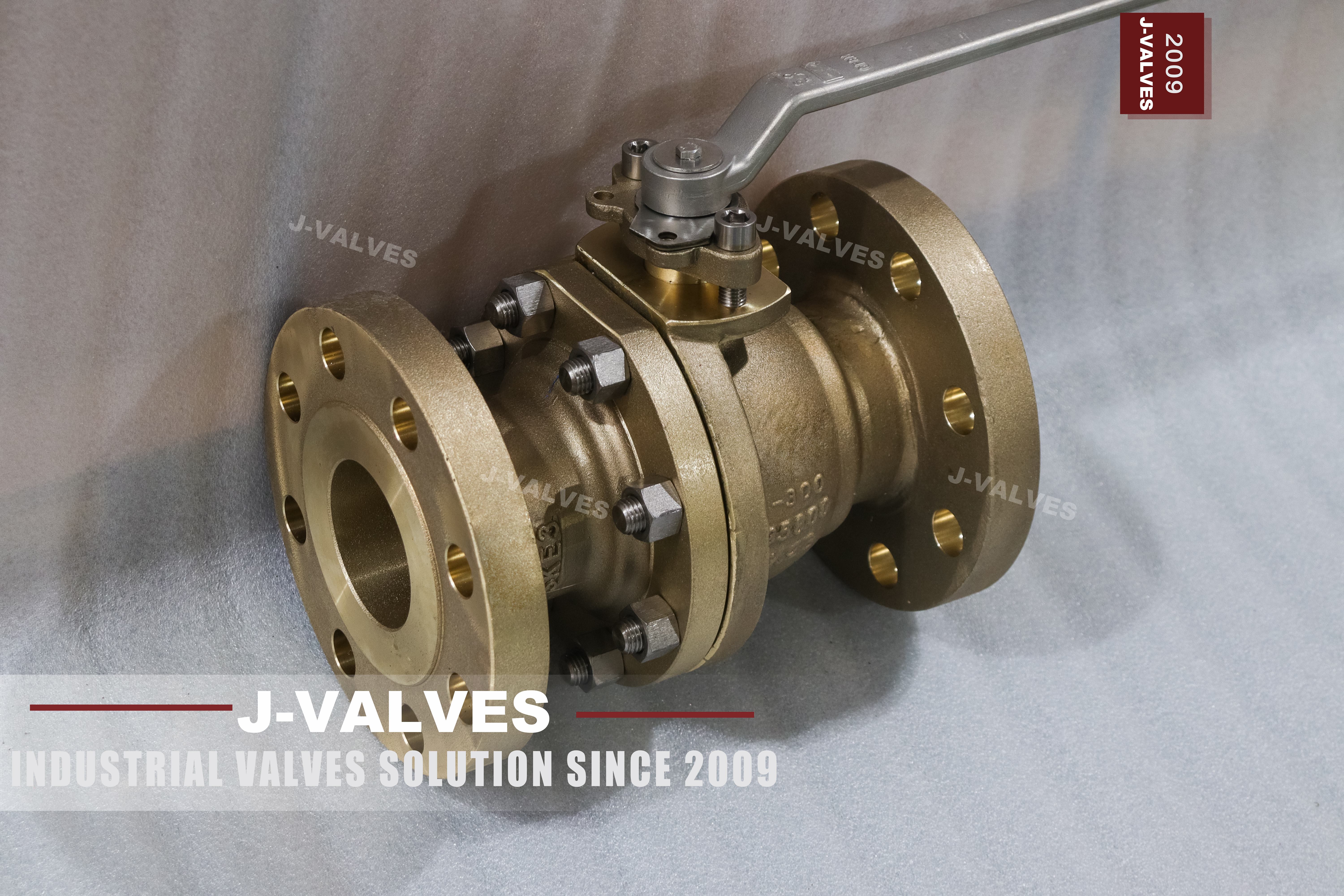
This is a two piece side entry floating ball valve cast in ASTM B148 C95800 nickel aluminum bronze, three inch at Class 300, flanged raised face, lever operated. The body reads three dash three hundred over C95800 over the works number, and the end cap carries the same works number, so the whole pressure boundary is one heat of one alloy. Copper alloy valves are the one family in this catalogue where the flange table and the rating table come from different books.
The drilling follows ASME B16.5 closely enough that the valve bolts to a steel flange, but the thickness, the pressure temperature ratings and therefore the stud length come from ASME B16.24. A buyer who orders studs to the steel flange thickness gets studs that are too short for the bronze flange. The third fact is about the class. Going from Class 150 to Class 300 in this alloy buys pressure and does not buy temperature; the aluminium bronze ceiling is set by the alloy's strength retention and it sits a long way below the figure printed on carbon steel pages, while the soft seat sits below that again.
On this valve the seat is the limit, not the body. The alloy is chosen for the water rather than for the pressure. Nickel aluminum bronze resists seawater by forming a protective film that repairs itself when it is damaged, which is why it survives where carbon steel disappears in a season and where 316 pits in a crevice. The aluminium content is what builds that film, and the composition matters more than the generic word bronze: two cast nickels aluminum bronzes can behave differently in the same line, and the certificate is where the difference is recorded.
Design and Construction
The body is two pieces with a single bolted joint. The cap enters the body on a spigot and is closed by a ring of studs that stand proud of the nuts, which is normal on bronze valves because the studs are threaded into the body rather than passed through. The ball and both seats leave through that end. Floating means the ball is not carried on shafts. The upstream pressure pushes it against the downstream seat and unloads the upstream seat, so one seat seals at a time.
That is why this valve cannot do double block and bleed, and why it has no seat injection fittings and no cavity drain: the floating geometry relieves the cavity upstream by itself when the pressure rises. The stem leaves through a gland at the neck with a clamped lever boss on top, and there is no mounting pad on this body. The lever is a plain bar with a grip, sized for a quarter turn by hand at this class and this bore, and it has hard stops at both ends.
The joint on a bronze body has one weakness that a steel body does not, and it is the thread. Studs are threaded into the body rather than passed through it, which is normal at this size, and bronze yields where steel would spring. That makes the joint sensitive to over-tightening in a way that is invisible until the stud strips or the face deforms. It is also why the assembly torque belongs in the maintenance instructions rather than in a fitter's judgement, and why a joint that has been opened twice deserves a new gasket and a careful look at the threads.
Material Options
Nickel aluminum bronze is chosen for the medium rather than for the pressure. It resists seawater and chloride solutions by forming a protective film, and the lower aluminium AB2 composition is the one normally specified where the valve will sit wet rather than splash wet. Two rows here are commonly written wrongly, including on the page this replaces. The bolting standards are A193 and A194, not B193 and B194, and the prefix matters because the B numbers are different documents entirely. And a B7M stud in a seawater valve is a carbon steel fastener holding a bronze body, which is the least corrosion resistant part of the assembly.
The temperature on this valve is a table lookup, and that is the honest way to state it. ASME B16.24 tabulates ratings per alloy and per class, so the ceiling is not a property of bronze in general but of this composition at this class; quoting a figure from a steel table or from another bronze is how a page ends up promising something the metal cannot do. Below that ceiling the seat sits lower again, so the alloy figure is a limit the valve rarely reaches and the seat figure is the one that governs operation.
Wall thickness on a casting is a foundry variable in a way that it is not on a forging, and the alloy makes it worse because the same section has to feed a large mass. A wall that is thin in one place is not visible from outside and does not show on a pressure test until it does. That is the reason the casting route is chosen for the shape and watched for the section, and the reason a buyer ordering a valve for a critical seawater duty is entitled to ask what the foundry does about section control rather than only what the alloy is.
| Component | Standard Material | Optional Upgrade | Service Notes |
|---|---|---|---|
| Body and end cap | ASTM B148 C95800 nickel aluminum bronze | B148 C95500 where strength matters more than corrosion | AB2 grade, lower aluminium, better resistance to selective phase attack |
| Ball | C95800, polished | UNS N05500 or 316 stainless | Ball and body in the same alloy avoids a galvanic couple inside the valve |
| Stem | UNS N05500 or 316 stainless | C95800 | Stem is inside the packing and cannot be verified after assembly |
| Seat | RPTFE | PTFE, PEEK, or metal seat | Soft seat gives zero visible leakage, metal seat gives temperature |
| Packing | PTFE V rings | Flexible graphite, or a packing specified for seawater | Standard packing is the weak point in a wet chlorine free duty |
| Gasket | Non asbestos fibre | Graphite spiral wound, or rubber bonded for seawater | The body joint gasket is a wetted part and belongs in the material decision |
| Bolting | A193 B7M with A194 2HM nuts | 316 stainless with 8M nuts | B7M is carbon steel and the first thing to corrode at a marine site |
Technical Specifications
The rows below separate the flange dimensions from the rating, because they come from different tables. The pressure class is a Class designation; the PN figure is the API 6D designation for the same class and not a European flange size. The temperature rows are written deliberately without a single number, because the number that matters is the one printed in the B16.24 table for this alloy at this class, and it is a table lookup that changes with the alloy rather than a property of bronze in general.
Note also that the seat sits below the alloy, so the alloy figure is a ceiling that the valve almost never reaches. The facing pair is worth checking before the valve is ordered, because a bronze flange and a steel flange at the same nominal size and class are not automatically a sealing pair. B16.24 defines the facing forms for these valves, and the piping specification defines what is on the pipe.
A raised face against a flat face will bolt up and will leak; two flat faces will seal with the right gasket and not with the wrong one. Reading the two drawings together takes a minute and settles the gasket question at the same time. Where the line is European the same question arrives as a face form rather than as a facing pair, and it is just as easy to get wrong. The table is also read at the design temperature and not at ambient, which is the part of a specification sheet that usually goes missing first.
| Item | Value |
|---|---|
| Type | Two piece side entry floating ball valve, soft seated |
| Nominal size | 3 inch, DN80 |
| Pressure class | Class 300, stamped 300 on the body |
| Pressure designation | PN 50, the designation API 6D clause 7.2 writes against Class 300 |
| Rating basis | ASME B16.24 for the alloy, at the design temperature |
| Body material | ASTM B148 C95800 cast nickel aluminum bronze |
| Bore | Full bore to API 6D Table 1 for NPS 3 |
| End connection | Raised face flanged, drilling to ASME B16.5, dimensions to B16.24 |
| Face to face | ASME B16.10 for the size and class ordered |
| Stud length | To the bronze flange thickness, not the steel flange thickness |
| Packing location | Gland at the body neck |
| Operator | Lever with clamped boss |
| Mounting pad | Not part of this body |
| Cavity drain | Not part of this body |
| Temperature, alloy | Per ASME B16.24 for this alloy and class |
| Temperature, valve | Set by the seat ordered, below the alloy ceiling |
| Product standard | API 608 with ASME B16.24 for the rating |
| Test standard | API 598 |
| Fire test | API 607 and ISO 10497 when specified |
Standards and Compliance
The standards chain for a copper alloy valve is shorter and less well known than for steel, and it is worth setting out because it explains why a data sheet that cites only B16.34 and API 608 is incomplete on a bronze valve. B16.34 organises its ratings by material group, and it has no copper alloy group at all. That is the reason B16.24 exists, and it is also the reason a page that quotes a B16.34 figure on a bronze body has quoted a number from a different book. The two standards are not competing here; B16.24 governs the rating and refers back to B16.34 for how the valve is tested. API 608 does apply at this size and class.
Its flanged scope runs to DN600 at Class 150, 300 and 600, so a three inch Class 300 valve is inside it. That is a different answer from the high pressure pages in this catalogue, where the same standard falls outside the scope on class alone. Fire safe on a bronze valve is a modest claim and it is worth stating precisely. There is a metal shoulder behind the seat, so when the soft insert is consumed the ball still lands on metal, and the body joint uses a gasket that survives the burn. The qualification is a defined fire followed by a leakage test, not a promise that the valve is unaffected.
What the certificate covers is a size and class band, and the band should be checked against the valve being bought rather than assumed. The reference back to B16.34 is not decoration. B16.24 governs the rating for the alloy, and it adopts the test requirements of B16.34 rather than writing its own, so the shell and seat tests on a bronze valve follow the same method as on a steel one even though the rating table is different. That is what makes it legitimate to cite both standards on one page, and illegitimate to quote a B16.34 rating figure for a bronze body.
| Requirement | Standard | What J-VALVES Supplies |
|---|---|---|
| Pressure temperature rating | ASME B16.24 | Rating read from the table for this alloy and class |
| Pressure boundary design | ASME B16.34 | Test requirements by reference, through B16.24 |
| Product standard | API 608 | Anti static device, fire safe design, marking to the standard |
| Pressure testing | API 598 | Shell at 1.5 times rating, seat at 1.1 times rating |
| Flange drilling | ASME B16.5, as adopted by B16.24 | Raised face, Class 300, drilling recorded at test |
| Face to face | ASME B16.10 | Length per the table for the size and class |
| Fire qualification | API 607 and ISO 10497 | Certificate covering the size and class band ordered |
| Material certification | EN 10204 3.1 | Heat number on body and cap, alloy on the certificate |
Manufacturing Process
The body is sand cast, then machined. Casting is the right process for bronze at this size, and the visible surface texture of a sand casting is not a defect; what matters is that the wall is sound and the flange faces are machined true. The critical machining is the seat pocket, the joint face and the stem bore, all of which have to be square to the flange faces. Bronze valves are supplied bare rather than painted, and that is correct here. There is no corrosion allowance being protected by a coating, and a coating on a raised face would put a compressible film under the gasket. The only surface treatment normally applied is a light passivation of the machined faces after test.
Assembly is a bench operation at this size. The ball and seats go in, the cap closes the joint, the gland is set and the lever is fitted. The valve is then turned a full quarter turn and the seat tested in both directions, because a floating ball has two seats and only one of them is loaded in service. Porosity at the seat pocket is the casting defect that matters, because it is the one that produces a leak nobody can trace. A sand casting can be sound everywhere and porous where the pocket was cut, and the pocket is machined after the casting is made, so the defect appears late.
That is why dye penetrant on the seat faces, where the order calls for it, is worth more on a bronze valve than on a forged one, and why the acceptance criterion belongs in the order rather than in the foundry's own standard. Machining the seat pocket is where a bronze body is won or lost. The pocket has to be concentric with the bore and square to the joint face, because the seat seal depends on that geometry more than on the finish, and bronze cuts easily enough that a poorly clamped body will move rather than complain. The check is a dial reading rather than a visual one, and it is done before the faces are finished so that any distortion from clamping is removed at the last cut.

Quality Control and Testing
Casting identity is the step that matters most on a bronze valve, and it is the one step that has to be recorded rather than remembered. The alloy is stamped on the body, the heat number is written on the certificate, and the analyser reading has to agree with both; a valve where those three disagree has no identity at all, whatever the paperwork says. That is the check the rest of the sequence assumes, and it is why the certificate is read before the valve is unpacked rather than after it is installed.
The alloy check is genuinely easy on this material, which is why it is worth insisting on. Nickel and aluminium are both read directly by a portable analyser, so a body that is not C95800 is identified in seconds without opening the valve or waiting for a laboratory, and the check is fast enough to be done on every unit rather than on a sample. What the instrument cannot see is the phase structure that decides how the casting behaves in seawater over years, and that answer comes from the foundry record rather than from a gun.
The flange faces are the last thing to inspect before the valve is crated, and on bronze they are worth a minute. A cast face is softer than a steel one, and a ding raised by a spanner or by a dropped cap will hold the gasket off its seat, which produces a joint leak that no amount of tightening will cure. The check is a visual pass plus a straight edge across the face, and raised metal is dressed rather than hammered down, because a hammered face is a face that no longer seals.
| Step | What Is Checked | Standard or Acceptance |
|---|---|---|
| 1 Incoming material | Alloy, heat identity, casting soundness | B148 C95800, certificate matches the stamping |
| 2 Dimensional | Bore, end sizes, face to face, joint face, flange thickness | Drawing, B16.24 dimensions, B16.10 length |
| 3 Machining | Seat pocket concentricity, gland bore, flange squareness | In house tolerance on the signed drawing |
| 4 Surface | Machined faces clean, no embedded sand or porosity at the seat | Visual and dye penetrant on the seat faces where specified |
| 5 Shell test | Body and joint under pressure | API 598, 1.5 times rating, no leakage |
| 6 Seat test | Both seats, both directions | API 598, 1.1 times rating, no visible leakage |
| 7 Operating test | Quarter turn, lever stop, gland tightness | Full travel without binding |
| 8 Marking and records | Stamping, heat traceability, test record | Certificate and test sheet issued with the valve |

Applications and Industry Service
Seawater is the duty this alloy exists for: cooling water, desalination trains, marine systems, fish farms, firewater on coastal sites and any line where chlorides would destroy a carbon steel valve in a season. The valve is also used on brackish water, brine and some chemical duties where 316 would pit. Class 300 at three inch is a normal combination in these systems because the pipe class requires it rather than because the pressure does. That is worth saying, because it means the valve is usually selected on corrosion and on flange compatibility rather than on differential pressure. What it should not be used for is high temperature.
The alloy ceiling is well below the carbon steel figures that appear on the same data sheet template, and a bronze valve on a steam line is a valve that will lose strength rather than leak gracefully. Throttling is the second thing to avoid; a soft seat used as a control valve is consumed by the flow. Seawater systems have a maintenance logic of their own, and this valve fits it: the joint gasket is a wetted part and is renewed rather than reused, the seats are inspected on both sides rather than only the downstream one, and the studs are checked for corrosion at the threads rather than at the nuts.
The reason for looking at both seats is the same as on any floating valve, and on a marine site it matters more, because a seat that has been sitting wet in the upstream position is the one that will fail when the flow reverses. What a buyer should expect on a seawater site is not a valve that never needs attention but one whose failures are predictable. The joint gasket goes first, the packing second and the seat third, and all three show themselves at a planned shutdown rather than at a leak. That is the argument for keeping one gasket and one packing set per valve on the shelf: the parts that fail are cheap, and the expensive failure is the one where the valve has to come out because nobody had them.

Installation, Operation and Maintenance
Two installation points decide how long the joint lasts. The first is stud length: measure the bronze flange thickness rather than assuming the steel figure, because a short stud leaves threads inside the nut and a long one leaves exposed thread to corrode. The second is torque; bronze is softer than steel and a flange bolt tightened to a steel value will deform the flange face rather than compress the gasket. Galvanic protection is worth a thought on a marine site.
The bronze valve is the noble part of the couple and the steel pipe is the one that pays, so an insulating gasket set or a coated flange pair at each end is cheap insurance. Stainless bolts are not automatically the answer, because stainless in seawater suffers crevice attack under the nut. Operation is a quarter turn. For maintenance, isolate, vent and drain before removing the cap, renew the body gasket rather than reusing it, and inspect both seat faces rather than only the downstream one.
A floating valve that has been run part open will show wire drawing on the seat that was doing the throttling. Velocity is the limit that seawater systems care about and valve data sheets rarely mention. High velocity strips the protective film faster than the alloy can rebuild it, and the damage appears at the seat and at any step in the bore rather than in the straight run. That is another reason a soft seated ball valve is a poor choice for a control duty in a marine system: the throttling point is exactly where the velocity is highest and the film is thinnest.
How to Specify and Order
Six fields decide the valve. Size and bore. Class, and the fact that the rating comes from B16.24 rather than B16.34. Flange drilling and thickness, with the stud length stated rather than left to the pipe contractor. Ball and stem material, named separately because they are the two parts nobody can inspect later. Seat material, which fixes both the temperature and the leakage acceptance. And the bolting grade, since a B7M stud in a seawater valve is a decision that should be made deliberately.
Ask for the EN 10204 3.1 certificate with the heat number matching the stamping, the API 598 test record, the B16.24 rating reference used for the order, and the fire certificate where the line needs one. On a bronze valve the certificate is short and the alloy is easy to verify, which is exactly why there is no reason to accept one that is vague. Two of the six order fields are usually left to the pipe contractor and should not be: the facing pair and the stud length.
The facing decides which gasket can be used, and the stud length decides whether the joint can be closed at all, because a bronze flange is not the same thickness as a steel one at the same nominal size. Both are cheap to state at the enquiry and expensive to discover at the joint, with the line drained and the studs already cut to length by somebody who assumed. Both are also the fields a contractor is most likely to fill in from the steel valve next door, which is why they are worth writing out in full rather than leaving to the pipe class sheet.
FAQ
Q: Why is the rating taken from ASME B16.24 and not B16.34?
A: Because B16.34 organises its ratings by material group and has no copper alloy group at all. B16.24 exists for these alloys and governs the rating, while referring back to B16.34 for how the pressure boundary is tested. A page that quotes a B16.34 figure on a bronze body has quoted a number from a different book.
Q: Are the bolts A193 or B193?
A: A193, with A194 nuts. The B prefix belongs to two unrelated documents: ASTM B193 is a test method for electrical resistivity and B194 covers copper beryllium plate. A certificate that cites B193 for bolting cannot be matched to the studs that were actually fitted.
Q: Does API 608 apply at three inch Class 300?
A: Yes. Its flanged scope runs to DN600 at Class 150, 300 and 600, so a three inch Class 300 valve is inside it. That is the opposite answer to the Class 900 pages in this catalogue, where the same standard falls outside on class alone.
Q: Why is stud length a separate line in the specification?
A: Because the bronze flange is not the same thickness as a steel flange at the same nominal size and class. Studs ordered to the steel thickness end up short in a bronze flange, and the shortage shows up at the joint rather than at the order desk.
Q: Can this valve do double block and bleed?
A: No. The ball floats, so line pressure pushes it into the downstream seat and leaves the upstream seat unloaded; one seat seals at a time and there is no cavity drain on this body to bleed through. Double block and bleed needs a trunnion valve with the right seat arrangement.
Q: Is C95800 the same alloy as C95500?
A: No. Both are cast nickel aluminum bronze, but the composition and the strength differ, and the difference sits in the aluminium content and in the phase structure that forms on cooling. C95500 is chosen where strength governs and C95800 is the default where the valve sits wet in seawater.


Hot Products


News
Ball Valve Condition Monitoring: Which Signals Actually Predict A Failure
Torque signatures, acoustic emission, differential pressure and digital twin residuals: which measurements find a failing ball valve early.
Read More
Ball Valves in SWRO Desalination: The High Pressure Section Where Ordinary Seawater Valves Fail
Why SWRO high pressure valves fail early: recovery arithmetic, crevice temperature, ERD ripple, scale, letdown cavitation and surge.
Read More
Air Test And Water Test For Ball Valves: What Each Medium Can Prove
A ball valve can pass a hydrostatic seat test and still leak gas. Why air and water prove different things, and how to read a bubble, decay or helium test.
Read More
Ball Valve Flange Bolting: Preload, Relaxation And The Fasteners That Decide Leakage
A weeping flange is rarely the gasket. Preload, torque scatter, hardness limits and thermal relaxation decide whether the joint holds at 100 bar and 400 C.
Read More