

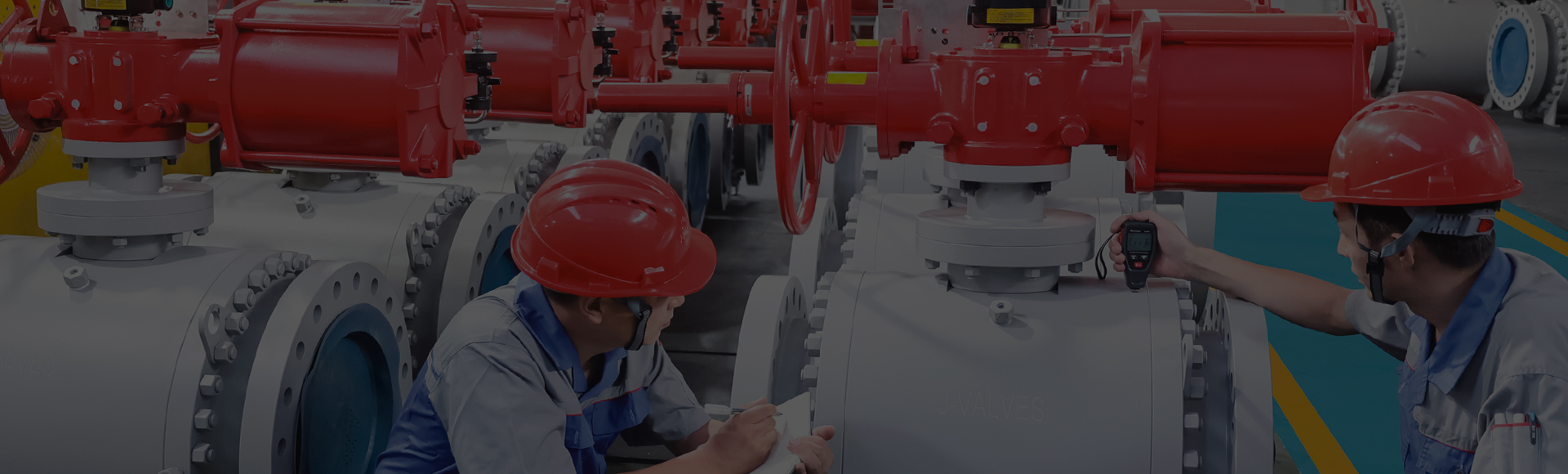
CHINA J-VALVES Offers Various High-quality I ndustrial Ball Valves
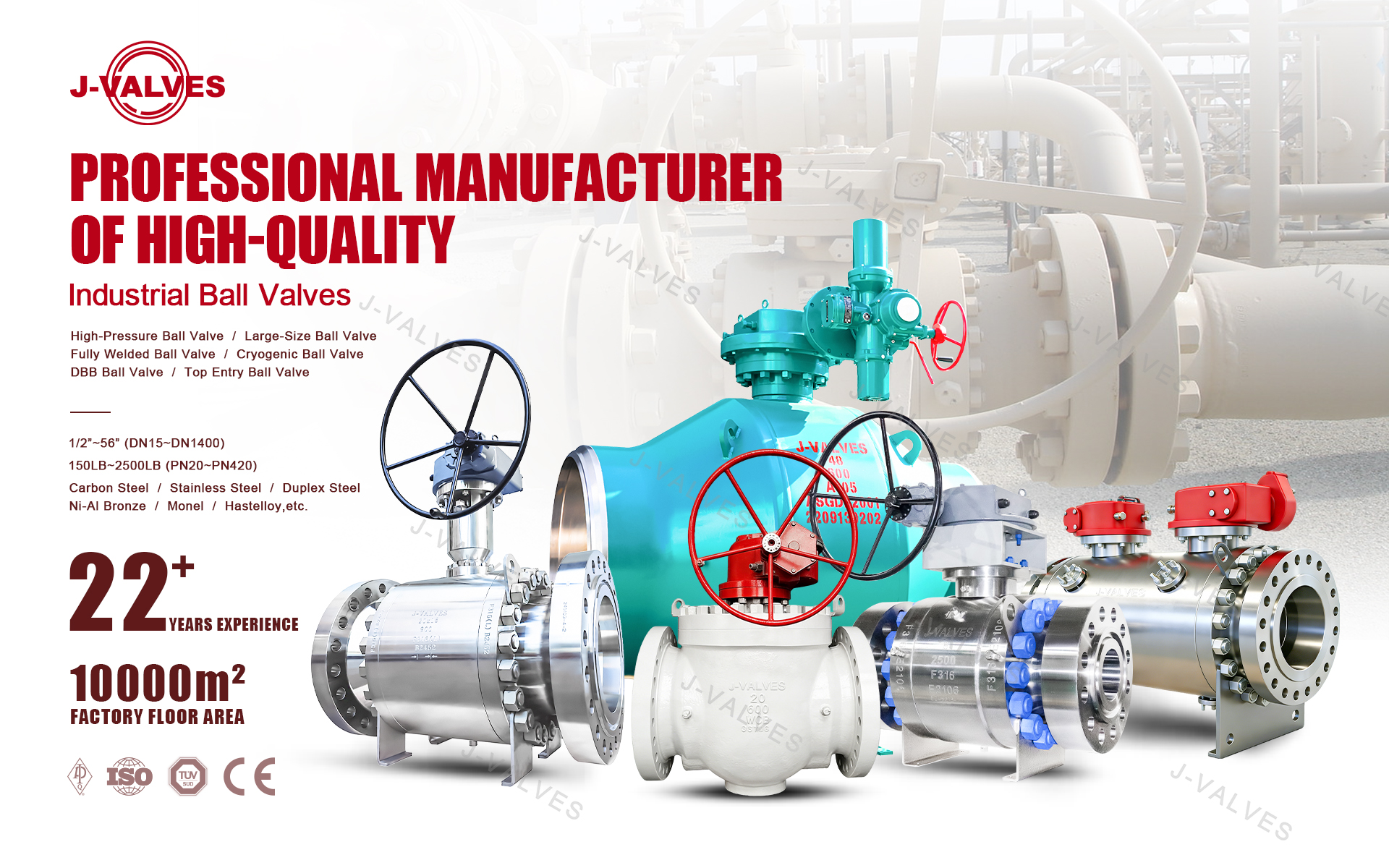
J-VALVES, a distinguished professional ball valve manufacturer rooted in China, takes pride in its extensive product portfolio. Our offerings span a wide range, including trunnion-mounted ball valves, floating ball valves, high-temperature ball valves, high-pressure ball valves, metal-sealed ball valves, ultra-low temperature ball valves, DBB ball valves, Three-way And Four-way Ball Valve, and fully welded ball valves. Each product is a testament to our commitment to precision engineering and reliable performance. Meticulously crafted, they are designed to not only meet but exceed the most stringent industrial demands, ensuring stable operation even under extreme conditions. This enables us to provide our clients with high-value services and makes our valves widely sought-after in industries.
Product Category
Contact Us

Pressure Class: 900LB (PN150)
Temperature Range: -196℃ to +100℃
Body / End Caps:ASTM A182 F304/F304L forged stainless steel; optional F316/F316L (for enhanced corrosion resistance) or A350 LF2 (economic low-temperature steel, limited to -46℃).
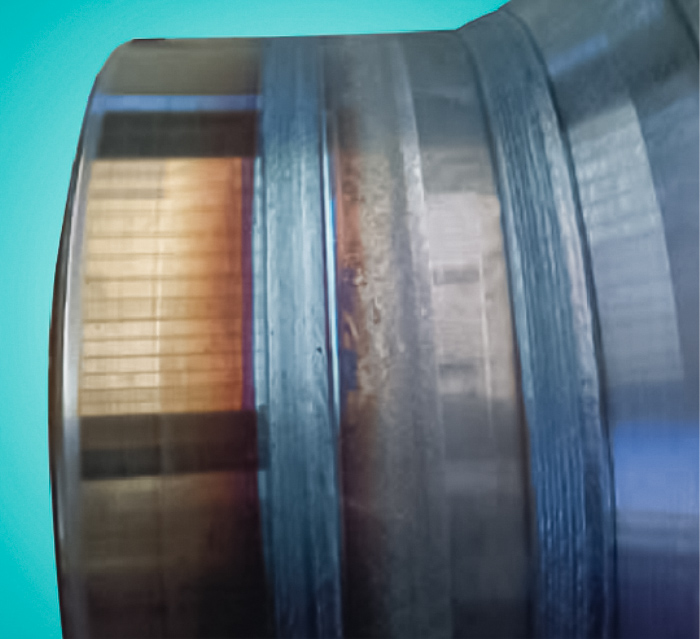
Ball:F304 with ENP (electroless nickel plating), hard chrome plating, or Stellite alloy overlay.
Trunnion / Supports:Surface-hardened F304 or 17-4PH precipitation hardening stainless steel.
Stem:Extended stem in F304/F304L, 17-4PH or Inconel 718 (for higher strength).
Seat Seal:Modified PTFE (-196℃ ~ 150℃); PEEK (-60℃ ~ 260℃); metal seal with flexible graphite (-196℃ ~ 650℃).
Packing:Flexible graphite reinforced with Inconel wire, special braided packing for low-temperature service.
Gasket:Flexible graphite stainless steel spiral wound gasket (304/316L) or metal ring gasket.
Bolts:ASTM A320 L7/L7M (low-temperature alloy steel) or B8M (F316 stainless steel), with A194 7/7M/8M nuts.
End Connection:Flanged (RF raised face / RTJ ring type joint, ASME B16.5); optional BW butt-weld ends (ASME B16.25).
Operation:Manual (worm gearbox, standard with cryogenic extended stem); pneumatic (low-temperature cylinder with dry air supply), electric (low-temperature motor), hydraulic.
Design Standards:ASME B16.34, API 6D, API 608
Inspection & Test Standards:API 598, API 6D
Face-to-Face Dimension:ASME B16.10
-
J-VALVES
F304 Austenitic Stainless Steel Construction:The valve body is forged from ASTM A182 F304 (0Cr18Ni9) steel. Its face‑centered cubic structure ensures excellent toughness even at cryogenic temperature down to -196℃, with no risk of low‑temperature brittle transition. It features good intergranular corrosion resistance, suitable for service ranging from ultra‑low temperature to medium temperature.
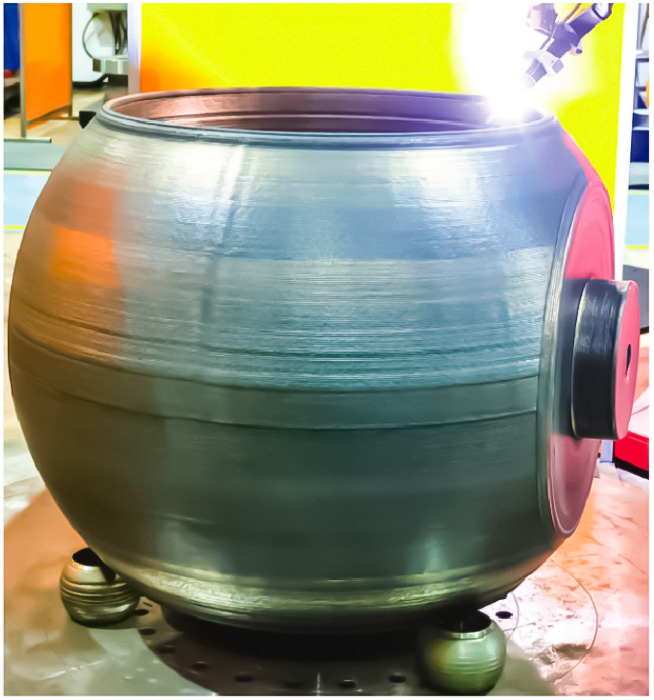
Integral Forged Three‑Piece Structure:The main body and both end caps are fully machined from forgings with compact grain structure and free of casting defects. The symmetrical three‑piece design provides uniform stress distribution and allows online disassembly and maintenance without removing the entire valve from the pipeline.
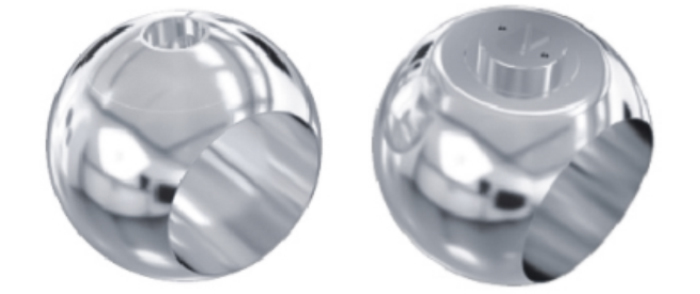
Fixed Ball / Trunnion Supported Design:The ball is precisely supported and fixed by upper and lower trunnions, achieving sealing independent of medium pressure. Operating torque is low and stable, completely eliminating ball deformation and sealing failure risks under 8‑inch large‑bore and 900LB high‑pressure conditions.
Cryogenic Adapted Design:The extended stem structure positions the stuffing box away from the ultra‑low temperature zone to prevent freezing and failure of sealing components. The extended bonnet neck provides sufficient space for insulation cladding, ensuring smooth operation at -196℃.
Optional Vacuum Insulation Structure:Vacuum jacket or foam insulation layer can be optionally installed outside the valve body to minimize cold loss, prevent frost and ice formation on the outer surface, and ensure operator safety.
Double‑Seat Cryogenic Sealing:Modified PTFE or metal seal with flexible graphite seats is adopted to achieve reliable bi‑directional sealing. Double Piston Effect (DPE) or Double Isolation and Bleed (DIB‑1/DIB‑2) configuration is available to meet strict isolation requirements in cryogenic systems.
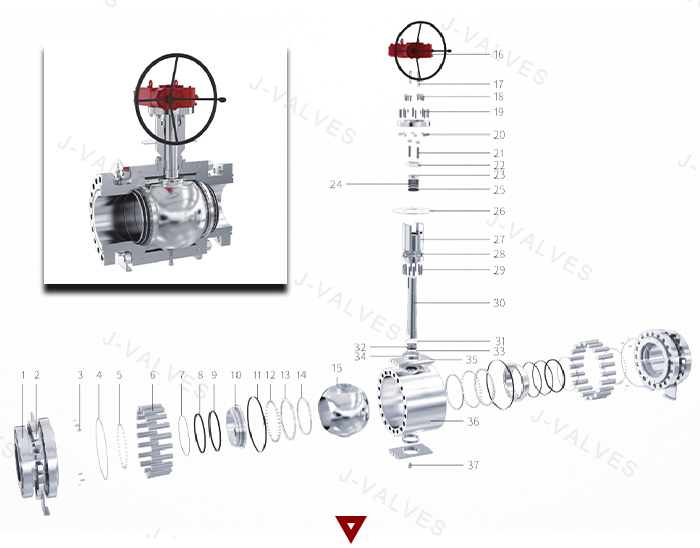
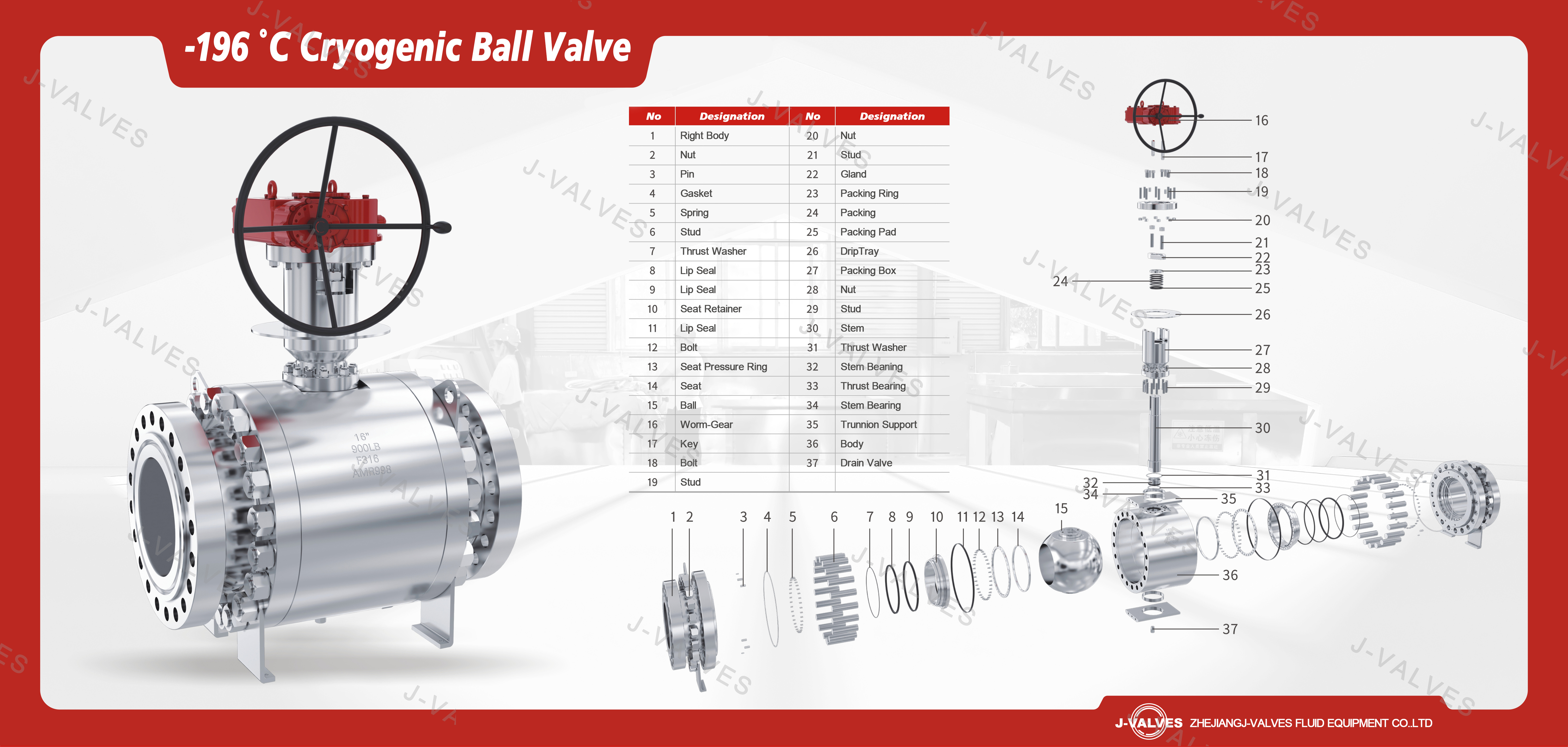
8"900LB F304 Three Piece Cryogenic Trunnion Mounted Flange Ball Valve 3D Diagram
2-3 piece body
Full andreduced bore trunnion mounted
Double block and bleed
Single or double piston effect design anti-blow out stem
Anti-static device
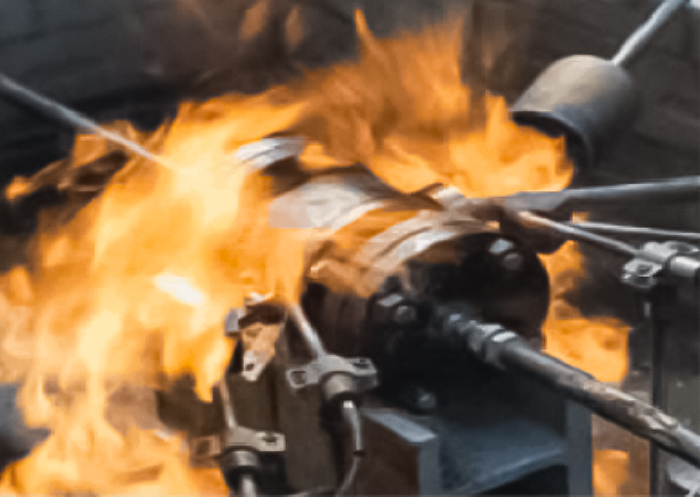
Firesafe to AP1-607/6FA/IS0 10497 springloaded seats
Sealant in jection on request NACE MR-01-75
API Licenses:
API6D
API6DSS
API6A-PSL4
Pressure Class:
ASME 150-2500
API 2000-15000
Service Type:
Standard Temperature:-29℃ to 220℃/-20°F to 428°F
Low Temperature:-46℃ to 150℃/-50°F to 302°F
Cryogenic Temperature: -47℃ to -196℃/-52°F to-320°F
Subsea(Shallow &Deep Water)
Underground
High Temperature:Above 220℃/428°F
J-VALVESSPE can supply a range ofseat types and configurationsto meet specific process needs:
J-VALVES trunnion mounted ball valves standard seat ringsare soft-seated by the use of athermoplastic or elastomeric or Meta
Seats-Tungsten /Chrome carbide /ENP

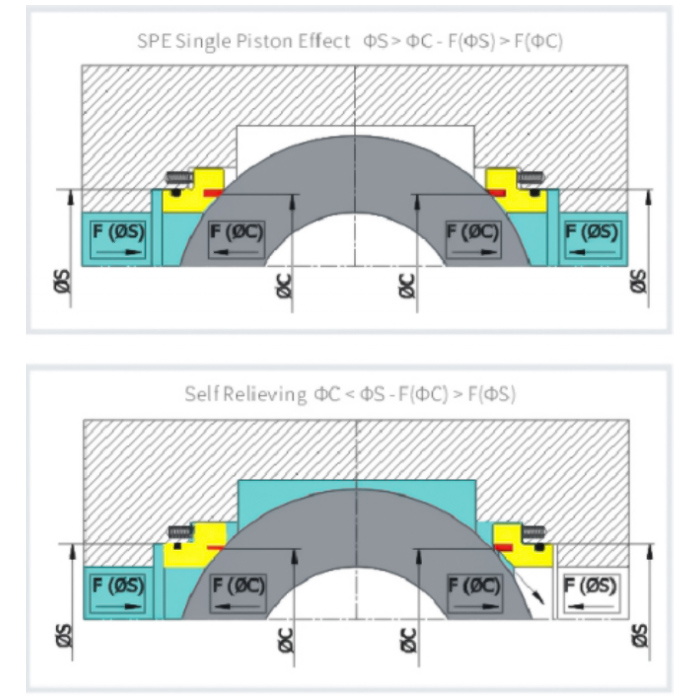
Single Piston (SPE) , Double Piston effect (DPE) and Combination (SPE x DPE) seats are available.
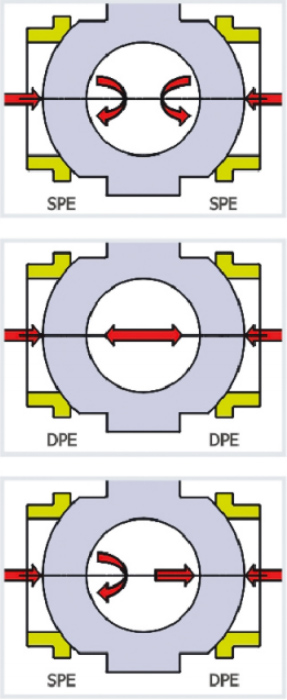
| Seat Design | Single piston effect (SPE) | Double piston effect(DPE)-DIB 1 | Combined DIB 2 |
| Bi-directional sealing | Yes | Yes | Yes |
| Body-Cavity Self relieving | Yes | No | Yes |
| Double Barrier | No | Yes | Yes (preferred direction only) |

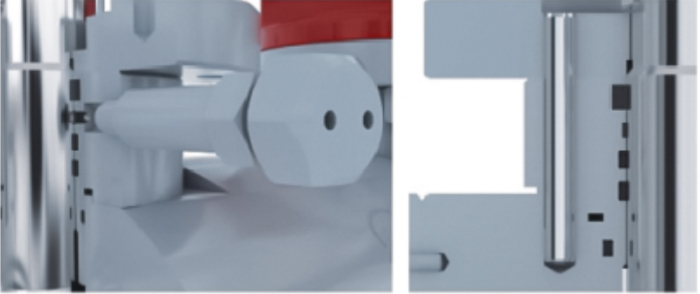
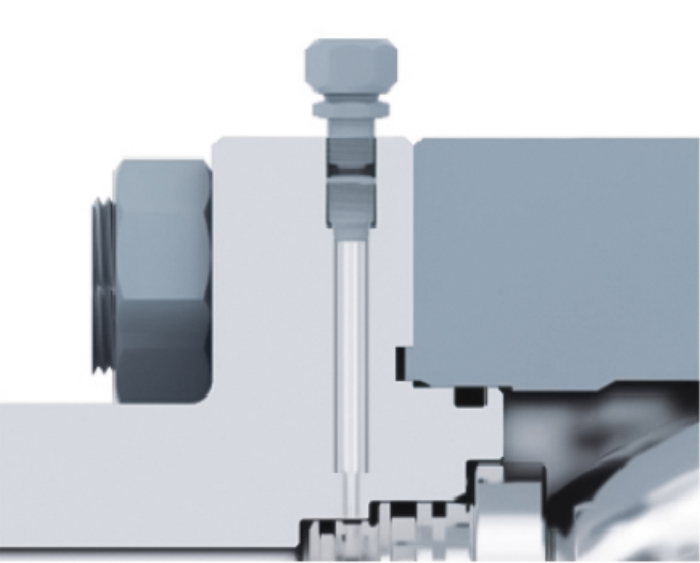
Emergency Seat Injection
Emergency grease in jection fitting forseat rings are standard for6" and larger valves and as option on sizes 2"-4".
An eedle valve, complete with non return check valve is screwed in the bodyand connected to theseatrings.
The emergency sealantinjection can temporarily solve leakage problems, seatsshall be re paired at the first opportunity.
For valves smaller than 6" seat sealant in jection fitting can beprovided in the body cavity
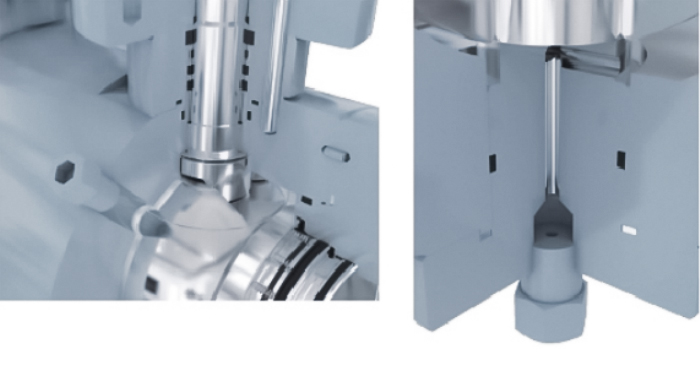
Body Vent & Drain
All J-VALVES SPE TMBV are complete with ascrewed NPT Plug, located in thelower side of the body completedraining of the body cavity.
For valves up to size 4"the drain and vent are combined in oneport.
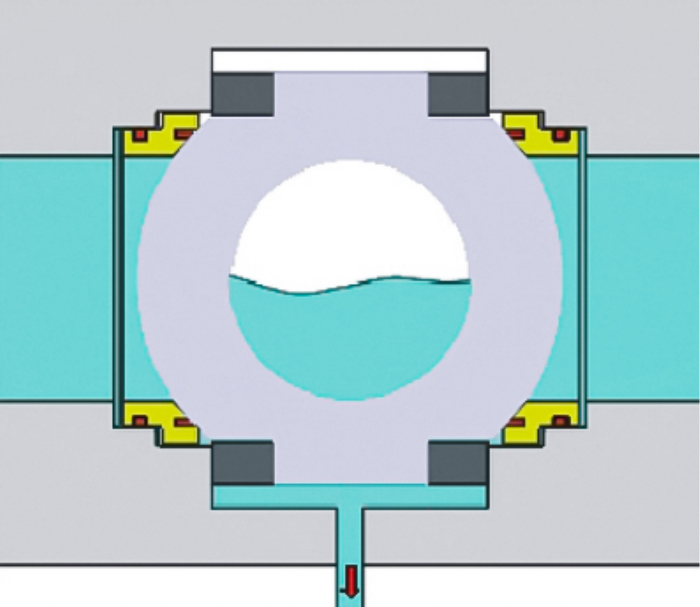
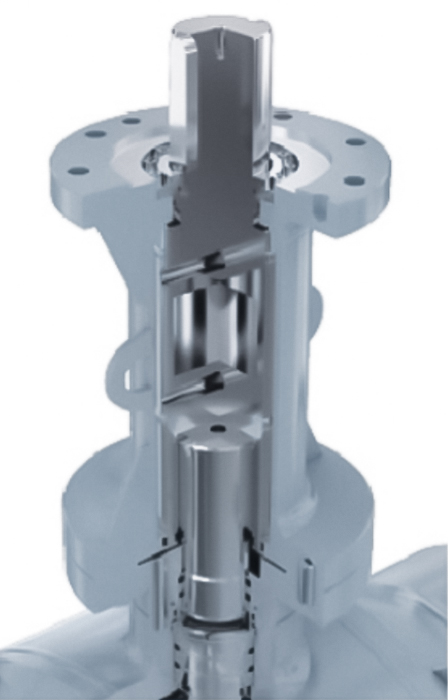
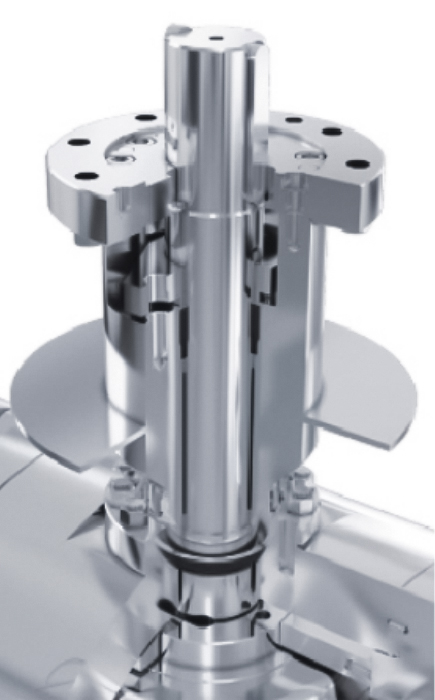
Extended Stem
Extended stem is supplied for Underground in stalla tion.
The stem seals arelocated inthe body Gland Plate.
The stem extension isnot affected by eventual stem seal failure.
Double Piston Effect
Extended bonnets are available for Cryogenic or high temperature service or special applications requiring this facility features.





Hot Products


News
From Material To Product: 0.75" 150LB C95800 Top Entry Floating Ball Valve
Explore 0.75 inch Class150 C95800 Nickel Aluminum Bronze top entry floating ball valve. Raw material inspection, precision casting and pressure test for seawater & marine corrosive service.
Read More
API 6D Technical Insights into A105 Trunnion Ball Valve Low Torque
Based on authoritative API 6D pipeline valve standard, explore technical logic behind low‑torque performance of A105 forged trunnion ball valve. Compare with floating ball valve, learn real‑world benefits for oil & gas and petrochemical projects.
Read More
API 608 Guide To Selecting C95800 Floating Ball Valves
In‑depth analysis of C95800 nickel‑aluminum bronze floating ball valve selection following API 608 specification. Cover material compliance, structural parameters, service condition matching and acceptance test for offshore, seawater desalination & coastal chemical projects.
Read More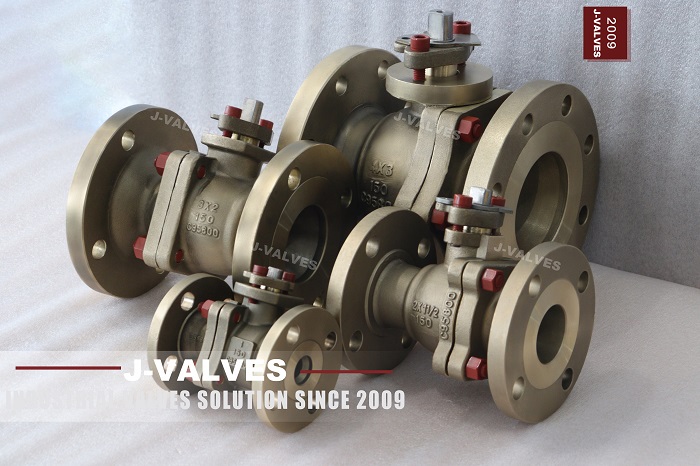
Inside The Valve Factory: 3PC Trunnion Ball Valve Manufacturing
Step‑by‑step factory tour of 3‑piece trunnion mounted ball valve production. Manufactured per API 6D, for oil & gas, chemical high‑pressure pipeline projects. Contact J‑VALVES for quotes.
Read More