

Introduction
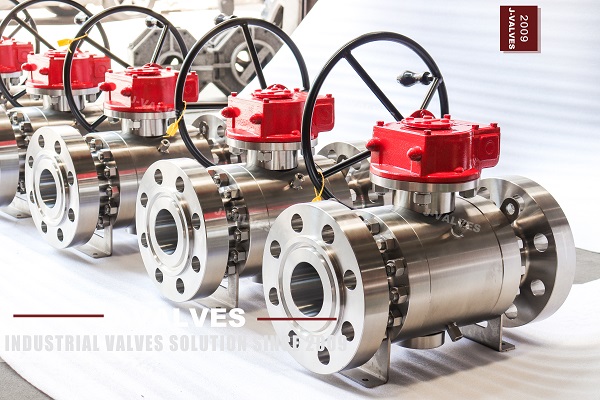
Stainless steel trunnion mounted ball valves are widely used in demanding industrial applications where reliable shut-off performance, corrosion resistance, and long service life are required. Compared with conventional floating ball valves, the trunnion mounted design provides additional mechanical support for the ball, making it suitable for large diameter pipelines, high pressure systems, and critical process applications.
With the continuous development of industries such as oil and gas, LNG, chemical processing, power generation, and offshore engineering, stainless steel trunnion ball valves have become an important solution for safe and efficient fluid control. Their advanced structure, optimized sealing system, and material advantages allow them to maintain stable performance under complex operating conditions.
1. Structural Features of Stainless Steel Trunnion Mounted Ball Valves
A stainless steel trunnion mounted ball valve consists of several key components, including the valve body, trunnion-supported ball, stem, seats, sealing elements, and actuator connection system.
The main difference from floating ball valves is that the ball is fixed by a lower trunnion and upper stem support. The ball does not move with pipeline pressure, while the seats move toward the ball to achieve sealing. This structure significantly reduces operating torque and improves valve reliability, especially for large-size and high-pressure applications.
Typical structural designs include:
Two-piece or three-piece valve body construction
Full bore or reduced bore flow passage
Double block and bleed (DBB) capability
Fire safe design according to API 607/API 6FA requirements
Anti-static design for safe operation
Double piston effect seat design
These features make stainless steel trunnion ball valves suitable for long-term pipeline operation.
2. Advantages of Stainless Steel Material Selection
Material selection plays a critical role in determining valve performance. Stainless steel provides excellent corrosion resistance and mechanical strength, making it an ideal choice for aggressive media and harsh environments.
Common stainless steel materials include:
Stainless Steel 304 / CF8
304 stainless steel provides good corrosion resistance and cost efficiency. It is commonly used in water treatment, general chemical applications, and industrial pipelines.
Stainless Steel 316 / CF8M
316 stainless steel contains molybdenum, which improves resistance against chloride corrosion and chemical attack. It is widely applied in:
Offshore platforms
Marine systems
Chemical processing plants
LNG facilities
Duplex Stainless Steel
Duplex stainless steel combines high strength with excellent corrosion resistance. It is often selected for high-pressure and highly corrosive environments.
The correct material selection ensures that stainless steel trunnion mounted ball valves maintain stable performance throughout their service life.
3. High Performance Sealing System Design
The sealing performance of a trunnion mounted ball valve is one of the most important factors affecting pipeline safety.
Advanced stainless steel trunnion ball valves typically use soft seat, metal seat, or hybrid sealing designs according to application requirements.
Soft Seat Design
Soft seats such as PTFE, RPTFE, or PEEK provide excellent sealing performance with low operating torque. They are suitable for applications requiring tight shut-off performance.
Advantages include:
Low friction operation
Reliable bubble-tight sealing
Good compatibility with various fluids
Metal Seat Design
Metal seated ball valves are designed for high temperature, abrasive, and severe service conditions.
Benefits include:
High temperature resistance
Excellent wear resistance
Longer service life
Suitable for demanding applications
The selection between soft seat and metal seat depends on pressure, temperature, medium characteristics, and operating conditions.
4. Pressure Performance and Low Torque Operation
One of the major advantages of stainless steel trunnion mounted ball valves is their ability to handle high-pressure applications with lower operating torque.
Because the ball is mechanically supported by the trunnion, pipeline pressure does not directly push the ball against the downstream seat. This reduces friction between the ball and seat, allowing smoother operation.
Key performance advantages include:
Stable sealing under high pressure
Reduced actuator size requirements
Lower operating torque
Improved cycle life
This design is especially beneficial for large diameter valves used in transmission pipelines and industrial facilities.
5. Applications of Stainless Steel Trunnion Ball Valves
Stainless steel trunnion mounted ball valves are widely used across various industries.
Oil and Gas Pipelines
In oil and gas transmission systems, reliable shut-off performance is essential. Stainless steel trunnion ball valves provide safe isolation and efficient flow control.
LNG and Cryogenic Systems
LNG applications require materials and designs capable of handling extremely low temperatures. Stainless steel construction provides excellent toughness and reliability in cryogenic environments.
Chemical Processing
Chemical industries require valves with strong corrosion resistance. Stainless steel trunnion ball valves can handle many aggressive chemical media.
Offshore and Marine Applications
Offshore environments expose equipment to saltwater corrosion. Stainless steel materials help improve durability and reduce maintenance requirements.
6. Manufacturing Quality Requirements
The performance of a stainless steel trunnion mounted ball valve depends not only on design but also on manufacturing quality.
Professional valve manufacturers focus on:
Precision machining of ball and seat surfaces
Advanced welding and heat treatment processes
Strict material traceability
Pressure testing according to API 6D requirements
Fugitive emission testing
Dimensional inspection
High-quality manufacturing ensures consistent sealing performance and operational reliability.
7. J-VALVES Stainless Steel Trunnion Mounted Ball Valve Solutions
J-VALVES provides engineered stainless steel trunnion mounted ball valve solutions for global industrial applications. The company focuses on reliable valve design, strict quality control, and customized solutions according to customer requirements.
J-VALVES stainless steel trunnion ball valves feature:
Robust trunnion support structure
High-performance sealing technology
Multiple stainless steel material options
API standard compliance
Suitable solutions for oil & gas, LNG, chemical, and energy industries
Through advanced manufacturing technology and professional engineering experience, J-VALVES helps customers achieve safer and more efficient pipeline systems.
Conclusion
Stainless steel trunnion mounted ball valves combine advanced mechanical design, excellent corrosion resistance, and reliable sealing performance. Their trunnion-supported structure provides significant advantages in high-pressure, large-diameter, and critical industrial applications.
With proper material selection, optimized sealing technology, and strict manufacturing control, stainless steel trunnion ball valves can deliver long-term reliability in demanding operating environments. They remain one of the preferred valve solutions for modern energy, chemical, marine, and industrial pipeline systems.


