


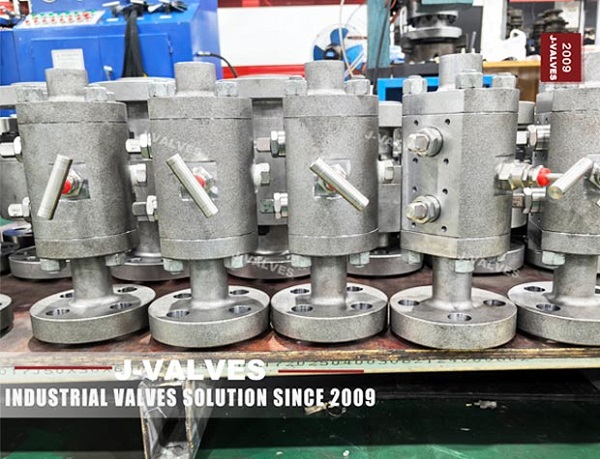
Introduction
In modern industrial pipeline systems, Double Block and Bleed (DBB) ball valves are widely used in applications where reliable isolation, safe maintenance, and superior sealing performance are required. Industries such as oil & gas, LNG, petrochemical, power generation, and chemical processing rely on DBB ball valves to achieve secure separation between upstream and downstream pressure zones.
One of the most important technologies behind the high reliability of industrial DBB ball valves is the pressure assisted sealing mechanism. This design utilizes pipeline pressure to enhance the contact force between the valve seat and ball, improving sealing performance under various operating conditions.
Unlike conventional valve designs that depend only on mechanical preload, pressure assisted sealing allows the valve to automatically respond to system pressure changes, providing more stable and efficient leakage control.
1. Working Principle of Pressure Assisted Sealing in DBB Ball Valves
The sealing performance of a DBB ball valve mainly depends on the interaction between the ball, valve seats, and pressure conditions inside the valve cavity.
In a pressure assisted sealing design, when the pipeline pressure increases, the medium pressure acts on the rear side of the valve seat. This pressure pushes the seat ring toward the ball surface, increasing the sealing force.
The sealing process can be divided into three conditions:
Low Pressure Condition
At low system pressure, the valve relies on:
Seat spring preload
Elastic deformation of sealing materials
Precision machining tolerance
to maintain initial sealing contact.
Normal Operating Pressure
When pipeline pressure increases, the pressure acts on the seat structure and generates additional force toward the ball.
This creates:
Higher seat-to-ball contact pressure
Improved sealing stability
Reduced risk of leakage
High Pressure Condition
Under high-pressure operation, the pressure assisted mechanism provides stronger sealing force, allowing the DBB ball valve to maintain reliable isolation performance.
This self-adjusting sealing principle is especially important for critical pipeline applications.
2. Advantages of Pressure Assisted Seat Design
2.1 Enhanced Zero Leakage Performance
The primary advantage of pressure assisted sealing is improved leakage prevention.
Traditional sealing structures may experience reduced contact force due to:
Temperature variation
Pressure fluctuations
Material aging
Mechanical wear
Pressure assisted seats compensate for these changes by using system pressure to maintain sealing contact.
This helps DBB ball valves achieve reliable shut-off performance in demanding industrial environments.
2.2 Improved Sealing Reliability Under High Pressure
High-pressure pipeline systems require valves that can withstand significant mechanical loads.
The pressure assisted sealing structure provides:
Increased sealing force with rising pressure
Better adaptation to pressure changes
Stable long-term operation
This makes DBB ball valves suitable for:
High-pressure gas pipelines
LNG facilities
Refinery process systems
Offshore applications
2.3 Reduced Operating Torque
Although higher sealing force improves reliability, excessive friction can increase valve operating torque.
Advanced DBB ball valve designs optimize:
Seat geometry
Ball surface finishing
Sealing material selection
to balance sealing performance and operating torque.
The result is smoother operation and longer service life for manual, pneumatic, and electric actuated valves.
3. Double Block and Bleed Function with Pressure Relief Capability
A key feature of DBB ball valves is their ability to provide double isolation and cavity pressure relief.
The valve contains two independent sealing barriers:
Upstream seat sealing
Downstream seat sealing
The space between the two seats forms a cavity that can be monitored or drained through a bleed system.
During operation:
Both seats block pipeline pressure.
The valve cavity remains isolated.
Trapped pressure can be released through the bleed port.
This function provides important advantages:
Safer maintenance operations
Improved equipment protection
Easier pressure verification
Pressure assisted sealing further enhances this isolation function by maintaining stable seat contact under changing pressure conditions.
4. Seat Design Considerations for Pressure Assisted DBB Ball Valves
The effectiveness of pressure assisted sealing depends on several engineering factors.
4.1 Seat Material Selection
Different applications require different seat materials.
Common options include:
PTFE Seats
Advantages:
Excellent chemical resistance
Low friction coefficient
Suitable for general applications
Reinforced PTFE Seats
Advantages:
Higher mechanical strength
Better wear resistance
Improved performance under pressure cycling
PEEK Seats
Advantages:
High temperature capability
Excellent mechanical properties
Suitable for severe service applications
Metal Seated Design
Advantages:
High temperature resistance
Suitable for abrasive media
Improved durability in harsh environments
4.2 Ball and Seat Surface Finishing
Precision machining plays an essential role in achieving reliable sealing.
Important manufacturing processes include:
Accurate spherical machining
Fine surface polishing
Controlled sealing clearance
Advanced surface treatment
A high-quality ball surface reduces:
Seat damage
Friction
Operating torque variation
5. Pressure Assisted Sealing Applications
LNG and Cryogenic Systems
LNG applications require valves capable of handling extreme temperature conditions.
DBB ball valves with pressure assisted sealing provide:
Reliable isolation
Low-temperature compatibility
Reduced leakage risk
They are commonly used in:
LNG storage terminals
Cryogenic transfer pipelines
Gas processing facilities
Oil and Gas Transmission Pipelines
Pipeline systems require dependable shut-off solutions.
DBB ball valves are used for:
Pipeline isolation
Metering stations
Compressor stations
The pressure assisted sealing mechanism improves reliability during continuous operation.
Petrochemical Processing Plants
Petrochemical systems often involve:
High pressure
Hazardous fluids
Strict leakage requirements
DBB ball valves provide safe isolation for:
Process equipment
Reactor systems
Separation units
6. Manufacturing Advantages of J-VALVES DBB Ball Valves
J-VALVES applies advanced engineering principles to develop industrial DBB ball valve solutions with reliable sealing performance.
Key advantages include:
Advanced Valve Design
J-VALVES DBB ball valves are engineered with:
Pressure assisted seat structures
Optimized cavity pressure control
Reliable double isolation capability
Strict Quality Control
Manufacturing processes include:
Material inspection
Dimensional verification
Pressure testing
Seat leakage testing
These procedures ensure consistent product performance.
Customized Solutions
Different industries require different valve configurations.
J-VALVES provides customized options including:
Carbon steel DBB ball valves
Stainless steel DBB ball valves
Cryogenic DBB ball valves
Metal seated DBB ball valves
Actuated DBB valve systems
Conclusion
The pressure assisted sealing mechanism of industrial DBB ball valves represents an advanced solution for achieving reliable isolation and long-term sealing performance in critical pipeline systems.
By utilizing pipeline pressure to enhance seat contact force, DBB ball valves provide improved leakage control, stable operation, and enhanced safety compared with conventional valve designs.
For demanding applications in LNG, oil & gas, petrochemical, and energy industries, selecting a DBB ball valve with optimized pressure assisted sealing technology is essential for achieving operational reliability and reducing maintenance requirements.
J-VALVES continues to develop high-performance industrial DBB ball valve solutions designed to meet global engineering standards and challenging service conditions.


