

I. Executive Summary: The Critical Choice in Flow Control
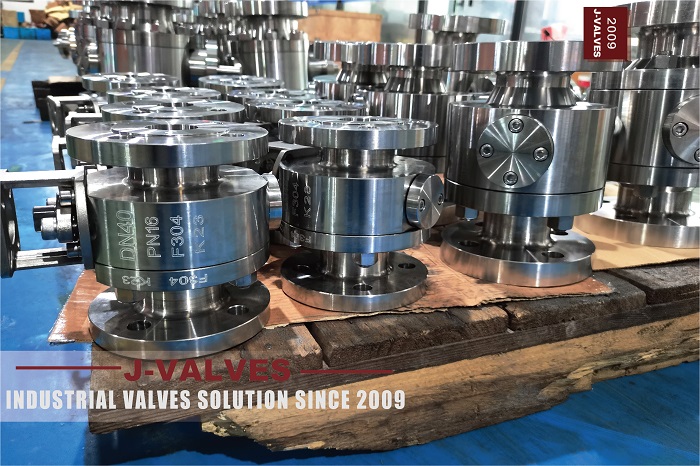
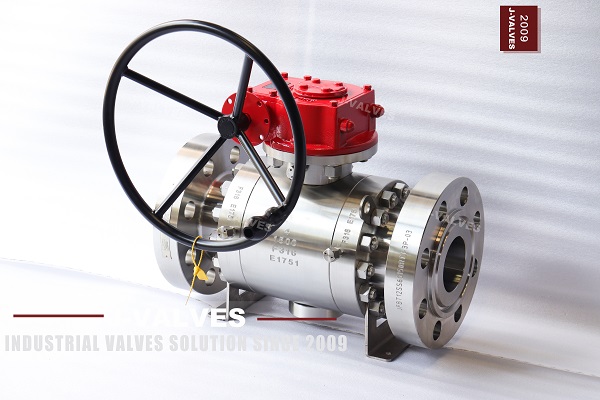
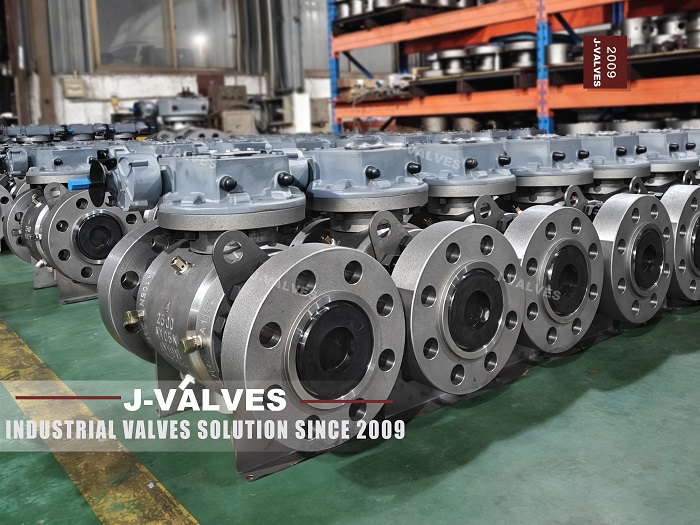
In high-stakes industrial environments, spherical trunnion mounted ball valves represent the gold standard for precision flow control. Unlike conventional floating ball valves, these engineered solutions use mechanical anchoring at both top and bottom (trunnions) to stabilize the ball element, enabling reliable operation under extreme pressures up to 2,500 PSI and temperatures exceeding 500°F .
Key Differentiator: While floating valves rely on downstream pressure to create seals—risking failure at low pressures—trunnion designs use spring-loaded seats that actively engage the fixed ball, ensuring consistent sealing from vacuum to maximum rated pressure .
II. Technical Architecture: Why Spherical Design Matters
Core Components:
- Fixed Ball Element: Mechanically anchored by upper stem and lower trunnion, eliminating axial movement
- Spring-Loaded Seat Assembly: Metal retainers with soft inserts (PTFE/RPTFE) or metal-to-metal seals that self-adjust to pressure fluctuations
- Double Block & Bleed (DBB) Capability: Inherent in most trunnion designs, allowing cavity pressure relief for maintenance safety
III. Specialty Applications: Where Precision is Non-Negotiable
1. Oil & Gas Pipeline Systems
- High-Pressure Transmission: Handles up to Class 2500 pressure ratings in natural gas and crude oil pipelines
- Emergency Shutoff: API 6D compliance ensures tight shutoff (Class VI) for safety-critical isolation
- Subsea Installations: Forged steel construction resists corrosion in offshore environments
2. Chemical Processing & Petrochemicals
- Corrosive Media Control: 316/316L stainless steel construction with PTFE seats handles acids, caustics, and aggressive solvents
- Catalyst Handling: Metal-seated variants withstand abrasive slurries and high-temperature cracking processes
- Process Automation: Low-torque design enables cost-effective pneumatic/electric actuation
3. Power Generation & Energy
- Steam Systems: Forged alloy steel (F11, F22) construction manages superheated steam at 600°F+
- Feedwater Control: Precision throttling capability maintains boiler efficiency
- Hydrogen Infrastructure: Emerging applications in green hydrogen pipelines require zero-leakage trunnion designs
4. Specialty Gas Systems
- Ultra-High Purity: Electropolished internals prevent contamination in semiconductor manufacturing
- Cryogenic Service: Extended bonnet designs handle LNG at -320°F
- Pharmaceutical Grade: CIP/SIP compatibility for sterile processes
IV. Competitive Advantages: Trunnion vs. Floating Ball Valves
Feature | Spherical Trunnion Mounted Ball Valve | Floating Ball Valve |
Pressure Range | Up to 2,500+ PSI (high-pressure) | Limited to 600 PSI (moderate) |
Size Capability | 2" to 60"+ diameters | Typically under 12" |
Torque Consistency | Low, predictable actuation force | High, variable with pressure |
Sealing Reliability | Bidirectional, all pressure ranges | Unidirectional, pressure-dependent |
Maintenance Cost | Higher initial, lower lifecycle | Lower initial, frequent repairs |
DBB Capability | Standard feature | Not available |
ROI Insight: While trunnion valves cost 30-50% more upfront, their 15-20 year service life in critical applications versus 5-8 years for floating designs delivers 40% lower total cost of ownership .
V. Selection Criteria: Engineering the Right Solution
Critical Specifications:
1. Pressure Class: ASME B16.34 (Class 150-2500) or API 6D for pipeline service
2. Material Selection:
- Body: Forged carbon steel (A105) for general service; stainless (F304/F316) for corrosion resistance
- Seats: PTFE for tight shutoff; PEEK for high temp; Stellite for abrasion
3. End Connections: RF/RTJ flanged for pipelines; BW/SW for process plants
4. Actuation: Spring-return pneumatic for fail-safe; smart positioners for modulating control
Red Flags to Avoid:
- Cast bodies in high-pressure cyclic service (risk of porosity failures)
- Non-API 6D valves in safety-critical hydrocarbon service
- Inadequate seat spring preload (causes leakage at low pressure)
VI. Installation & Maintenance Best Practices
Pre-Installation:
- Verify seat material compatibility with process media
- Confirm actuator sizing accounts for maximum differential pressure
- Implement DBB valve testing procedures per API 6D Appendix F
Operational Protocols:
- Never throttle partially open in high-velocity gas service (causes seat erosion)
- Cycle quarterly to prevent seat "set" and sticking
- Monitor cavity pressure via bleed fittings to detect seat leakage early
Predictive Maintenance:
- Annual seat leakage testing using helium mass spectrometry
- Stem packing adjustment every 2,000 cycles
- Full overhaul at 50,000 cycles or 5 years (whichever comes first)
VII. Future Trends: Smart Trunnion Valves
The integration of IoT sensors and digital positioners is transforming trunnion ball valves into intelligent flow control nodes. Real-time monitoring of:
- Seat wear indicators
- Cavitation detection
- Torque signature analysis for predictive failure alerts
This enables condition-based maintenance, reducing unplanned shutdowns by up to 60% in critical applications .
VIII. Conclusion: Precision as a Competitive Advantage
Spherical trunnion mounted ball valves are not commodity components—they are precision-engineered safety devices. In applications where a single valve failure can cost millions in downtime or environmental liability, their superior flow control precision, bidirectional sealing integrity, and extended service life justify the investment. For engineers and procurement professionals, specifying API 6D-certified trunnion valves from reputable manufacturers ensures operational excellence and regulatory compliance.