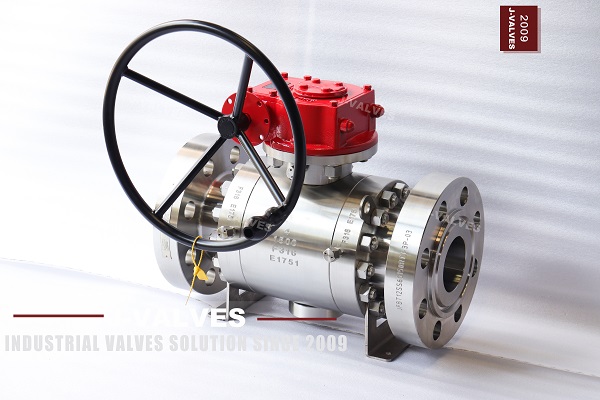


Trunnion ball valves are widely used in industries that require robust performance under extreme conditions, including high-pressure, high-temperature, and corrosive environments. Two common materials for manufacturing these valves are forged steel and alloy steel, each offering distinct advantages. Understanding the differences in high-temperature performance between forged steel and alloy steel trunnion ball valves is critical for making an informed decision when selecting valves for your project.
1. Overview of Forged Steel and Alloy Steel Trunnion Ball Valves
Forged Steel Trunnion Ball Valves
Forged steel is a material known for its exceptional strength and resistance to high stresses, making it ideal for high-pressure and high-temperature applications. The forging process involves shaping the steel under high heat and pressure, resulting in a homogeneous grain structure that provides excellent mechanical properties. Forged steel valves are typically used in critical applications such as oil and gas pipelines, power generation, and chemical processing, where performance and reliability are paramount.
Alloy Steel Trunnion Ball Valves
Alloy steel, on the other hand, is a blend of carbon steel and various alloying elements such as chromium, molybdenum, and nickel. These elements enhance the material's ability to withstand high temperatures, oxidation, and corrosion. Alloy steel trunnion ball valves are particularly suited for applications in industries such as petrochemical, petro-refining, and chemical processing, where exposure to high temperatures and aggressive fluids is common.
2. High-Temperature Performance: Key Factors
Thermal Strength and Stability
Forged Steel: Forged steel exhibits superior thermal strength and stability, which is crucial for maintaining the integrity of the valve under high-temperature conditions. It retains its strength even at elevated temperatures, making it suitable for applications where temperature fluctuations are common. However, forged steel can become more brittle at very high temperatures (above 700°C or 1300°F).
Alloy Steel: Alloy steels are specifically engineered for high-temperature environments. The alloying elements in the steel provide enhanced resistance to thermal degradation, ensuring better performance at temperatures above 700°C. Certain alloy steels, such as those with chromium and molybdenum, maintain excellent strength and toughness at high temperatures, offering an edge over standard forged steel in certain high-heat applications.
Oxidation and Corrosion Resistance
Forged Steel: While forged steel is strong, it can suffer from oxidation and corrosion when exposed to high-temperature environments with high levels of moisture or chemicals. This can result in the degradation of the material and compromised valve integrity over time.
Alloy Steel: The alloying elements in alloy steel, especially chromium and molybdenum, provide superior resistance to oxidation and corrosion. This makes alloy steel trunnion ball valves more suitable for high-temperature applications where the valve will be exposed to aggressive fluids or corrosive substances.
Thermal Expansion
Forged Steel: Forged steel has a relatively low coefficient of thermal expansion compared to other materials. This means that it will undergo less dimensional change when exposed to temperature fluctuations, reducing the risk of valve misalignment or failure under high-heat conditions.
Alloy Steel: Alloy steels typically have a higher coefficient of thermal expansion than forged steel. While this can lead to greater dimensional changes during temperature shifts, the enhanced resistance to thermal degradation helps to compensate for this. For extremely high-temperature environments, alloy steel valves may be preferred for their overall material strength.
3. Applications in High-Temperature Environments
Both forged steel and alloy steel trunnion ball valves are commonly used in high-temperature applications, but their suitability depends on the specific conditions of the operating environment.
Forged Steel Valves: These are ideal for high-pressure applications with moderate temperature ranges. For example, they are commonly used in power plants, steam systems, and high-temperature industrial piping. Forged steel’s mechanical strength and resistance to pressure make it well-suited for these environments.
Alloy Steel Valves: Alloy steel trunnion ball valves are preferred in applications where high temperatures, corrosion, and oxidation are critical factors. For instance, they are widely used in the chemical and petrochemical industries, where the fluid may contain aggressive chemicals that can accelerate corrosion in standard steel materials.
4. Cost Considerations
Forged Steel: Forged steel trunnion ball valves generally come at a lower initial cost than alloy steel valves. However, the lower resistance to high-temperature oxidation may lead to higher maintenance costs over time if the valves are not properly maintained or replaced.
Alloy Steel: Alloy steel valves tend to have a higher upfront cost due to the added alloying elements and specialized manufacturing processes. However, their superior high-temperature performance and longer service life often make them a more cost-effective choice in the long run, especially in industries where downtime due to valve failure can result in significant losses.
5. Maintenance and Durability
Forged Steel: Maintenance of forged steel valves in high-temperature applications requires regular inspection to ensure that oxidation, corrosion, and material fatigue do not compromise their function. If subjected to very high temperatures, the material’s durability may decrease over time, necessitating early replacement.
Alloy Steel: With enhanced corrosion and oxidation resistance, alloy steel valves tend to have longer lifespans in high-temperature applications. Properly maintained, alloy steel trunnion ball valves can provide reliable, long-term performance, making them a better choice for industries with continuous high-temperature processes.
6. Conclusion
When selecting trunnion ball valves for high-temperature applications, it is essential to choose the material that best matches the specific requirements of your system.
Forged Steel offers excellent strength and pressure resistance, making it suitable for moderate high-temperature environments, but its performance may degrade under extreme conditions.
Alloy Steel, with its superior high-temperature resistance, oxidation resistance, and overall durability, is the material of choice for more aggressive, high-heat applications where long-term reliability is critical.
By considering factors such as the expected temperature range, the nature of the fluids in the system, and long-term durability, you can ensure that your trunnion ball valves will perform optimally in demanding conditions.