

With the continuous improvement of industrial automation and pipeline system safety requirements, electric fully welded ball valves have become indispensable key valve equipment in the fields of oil and gas, chemical engineering, heating, and urban infrastructure, thanks to their high reliability, long service life, and intelligent control advantages.
I. Product Overview
An electric fully welded ball valve is an automated control valve that highly integrates a fully welded ball valve body with an electric actuator. The product adopts a fully welded structure to replace traditional flange connections, effectively eliminating the risk of external leakage. It realizes remote opening/closing and automatic control through an electric actuator, making it suitable for large-diameter, high-pressure, and unattended working conditions.
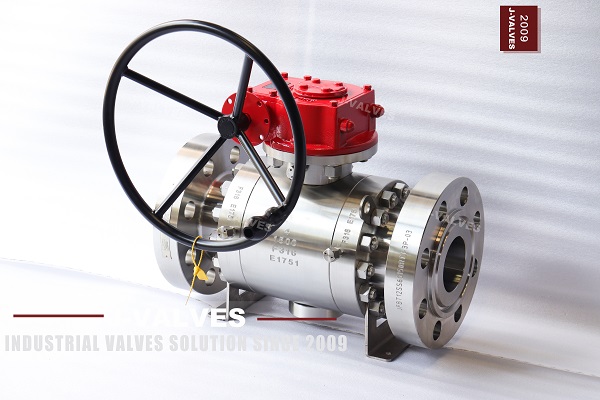
As can be seen from the picture, the valve features a compact overall structure, a stably installed actuator, and a streamlined valve body design, which helps reduce flow resistance and improve system operation efficiency.
II. Core Structure and Technical Features
1. Fully Welded Valve Body Structure
The valve body is manufactured using an integral welding forming process, with no flanges or external leakage points, significantly enhancing sealing safety. Compared with traditional flange ball valves, the fully welded structure is more suitable for buried pipelines, long-distance transportation, and harsh working conditions.
Common valve body materials include:
ASTM A105
A350 LF2
A350 LF6
These materials can adapt to low-temperature, high-pressure, and complex medium environments.
2. Electric Actuator System
The electric actuator has the following advantages:
Supports on-off or regulating control
Enables remote control (DCS/PLC)
Built-in overload protection and limit protection
Optional explosion-proof design and high protection rating (IP67/IP68)
The actuator is connected to the valve stem coaxially, featuring high transmission efficiency and fast response, making it suitable for automated management and control systems.
3. Wide Range of Specifications
According to the picture information, electric fully welded ball valves can cover:
Size Range: 2"–60" (DN50–DN1500)
Pressure Rating: 150LB–2500LB (PN16–PN420)
They can meet the diverse needs of conventional industrial pipelines to high-pressure transmission systems.
Zero External Leakage Design: The fully welded structure eliminates medium leakage.
Long Service Life: Minimal wear on key seals results in low maintenance frequency.
High Automation Level: Suitable for smart factories and remote control systems.
Flexible Installation: Applicable to both above-ground and buried pipelines.
Stable Operation: Smooth opening and closing, with strong vibration and impact resistance.
IV. Typical Application Fields
Electric fully welded ball valves are widely used in the following industries:
Natural gas transmission and distribution systems
Petroleum and refined oil pipelines
Chemical and fine chemical plants
Urban heating and water supply projects
Metallurgical, power, and environmental protection projects
Pharmaceutical and special process pipelines
In scenarios requiring high safety, low maintenance, and automated control, this type of valve demonstrates significant advantages.