

In oil & gas, petrochemical, LNG, and other high-risk process systems, a valve must do more than simply isolate flow. It must also remain structurally reliable when exposed to fire. For pipeline ball valves, API 6D defines the requirements for the design, manufacture, assembly, testing, and documentation of ball, check, gate, and plug valves used in pipeline and piping systems. For fire-safe qualification, industry discussions commonly reference API 6FA, API 607, and ISO 10497 depending on valve design and project specification.
I. What is API 6FA?
API 6FA is API’s fire test standard for valves. API’s own catalog lists it as “Specification for Fire Test for Valves,” and the catalog description indicates that it is used to test and evaluate pressure-containing performance under defined fire conditions. For buyers and engineers, that makes API 6FA a key document when fire-safe performance must be proven, not just claimed.
II. Why does a trunnion ball valve need fire-safe certification?
Trunnion ball valves are often selected for high-pressure, large-size, and critical pipeline service. In a fire scenario, the valve can face extreme thermal stress, seal degradation, and deformation risk. Fire-safe certification does not mean the valve is “fireproof”; it means the design has been type-tested to show that it can retain pressure-containing capability during and after fire exposure. API 607’s official description explicitly focuses on confirming pressure-containing capability during and after the fire test.
III. Which standards are most relevant?
API 6D covers the baseline requirements for pipeline and piping valves, including ball valves.
API 6FA focuses on fire testing for valves and is widely used in fire-safe qualification discussions.
API 607 specifies fire testing requirements for quarter-turn valves and valves equipped with nonmetallic seats; the API catalog also notes that actuator fire testing is outside the scope of the standard.
ISO 10497:2022 specifies fire type-testing requirements and a fire type-test method for soft- and metal-seated isolation valves.
IV. What should buyers verify before purchase?
A strong fire-safe procurement package should confirm four things: the valve’s API 6D applicability, the exact fire test standard used, the tested size/pressure/material range, and whether the actuator, packing, and sealing design match the actual service conditions. Standards are not interchangeable, so the final selection should follow the project specification rather than a generic “fire safe” label.
V. Typical applications
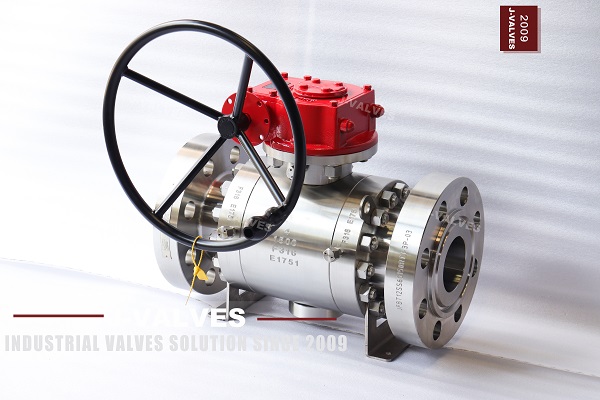
API 6FA trunnion ball valves are commonly positioned for oil & gas transmission, refining, LNG systems, chemical processing, and other critical services where shutdown reliability matters as much as flow control. This is where clear technical content helps both users and search engines: it answers the buyer’s real question—“Will this valve meet my project fire-safe requirement?”—instead of repeating keywords without value.
VI. FAQ
Q1: Is API 6FA the same as API 607?
No. API 6FA is API’s fire test standard for valves, while API 607 is specifically for quarter-turn valves and valves with nonmetallic seats.
Q2: Does a trunnion ball valve always need API 6FA certification?
Not always. The right standard depends on valve design, seat material, project requirements, and purchaser specification. In practice, API 6FA, API 607, and ISO 10497 are all possible references, but they are not used as blanket substitutes for one another.
Q3: Does fire-safe certification mean the valve is completely fireproof?
No. It is a qualification showing that the valve can maintain acceptable pressure-containing performance under the defined fire test conditions.