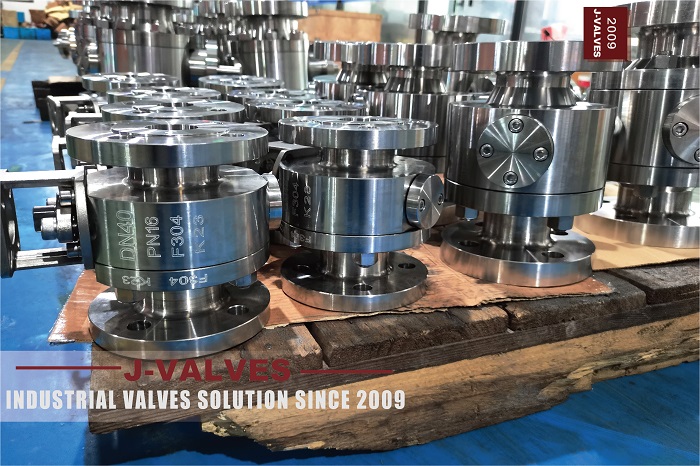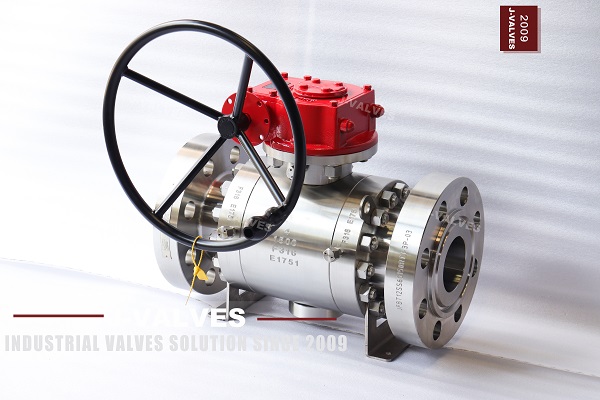


Trunnion-mounted ball valves are widely used in various industrial applications, especially in oil and gas, chemical, and power plants. These valves provide essential flow control in pipelines, offering features like high-pressure performance, ease of operation, and durability. When selecting a trunnion ball valve for your application, it's important to understand the differences between Top Entry and Side Entry designs. These two valve configurations are distinguished by how they are assembled, operated, and maintained.
What Are Trunnion-Mounted Ball Valves?
Before diving into the specific designs, let's first understand the basic structure of a trunnion-mounted ball valve. These valves are equipped with a ball that is mounted on two trunnions—one on top and one on the bottom—allowing for smoother and more controlled operation under high pressures. Trunnion valves are typically used in larger pipe sizes and are known for their ability to handle high-pressure applications, making them a preferred choice in many industries.
Top Entry Trunnion Valves
In a top-entry trunnion valve, the ball is inserted and removed from the top of the valve body. This design allows for easier maintenance, as the valve body doesn't need to be disassembled from the pipeline during servicing. The key features of top-entry valves include:
Maintenance Accessibility:
The primary advantage of a top-entry valve is the ability to access the internals without removing the valve from the pipeline. This reduces downtime, minimizes the need for complex disassembly, and saves labor costs.
Reusability:
Due to its design, top-entry valves often have components that can be reused multiple times, reducing the overall cost of maintenance.
Compact Design:
These valves tend to have a more compact design, which can be ideal when space constraints are an issue.
Applications:
Top-entry trunnion valves are particularly advantageous in applications that require regular maintenance, such as in the oil and gas industry, where valves must be inspected and serviced frequently.
Side Entry Trunnion Valves
In contrast, side-entry trunnion valves have a ball that is inserted and removed from the side of the valve body. This design is more common in applications where valve replacement or maintenance isn't as frequent, as the components cannot be accessed as easily without removing the entire valve from the pipeline. The main features of side-entry valves are:
Durability and Reliability:
Side-entry valves generally have a simpler design and are often more robust for certain applications. The side-entry design can withstand higher pressures without compromising structural integrity.
Cost-Effective for Less Frequent Maintenance:
These valves are often more cost-effective in situations where maintenance is not as frequent. Since they do not require top-entry access, they can be made at a lower manufacturing cost.
Applications:
Side-entry valves are commonly used in applications that require high-performance, but with less frequent servicing, such as in power plants or chemical processing industries.
Larger Valve Sizes:
Side-entry valves are often available in larger sizes, making them suitable for pipelines that need to accommodate high-flow capacities.
Key Differences Between Top Entry and Side Entry Trunnion Valves
| Feature | Side Entry Trunnion Valves | |
Access for Maintenance | Easier maintenance, no need to remove from pipeline | Maintenance requires valve removal from pipeline |
Design Complexity | More complex, as components must be removable from the top | Simpler, fewer moving parts in assembly |
Cost | Higher cost due to more complex design and ease of maintenance | Generally lower cost due to simpler design |
Durability | Suitable for high-cycle applications that require frequent maintenance | Highly durable, better for long-term reliability with minimal servicing |
Ideal Applications | Oil and gas, chemical, or industries requiring frequent maintenance | Power generation, petrochemical, and industries with lower maintenance needs |
Size Availability | Often smaller sizes, ideal for space-constrained applications | Larger sizes are more common |
Which One Is Right for You?
When choosing between a top-entry and side-entry trunnion valve, consider the following factors:
Maintenance Requirements: If your application requires frequent maintenance or repairs, a top-entry valve may be more beneficial due to easier access to internal components.
Size and Space Constraints: If space is limited, top-entry valves may be more compact, but side-entry valves tend to offer larger sizes for higher flow rates.
Pressure and Durability: Side-entry valves are often better suited for high-pressure applications that require superior durability over time.
Cost Considerations: Top-entry valves may have higher upfront costs due to their more complex design but can save on maintenance costs in the long run. Side-entry valves are more cost-effective if maintenance is less frequent.
Conclusion
In conclusion, both top-entry and side-entry trunnion valves offer distinct advantages depending on the application. Top-entry valves are the preferred choice for industries requiring regular maintenance and easy access, while side-entry valves excel in high-pressure, large-scale applications with less frequent maintenance needs. Understanding the key differences between these two types will help you make an informed decision that best suits your operational requirements.