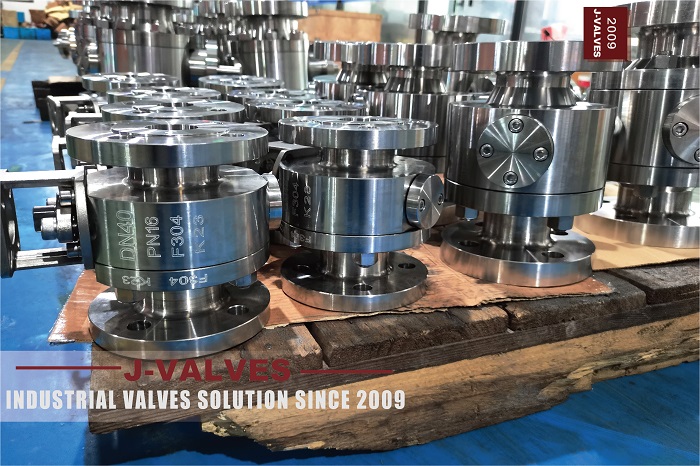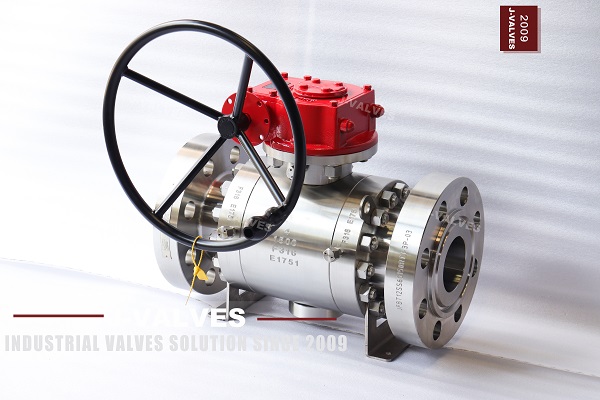


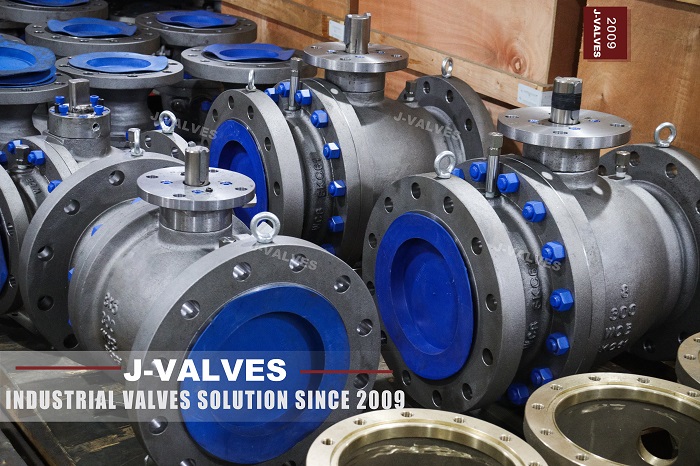
In industrial piping systems, floating ball valves are widely used because of their compact structure, quick operation, and reliable sealing performance. For medium to high-pressure applications, the 2PC WCB Floating Ball Valve ANSI Class 300 DN200 is a practical and cost-effective solution. At the same time, when corrosion resistance and long service life become top priorities, the CF8 floating ball valve offers even greater value in many projects.
J-VALVES focuses on industrial valve manufacturing and customization. Based on different media, pressure ratings, and connection standards, J-VALVES provides valve solutions designed for real operating conditions. Whether the valve body is made of WCB carbon steel or CF8 stainless steel, the main goal remains the same: stable sealing, dependable operation, and long-term performance.
I. What Is a 2PC Floating Ball Valve?
A 2-piece floating ball valve is built with two main body sections. Inside the valve, the ball is pushed slightly toward the downstream seat by the line pressure, which creates a tighter seal. This design offers several advantages:
Simple structure and easy maintenance
Low operating torque
Fast opening and closing
Excellent sealing performance
Suitable for a wide range of fluids
For ANSI Class 300 and DN200 specifications, this type of valve is commonly used in applications where pressure resistance, durability, and reliable shutoff are essential.
II. WCB vs. CF8: What Is the Difference?
WCB is a carbon steel material commonly used in general industrial service. It offers good mechanical strength and a cost advantage. CF8, on the other hand, is a stainless steel cast material equivalent to cast 304 stainless steel, offering much better corrosion resistance and cleaner surface performance.
CF8 floating ball valves are especially suitable for environments such as:
Corrosive media
Wet, humid, or marine conditions
Systems requiring high cleanliness
Applications that demand longer service life and less maintenance
While WCB valves remain a strong choice for many standard projects, CF8 is often the better option when the operating environment becomes more aggressive.
III. Key Advantages of CF8 Floating Ball Valves
1. Superior Corrosion Resistance
CF8 stainless steel performs much better than carbon steel in contact with water, air, weak acids, weak alkalis, and many chemical media. It is less likely to rust or degrade, making it highly suitable for chemical processing, water treatment, food-related utility systems, and coastal installations.
2. Longer Service Life
Better corrosion resistance means less internal damage and slower wear. For systems that operate frequently or continuously, a CF8 floating ball valve can significantly extend service life and reduce unplanned downtime, lowering the total cost of ownership.
3. Stable Sealing Performance
One of the biggest strengths of a floating ball valve is its excellent shutoff capability. With the stable material properties of CF8 and precision machining, the valve can maintain reliable sealing under medium to high-pressure conditions, especially when paired with PTFE, RPTFE, or other high-performance seats.
4. Suitable for Multiple Applications
CF8 floating ball valves are not limited to one industry. They can be used in general process systems, clean fluid lines, and applications that demand consistent control and leak reduction. For projects where system safety and operational stability matter, CF8 is a smart material choice.
5. Better Appearance and Easier Maintenance
Stainless steel surfaces are cleaner, smoother, and easier to inspect. For engineering projects that value both performance and professional appearance, CF8 valves provide an advantage in both function and presentation.
IV. Why ANSI Class 300 DN200 Matters
ANSI Class 300 indicates a higher pressure rating suitable for demanding industrial service, while DN200 refers to a relatively large nominal size. This combination is commonly found in:
Oil and gas pipelines
Chemical transfer systems
Water treatment and circulation systems
Steam and utility lines
Plant automation and process control systems
In these applications, the valve must do more than simply open and close. It must also withstand pressure, deliver consistent performance, and remain dependable over time. J-VALVES 2PC ball valve design offers a compact but durable solution for such requirements.
V. Why Choose J-VALVES?
J-VALVES pays close attention to material selection, machining accuracy, and application suitability. Depending on project requirements, the company can provide:
WCB, CF8, CF8M, and other body materials
ANSI, API, DIN, and related standards
Manual, pneumatic, and electric operation
Customized sizes, pressure classes, and end connections
For buyers and engineers, selecting a valve is not only about looking at technical data. It is also about matching the valve to the actual medium, environment, and maintenance expectations. That is where J-VALVES adds real value by offering solutions based on application needs, not just generic products.
VI. Conclusion
The 2PC WCB Floating Ball Valve ANSI Class 300 DN200 - J-VALVES represents a proven industrial valve solution. However, from a practical application perspective, the CF8 floating ball valve stands out for its corrosion resistance, sealing stability, service life, and maintenance convenience.
For projects that demand better material performance, lower maintenance frequency, and improved system reliability, CF8 is often the more suitable choice. J-VALVES continues to deliver dependable valve solutions for industrial users around the world.