


Stainless steel ball valves can be closed with only a 90-degree rotation and a small torque. The completely equal body cavity provides the medium with little resistance, through the flow channel. The main characteristic of stainless steel ball valves is their compact construction and ease of operation and maintenance. Stainless steel ball valves can be used to control the flow of various types of fluids such as air, water, steam, all kinds of corrosive media, mud, oil, liquid metal, and radioactive media. The ball valve body can be integral, and can also be combined. Stainless steel ball valves shall generally be installed horizontally in piping. Let's take a look at the working principle and advantages of stainless steel ball valves.
Here is the content list:
How Stainless Steel Ball Valves Work.
7 Benefits of Stainless Steel Ball Valves.
How to Use Stainless Steel Ball Valves.
How Stainless Steel Ball Valves Work
Stainless steel ball valves work by rotating the valve core to open or close the valve. Stainless steel ball valves switch is light, small in size, can be made into a large diameter, reliable sealing, simple structure, convenient maintenance, sealing surface and spherical surface are often closed, not easy to be eroded by media, and are widely used in various industries. Stainless steel ball valves and plug valves are the same types of valve, only their closing part is a sphere, and the sphere rotates around the center line of the valve body to open and close a valve. Stainless steel ball valves are mainly used to cut, distribute and change the flow direction of the medium in the pipeline. The ball valve is a new type of valve that is widely used.
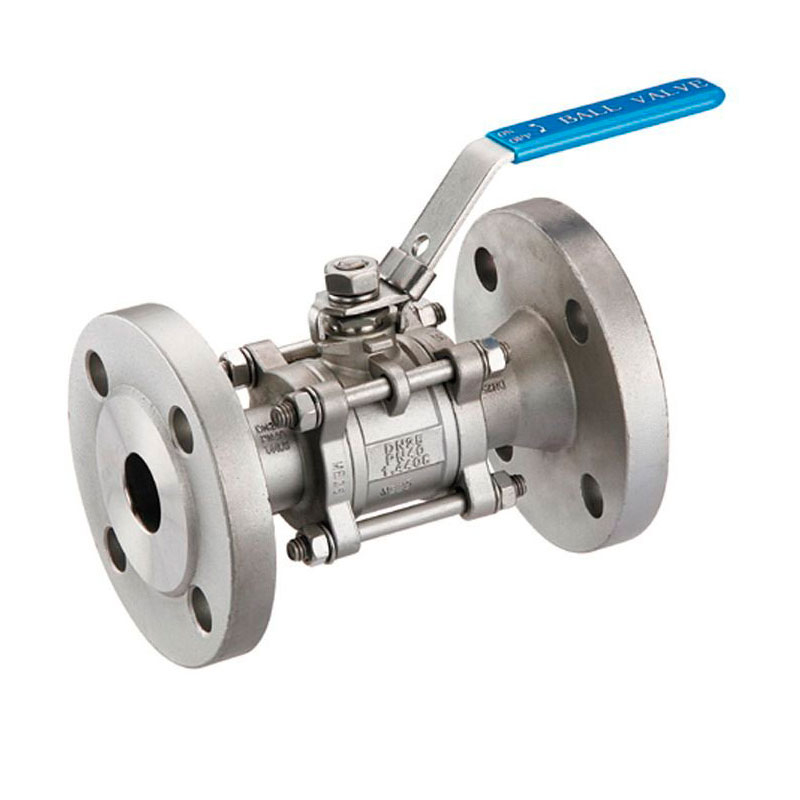
7 Benefits of Stainless Steel Ball Valves
1. Stainless steel ball valves have low fluid resistance, and their drag coefficient is equal to that of the same length of pipe.
2. Stainless steel ball valves are simple in structure, small in size, and light in weight.
3. Stainless steel ball valves are tight and reliable. The sealing surface material of ball valves is widely used in plastic, with good sealing performance. It is also widely used in vacuum systems.
4. Stainless steel ball valves are easy to operate, open and close quickly, and only need to rotate 90° from fully open to fully closed, which is convenient for long-distance control.
5. Stainless steel ball valves are easy to maintain, the ball valve has a simple structure, the sealing ring is generally movable, and it is more convenient to disassemble and replace.
6. When Stainless steel ball valves are fully opened or fully closed, the sealing surface of the ball and the valve seat is isolated from the medium, and the sealing surface of the valve will not be corroded when the medium passes through.
7. Stainless steel ball valves are suitable for a wide range of applications, ranging from small diameters to several millimeters to several meters, from high vacuum to high pressure. Stainless steel ball valves have been widely used in the petroleum, chemical industry, power generation, paper making, atomic energy, aviation, rocket, and other sectors, as well as people's daily life.
How to Use Stainless Steel Ball Valves
First, make sure that the pipes and valves have been flushed before operation. Second, the operation of stainless steel ball valves drives the valve stem to rotate according to the size of the input signal of the actuator: when it rotates forward 1/4 turn (900), the valve is closed. The valve is closed when it is rotated 1/4 turn (900) forward. Reverse rotation 1/4 turn (900), and the valve opens. Third, when the actuator direction indicating arrow and pipeline parallel, the valve is open; When the indicating arrow is perpendicular to the line, the valve is closed.
If you are interested in our stainless steel ball valves products or have other needs, you can contact us, our website is https://www.ballvalvess.com/.


