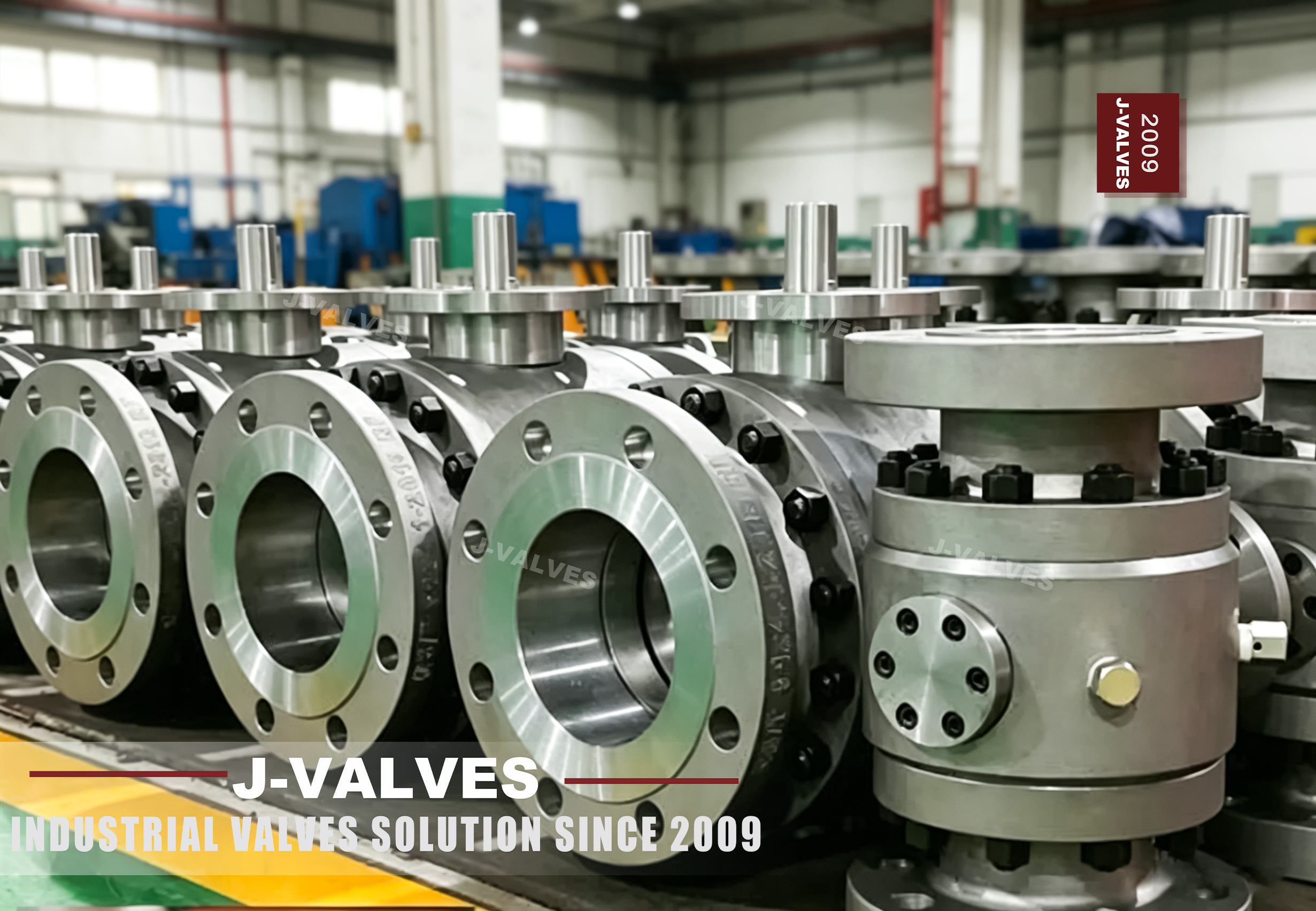
In the industrial field and numerous engineering projects, valves play a crucial role. They are like precise "traffic conductors", controlling the flow of fluid media. And the J-VALVES ASME B16.34 trunnion ball valves, with their own unique advantages, shine brightly in many different scenarios. Today, let's take a look at what its application scenarios are.
The Oil and Gas Industry
During the exploration, transportation, and processing of oil and gas, a large number of reliable valves are needed to ensure the safety and efficiency of the entire process. The J-VALVES ASME B16.34 trunnion ball valves have key applications in wellhead devices. When oil is just extracted from the ground, it can precisely control the flow direction of crude oil, withstand high-pressure environments and complex situations such as impurities that may be mixed in the crude oil, ensuring that the crude oil can smoothly enter the subsequent gathering and transportation pipelines.
On the natural gas transmission pipelines, this kind of ball valve is equally indispensable. Since natural gas needs to be transported over long distances and under high pressure, the sealing requirements for valves are extremely high. And its excellent sealing performance can effectively prevent natural gas leakage, avoid energy waste and potential safety hazards such as fire, explosion and other dangerous situations, firmly safeguarding the "main artery" of natural gas transmission.
In addition, in oil and gas refineries, in the face of various chemical media with different temperatures and corrosiveness, the J-VALVES ASME B16.34 trunnion ball valves can accurately adjust and control the flow of media such as petroleum fractions and various chemical raw materials by virtue of their good corrosion resistance and stable structure, helping the entire refining production process proceed in an orderly manner.
The Chemical Industry
Chemical production often involves various strong acids, strong alkalis, organic solvents and other chemical substances with extremely strong corrosiveness and variable properties. The J-VALVES ASME B16.34 trunnion ball valves adopt high-quality materials and advanced manufacturing processes, enabling them to possess excellent chemical corrosion resistance.
In fertilizer production, whether it is the transportation of raw materials such as ammonia and sulfuric acid or the preparation of finished fertilizer solutions, it can accurately open and close, ensuring that materials flow according to production requirements and will not be damaged or leak due to long-term contact with these chemical substances.
In plastic production workshops, on the transportation pipelines of chemical raw materials such as polyethylene and polypropylene before and after the polymerization reaction, this kind of ball valve can flexibly control the on-off of materials, providing a powerful guarantee for precise chemical production operations, enabling plastic products of different batches and specifications to be successfully produced.
In the pharmaceutical industry, a chemical sub-sector with extremely high requirements for hygiene and precision, the J-VALVES ASME B16.34 trunnion ball valves are also competent. It can precisely control the flow of fluids in the synthesis of active pharmaceutical ingredients, the preparation of pharmaceutical preparations and other links. Meanwhile, its good cleanliness and sealing performance also meet the strict regulatory requirements of drug production, ensuring that the produced drugs are safe and reliable.
The Power Industry
In thermal power plants, water is an important medium in the entire power generation process. From the water inlet of the boiler to the generation of steam and then to the subsequent condensate recovery and other links, valves are needed for regulation. The J-VALVES ASME B16.34 trunnion ball valves can stably control the flow of cooling water, ensuring that the generator set will not malfunction due to excessive temperature and maintaining the normal operation of the entire thermal system.
In nuclear power plants, the control of special fluids such as radioactive media and high-temperature and high-pressure coolants allows no slightest negligence. This kind of ball valve, relying on its reliable performance and the characteristic of being manufactured in strict accordance with high standards, can accurately operate the corresponding fluids on the premise of ensuring safety, contributing to the stable operation of nuclear power plants.
The Field of Water Supply and Drainage and Municipal Engineering
The urban water supply system needs to continuously deliver clean water to thousands of households. The J-VALVES ASME B16.34 trunnion ball valves are installed at various key nodes of the water supply pipelines and can easily adjust the water flow to meet the water demand of people in different areas and at different times.
In sewage treatment plants, in the face of sewage containing various impurities and pollutants, it can play a role in all aspects such as the collection, treatment and discharge of sewage, reliably control the flow direction of sewage, prevent improper leakage of sewage from causing secondary pollution to the surrounding environment, and help create a good urban ecological environment.
Moreover, in the urban heating pipe networks, the transportation of heat media also requires valves for precise regulation. This kind of ball valve can adapt to the temperature, pressure and other conditions of the heat media, ensuring that residents can enjoy a stable and comfortable heating supply in cold winters.
In conclusion, the J-VALVES ASME B16.34 trunnion ball valves, with their excellent performance, good adaptability and reliable quality, play an irreplaceable role in many different industries and scenarios, providing a solid guarantee for fluid control in various fields and promoting the continuous progress of various engineering projects and industrial production.