



Fully welded ball valves are widely used in oil and gas, district heating, LNG, and industrial pipeline systems because of their excellent sealing performance, compact structure, and long service life. Choosing the correct valve is essential for ensuring system safety and operational reliability.
Key Selection Factors
1. Pressure and Temperature
The valve must match the operating pressure and temperature of the system. High-pressure applications usually require forged steel fully welded ball valves for better strength and durability.
2. Material Selection
Different working conditions require different valve materials.
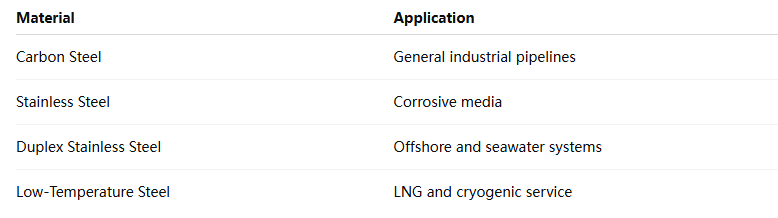
Correct material selection improves corrosion resistance and service life.
3. Bore Type
Fully welded ball valves are available in:
Full bore
Reduced bore
Full Bore
Lower pressure drop
Better flow performance
Suitable for pigging systems
Reduced Bore
More economical
Smaller and lighter
Sealing Performance
Seat materials directly affect valve reliability. Common options include:
PTFE
Reinforced PTFE
PEEK
Metal seats
Metal-seated valves are better for high-temperature and abrasive applications.
Anti-Corrosion Protection
For underground or offshore systems, valves often use:
Epoxy coatings
Corrosion-resistant alloys
Cathodic protection systems
These methods improve long-term durability.
Common Applications
Fully welded ball valves are widely used in:
Oil and gas pipelines
LNG systems
District heating networks
Offshore platforms
Petrochemical plants
Conclusion
Selecting the correct fully welded ball valve requires evaluating pressure, temperature, material compatibility, sealing design, and corrosion resistance. Proper valve selection helps improve pipeline safety, reduce maintenance costs, and ensure long-term industrial reliability.


