

Introduction
In modern industrial piping systems, flange design plays a critical role in ensuring leak-free operation, pressure stability, and long-term system reliability. Among various flange types, the Raised Face Flange (RF) has become the most widely adopted sealing configuration for trunnion mounted ball valves, especially in high-pressure and critical service applications.
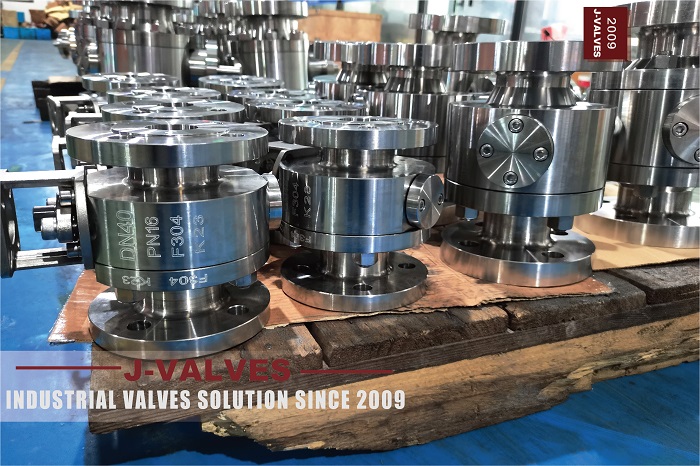
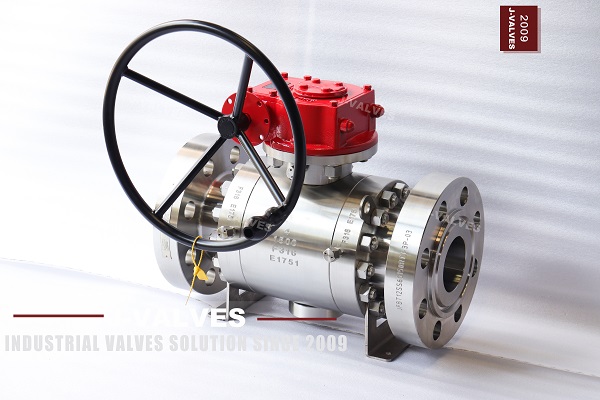
As shown in the photo, the Raised Face Flange Trunnion Ball Valve integrates a robust trunnion-supported ball structure with precision-machined RF flanges, delivering superior sealing integrity and excellent compatibility with international piping standards.
What Is a Raised Face (RF) Flange?
A Raised Face flange features a small elevated sealing surface around the bore centerline. This raised area is designed to concentrate gasket pressure, improving sealing performance under both static and fluctuating operating conditions.
Key RF Flange Characteristics:
1. Raised sealing surface (typically 1.6–6.3 μm Ra finish)
2. Optimized gasket compression
3. Compatible with flat gaskets, spiral wound gaskets, and ring gaskets
4. Standardized dimensions per ASME, EN, and DIN specifications
For trunnion ball valves, RF flanges offer a practical balance between sealing reliability and installation flexibility.
Flange Compatibility Across Global Standards
One major advantage of RF flange trunnion ball valves is their wide compatibility with international flange standards.
Common Standards Supported:
1. ASME B16.5 / B16.47
2. EN 1092-1
3. DIN Flange Series
4. ISO 7005
This compatibility allows RF trunnion ball valves to be seamlessly integrated into:
1. Oil & gas transmission pipelines
2. Chemical and petrochemical plants
3. Power generation systems
4. Industrial water and utility networks
The raised face design reduces alignment sensitivity during installation, helping contractors achieve consistent sealing without excessive bolt stress.
Sealing Integrity in Trunnion Ball Valve Design
Sealing integrity is not defined by the flange alone—it is the result of valve structure, load distribution, and precision machining.
Why RF Works Especially Well with Trunnion Ball Valves:
1. Stable Ball Positioning: Trunnion-mounted balls reduce seat load fluctuations.
2. Even Gasket Compression: RF surface focuses bolt load where sealing is most effective.
3. Reduced Leakage Risk: Ideal for high-pressure and large-diameter pipelines.
4. Long-Term Performance: Minimizes gasket creep and relaxation over time.
The photo highlights a heavy-duty valve body and flanged ends engineered to maintain sealing performance even under pressure cycling and temperature variation.
Material Selection & Surface Finish
Raised Face flanges on trunnion ball valves are typically manufactured from:
1. Carbon Steel (A105 / WCB)
2. Stainless Steel (CF8 / CF8M)
3. Alloy Steel (F11, F22)
4. Duplex & Special Alloys (on request)
Precision CNC machining ensures:
1. Flatness tolerance control
2. Uniform surface roughness
3. Reliable gasket seating
This directly impacts sealing integrity and service life in demanding industrial environments.
Typical Applications
Raised Face Flange Trunnion Ball Valves are commonly used in:
1. High-pressure oil & gas pipelines
2. Refinery and petrochemical units
3. LNG and gas processing facilities
4. Industrial process isolation
5. Utility and infrastructure projects
Their design offers a cost-effective yet highly reliable sealing solution for both onshore and offshore installations.
Conclusion
The Raised Face Flange (RF) Trunnion Ball Valve represents a proven combination of global flange compatibility and dependable sealing integrity. By pairing a trunnion-supported ball mechanism with precision-machined RF flanges, this valve design delivers consistent performance, simplified installation, and long-term operational safety.
For industries where leakage prevention and standard compliance are non-negotiable, RF flange trunnion ball valves remain a trusted and widely adopted solution.