



Introduction
With the rapid development of LNG, natural gas processing, hydrogen energy, and other low-temperature industries, the demand for reliable cryogenic valve solutions has continued to increase. In these applications, valves must maintain stable sealing performance and mechanical integrity under extremely low-temperature conditions.
The cryogenic floating ball valve is an important isolation component designed for low-temperature fluid systems. Its compact structure, reliable shutoff capability, and excellent adaptability make it widely used in LNG terminals, cryogenic storage systems, gas processing facilities, and energy transportation pipelines.
Unlike conventional floating ball valves used at normal temperatures, cryogenic floating ball valves require specialized design considerations, including extended bonnet structures, low-temperature materials, thermal contraction compensation, and advanced sealing technology.
J-VALVES provides engineered cryogenic floating ball valve solutions designed to meet demanding industrial requirements with reliable performance and long service life.
1. Working Principle of Cryogenic Floating Ball Valves
A floating ball valve operates through a ball that is not fixed by a trunnion support. Instead, the ball is allowed to move slightly under pipeline pressure.
During operation:
The valve opens when the stem rotates the ball 90 degrees.
The flow passage aligns with the pipeline.
When closing, the ball rotates to block the flow.
Upstream pressure pushes the floating ball toward the downstream seat.
The seat and ball form a tight sealing interface.
This pressure-assisted sealing principle enables reliable shutoff performance with a relatively simple structure.
2. Key Design Features of Cryogenic Floating Ball Valves
2.1 Extended Bonnet Design
One of the most important features of cryogenic floating ball valves is the extended bonnet structure.
The extended bonnet provides:
Sufficient distance between packing area and cryogenic medium
Protection of stem sealing components
Reduction of ice formation around the operating area
Improved insulation performance
This design helps maintain stable valve operation under extremely low temperatures.
2.2 Low Temperature Material Selection
Material selection is critical for cryogenic applications because ordinary carbon steel may lose toughness at low temperatures.
Common cryogenic valve materials include:
Low Temperature Carbon Steel
Examples:
ASTM A352 LCC
ASTM A350 LF2
Advantages:
Excellent low-temperature impact toughness
Good mechanical strength
Suitable for LNG applications
Stainless Steel
Examples:
CF8M
F316
Advantages:
Excellent corrosion resistance
Good cryogenic performance
Suitable for demanding process conditions
2.3 Pressure Energized Seat Design
Cryogenic floating ball valves commonly use pressure-assisted sealing structures.
When pressure increases:
The ball moves toward the downstream seat
Contact pressure increases
Leakage risk is reduced
This design provides reliable sealing performance during:
Startup operations
Pressure fluctuations
Thermal cycling conditions
3. Safety Advantages of Cryogenic Floating Ball Valves
3.1 Reliable Leakage Control
In LNG and cryogenic systems, leakage control is extremely important.
Cryogenic floating ball valves achieve reliable isolation through:
Precision-machined ball surfaces
Optimized seat materials
Low-temperature sealing technology
Accurate assembly processes
These features help maintain stable sealing performance throughout the valve service life.
3.2 Anti-Blowout Stem Design
Safety-critical valve applications require protection against stem failure.
A cryogenic floating ball valve normally incorporates:
Internal stem installation
Anti-blowout structure
Secondary sealing protection
This prevents stem release under abnormal pressure conditions.
3.3 Fire Safe Performance
For hydrocarbon applications, fire-safe design is an important requirement.
Typical features include:
Metal-to-metal backup sealing
Graphite secondary seals
Fire-resistant packing systems
These structures help maintain isolation capability during emergency conditions.
4. Performance Analysis of Cryogenic Floating Ball Valves
4.1 Torque Performance
Floating ball valves generally have a simple operating mechanism.
Advantages include:
Compact structure
Easy operation
Lower manufacturing complexity
However, as pressure increases, the force acting on the ball also increases.
Therefore, proper seat design and torque calculation are essential for reliable operation.
4.2 Flow Characteristics
Cryogenic floating ball valves usually feature:
Full bore design
Straight flow passage
Low flow resistance
Benefits include:
Reduced pressure loss
Improved system efficiency
Lower turbulence
4.3 Thermal Contraction Compensation
Low-temperature operation causes contraction of metal components.
A properly designed cryogenic floating ball valve considers:
Body contraction
Seat deformation
Stem expansion differences
Sealing preload changes
Engineering solutions help maintain stable sealing performance during temperature variations.
5. Applications of Cryogenic Floating Ball Valves
LNG Industry
Cryogenic floating ball valves are widely used in:
LNG storage tanks
LNG loading systems
Cryogenic transfer pipelines
Natural Gas Processing
Applications include:
Gas separation units
Low-temperature process lines
Purification systems
Hydrogen and Clean Energy Systems
Low-temperature valves are increasingly applied in:
Hydrogen liquefaction systems
Cryogenic transportation equipment
Energy storage facilities
6. J-VALVES Advantages in Cryogenic Floating Ball Valve Manufacturing
J-VALVES has extensive experience in designing and manufacturing industrial valve solutions for demanding applications.
6.1 Professional Cryogenic Engineering Capability
J-VALVES focuses on:
Low-temperature material selection
Cryogenic structural optimization
Sealing system improvement
Application-based valve design
Each valve solution is developed according to operating temperature, pressure rating, and service requirements.
6.2 Strict Material Traceability
For cryogenic floating ball valves, J-VALVES implements:
Raw material inspection
Chemical composition verification
Mechanical property testing
Material certificate control
This ensures material reliability in extreme operating conditions.
6.3 Advanced Manufacturing and Testing
Manufacturing processes include:
Precision machining
Sealing surface finishing
Assembly control
Pressure testing
Testing procedures may include:
Shell hydrostatic test
Seat leakage test
Low-temperature performance verification
Dimensional inspection
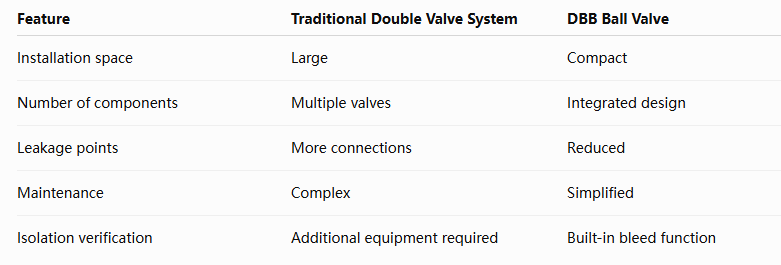
7. Cryogenic Floating Ball Valve vs Cryogenic Trunnion Ball Valve
8. Why Choose Cryogenic Floating Ball Valves for LNG Systems?
Cryogenic floating ball valves offer several advantages:
Compact design
Reliable shutoff performance
Suitable for low-temperature applications
Easy maintenance
Efficient flow characteristics
Flexible installation options
Their combination of safety, performance, and reliability makes them an important valve solution for modern LNG and cryogenic systems.
Conclusion
The cryogenic floating ball valve is a specialized industrial valve designed to provide dependable isolation under extremely low-temperature conditions. Through advanced material selection, extended bonnet design, pressure-assisted sealing technology, and strict manufacturing control, these valves achieve excellent performance in LNG, natural gas, and clean energy applications.
With professional engineering experience, advanced production technology, and comprehensive quality control, J-VALVES delivers high-performance cryogenic floating ball valve solutions for global industrial projects.


