


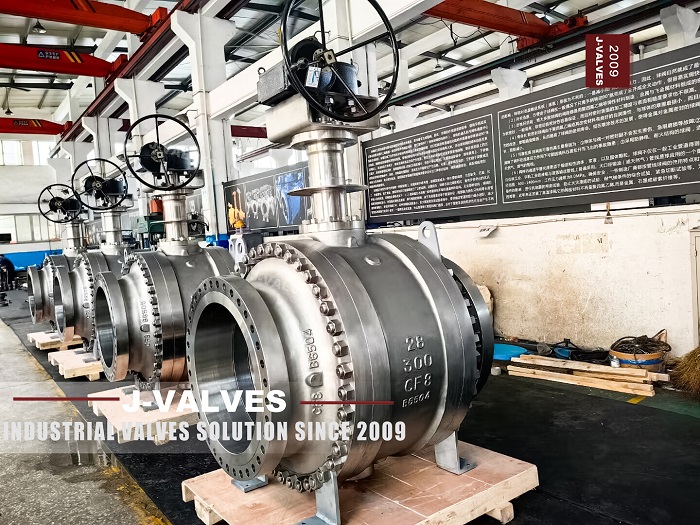
Cryogenic ball valves are widely used in LNG, liquid oxygen, liquid nitrogen, and liquid argon systems.
These valves must perform reliably under extremely low temperatures, which means proper storage and maintenance are just as important as product quality.
If a cryogenic valve is stored in a humid, dusty, or poorly managed environment, problems may appear later, such as damaged sealing surfaces, corrosion, stiff stem movement, or internal contamination.
That is why valve storage and maintenance should never be treated as a minor task.
I. Why Storage and Maintenance Matter?
Cryogenic ball valves are designed for demanding applications.
Their body, stem, seats, and sealing materials must remain in good condition to perform well in service.
Poor handling or storage may lead to:
Scratched sealing surfaces
Moisture-related corrosion
Loss of lubricant performance
Dirt or foreign matter inside the valve
Deformation caused by stacking or impact
In short, a cryogenic valve’s lifetime depends not only on manufacturing quality, but also on how it is stored and maintained.
II. Pre-Storage Inspection Checklist
Before placing the valve into storage, it is a good practice to check the following items:
Inspection Item | Recommended Action | Purpose |
Visual condition | Check for dents, scratches, or transport damage | Detect issues early |
End protection | Confirm end caps or covers are intact | Keep dust and debris out |
Nameplate and marking | Verify model, size, pressure rating, and material | Prevent wrong handling |
Documents | Review certificates, packing list, and records | Support traceability |
Valve position | Confirm the recommended open or closed condition | Protect sealing parts |
III. How to Store Cryogenic Ball Valves Correctly?
1. Keep the storage area dry, clean, and ventilated
Store the valve in a dry warehouse whenever possible.
Avoid exposure to rain, condensation, and high humidity.
2. Do not place valves directly on the floor
Use pallets or supports to keep the valve off the ground.
This helps reduce moisture exposure and physical damage.
3. Protect sealing ends and port openings
End caps should remain in place.
If they are removed for inspection, they should be replaced immediately after use.
4. Avoid stacking too high
Heavy valves should not be stacked in a way that may cause deformation or unnecessary stress.
Large-diameter cryogenic valves need stable support.
5. Keep away from corrosive substances
Do not store valves near acids, alkalis, salt spray, or oily contamination areas.
IV. Maintenance Tips for Cryogenic Ball Valves
Even when a valve is not yet in service, basic maintenance is still important.
Maintenance Item | Suggested Frequency | Key Focus |
Visual inspection | Monthly or quarterly | Check for rust, damage, or moisture |
Operational check | Scheduled light operation | Ensure smooth stem movement |
Seal condition check | Periodic review | Detect potential leakage risks |
Lubrication check | According to product requirements | Maintain stem and moving parts |
Packaging restoration | After each inspection | Keep the valve protected |
V. What to Avoid During Maintenance?
1. Do not disassemble without need
Cryogenic ball valves have precise internal structures.
Unnecessary disassembly may damage sealing parts.
2. Use suitable cleaning methods
Clean the valve with a soft cloth and appropriate cleaning materials.
Avoid metal tools that may scratch sealing surfaces.
3. Do not use incompatible lubricants
Cryogenic service requires specific lubricant performance.
Always follow the valve manual or technical requirements.
4. Check the actuator if installed
If the valve is fitted with pneumatic, electric, or gear-operated actuators, inspect the linkage, limit stops, and movement.
5. Keep maintenance records
A simple log of storage time, inspection date, maintenance actions, and abnormal findings can save time later.
VI. Storage vs. Maintenance: Correct Practice vs. Common Mistakes
Item | Correct Practice | Common Mistake | Possible Result |
Storage environment | Dry, clean, ventilated | Outdoor or damp storage | Corrosion and contamination |
End protection | Keep covers intact | Leave ports open | Dirt enters the valve |
Stacking method | Stable placement | Heavy stacking | Valve deformation |
Lubrication | Check according to spec | Ignore after delivery | Stiff movement |
Operation | Gentle and regular | Forceful handling | Seal and part damage |
VII. Recommended Long-Term Storage Process
Inspect the valve before storage
Clean it and confirm that all ends are sealed
Store it in a dry, non-corrosive area
Record model, quantity, and storage date
Inspect it regularly and update records
Check the valve again before shipment or installation
Perform required tests before use
This simple process can help reduce field failure risk and improve project reliability.
VIII. J-VALVES Expert Advice
For cryogenic valves, performance does not depend on the product alone.
How the valve is stored, moved, and maintained is equally important.
J-VALVES recommends that users manage procurement, storage, transport, and installation in a standard way.
This helps cryogenic ball valves perform more reliably in LNG systems, low-temperature storage, and other special process applications.
When choosing a cryogenic valve solution, consider:
Material compatibility
Sealing reliability
Structural design
Storage and transport protection
Maintenance convenience
Conclusion
The value of a cryogenic ball valve is not limited to its factory performance.
Its long-term reliability depends on proper storage and maintenance.
A clean, dry, and well-managed storage process helps protect sealing performance, operating smoothness, and service life.
For engineering projects, these details often decide whether the system runs more reliably and with fewer shutdown risks.
Follow J-VALVES for more practical valve selection, operation, and maintenance insights.
FAQ
Q1: Can cryogenic ball valves be stored outdoors for a long time?
It is not recommended. Outdoor storage may cause moisture, dust, and corrosion issues.
Q2: How often should a cryogenic ball valve be inspected?
Monthly or quarterly inspection is usually a good practice, depending on storage conditions and project needs.
Q3: Should the valve stay open or closed during storage?
Follow the product instructions and packaging condition. The key is to keep the sealing surfaces and port protection in good condition.


