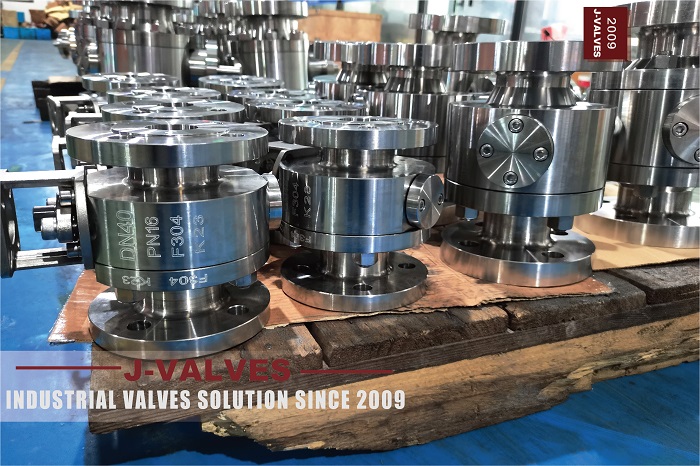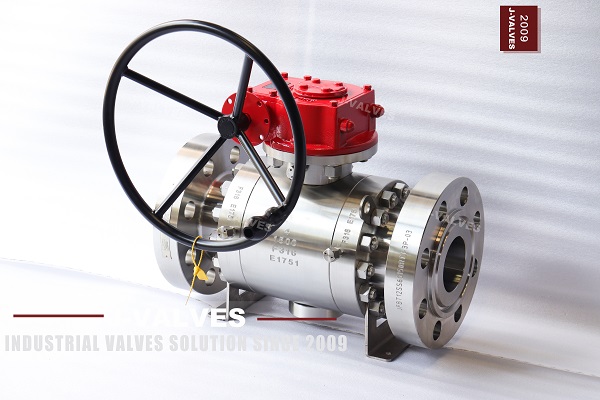


Trunnion ball valves are critical components in fluid control systems across a variety of industries, including oil and gas, chemical processing, water treatment, and power generation. These valves are known for their ability to handle high pressures and large volumes of fluid, making them indispensable in demanding applications.
What Are Trunnion Ball Valves?
A trunnion ball valve is a type of valve where the ball is supported by a shaft (trunnion) at both the top and bottom, providing stability and reducing the friction that occurs during operation. Unlike floating ball valves, which rely on the flow of media to pressurize the ball against the seat for sealing, trunnion ball valves are designed with two fixed points of support, making them ideal for high-pressure applications. This unique design ensures that the ball remains stationary under pressure, offering a more reliable seal and requiring less torque to operate.
Trunnion Ball Valve Product Series
Trunnion ball valves come in a range of product series, each designed to meet the specific requirements of different industries and applications. Below are the primary product series of trunnion ball valves:
1. Standard Trunnion Ball Valves
This series of valves is designed for general industrial use, such as in pipelines for oil, gas, and water. They are widely used in both upstream and downstream oil and gas operations, chemical processing, and general flow control. These valves come in various pressure ratings and sizes, and they can be equipped with either soft or metal seats to meet specific sealing requirements.
Pressure Ratings: Typically available from Class 150 to Class 2500, suitable for medium- to high-pressure systems.
Size Range: Common sizes range from 2" to 56" (DN50 to DN1400).
Material Options: Carbon steel, stainless steel, and alloys.
2. Cryogenic Trunnion Ball Valves
Designed for applications involving extremely low temperatures (such as in liquefied natural gas (LNG) production and storage), cryogenic trunnion ball valves are built to withstand temperature ranges as low as -196°C (-320°F). These valves are specifically engineered to maintain tight sealing and operational integrity in extreme conditions.
Temperature Range: Suitable for temperatures as low as -196°C (-320°F).
Special Features: Enhanced sealing materials, cryogenic testing, extended stem, and insulation to protect the valve body.
3. Fire-Safe Trunnion Ball Valves
Fire-safe trunnion ball valves are designed to provide safe and reliable operation in environments where the risk of fire is high. These valves meet the stringent fire-safety standards, ensuring that they continue to function even under fire conditions.
Fire-Safe Compliance: Conforms to API 607, ISO 10497, and other international fire-safety standards.
Materials: Typically includes graphite packing, metal-to-metal sealing, and fire-resistant body materials to prevent leakage during fire events.
4. Double Block and Bleed (DBB) Trunnion Ball Valves
Double Block and Bleed (DBB) trunnion ball valves provide two independent seals to prevent leakage in the system. They are designed with a bleed valve between the two seats, which allows operators to vent any trapped media in the valve body. These valves are commonly used in critical applications where leakage cannot be tolerated.
Functionality: Dual block seals and bleed valve.
Applications: High-risk applications such as petroleum and chemical processing, where isolation and leakage prevention are paramount.
5. Metal-Seated Trunnion Ball Valves
These valves are designed for high-temperature and abrasive applications, where standard soft-seated valves might fail. The metal seats are resistant to wear and tear, making them ideal for severe conditions such as handling high-viscosity fluids, slurries, and high-pressure steam.
Sealing Material: Metal-to-metal seals that resist wear and high temperatures.
Applications: Petrochemical, power generation, and other high-temperature applications.
6. Top-Entry Trunnion Ball Valves
Top-entry trunnion ball valves are designed for easy maintenance and repairs. The top-entry design allows the valve to be serviced and disassembled without removing it from the pipeline, which is a significant advantage for systems where maintenance downtime needs to be minimized.
Maintenance: Easier servicing with top-entry access.
Applications: Ideal for critical systems requiring frequent maintenance, such as oil and gas pipelines.
Technical Highlights of Trunnion Ball Valves
Trunnion ball valves are characterized by their exceptional performance in high-pressure, high-temperature, and challenging fluid environments. Below are some key technical highlights that set trunnion ball valves apart from other valve types:
1. Reduced Torque Requirements
One of the major advantages of trunnion ball valves is their reduced torque requirements. Since the ball is fixed at both ends, it does not float freely like in a traditional ball valve. This fixed design significantly lowers the torque required to operate the valve, making it ideal for large-diameter and high-pressure systems.
2. High Pressure and Large Bore Capabilities
Trunnion ball valves are designed to handle high pressures and large flow rates. With pressure ratings ranging from Class 150 to Class 2500, these valves are suitable for a wide range of industrial applications, from regular flow control to high-pressure systems.
Pressure Range: Up to 2500 psi or higher.
Flow Capacity: Ideal for full-bore applications that require minimal flow restriction.
3. Long Service Life
The design of trunnion ball valves minimizes wear and tear on critical components such as the ball and seat, ensuring a longer operational life. The trunnion design also helps maintain consistent sealing pressure, reducing the likelihood of leaks over time.
4. Enhanced Sealing Performance
The ball's trunnion support system ensures a tighter and more consistent seal compared to floating ball valves, especially in high-pressure and high-temperature applications. This ensures minimal leakage, even in demanding environments.
Sealing Types: Soft-seated or metal-seated options based on the application's requirements.
5. Versatility in Design and Materials
Trunnion ball valves are available in a variety of configurations, materials, and pressure ratings, making them versatile for use in diverse industries. Common materials include carbon steel, stainless steel, and exotic alloys like Hastelloy and Inconel, which ensure that the valves can handle a range of fluids from hydrocarbons to corrosive chemicals.
6. Leakage Control and Safety Features
Many trunnion ball valves come with additional safety features, such as fire-safe designs, blow-out proof stems, and anti-static designs. These features provide extra protection in hazardous environments and enhance the overall safety of the system.
Conclusion
Trunnion ball valves are an essential component in fluid control systems, providing exceptional performance in high-pressure, high-temperature, and critical applications. The wide range of product series—ranging from standard valves to specialized designs like cryogenic, fire-safe, and DBB valves—ensures that there is a trunnion ball valve suitable for virtually any industrial requirement.