


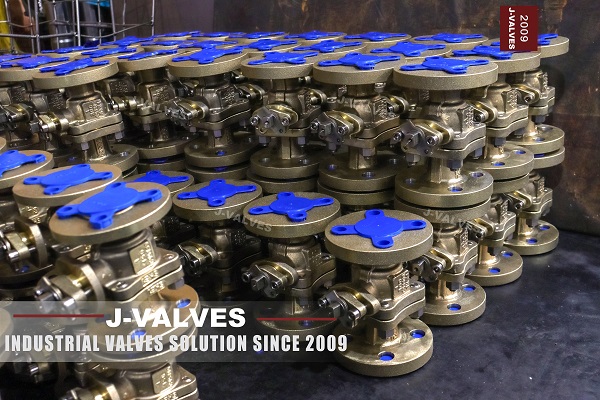
Floating ball valves are widely used in industrial piping systems for on/off control due to their simple design, reliable sealing, and ease of operation. One of the most critical factors influencing valve performance is the seat material. In industrial applications, floating ball valves are commonly offered with soft seats or metal seats, each with distinct advantages and limitations.
Soft-Seated Floating Ball Valves
Soft seats are typically made from materials such as PTFE, RPTFE, PEEK, or reinforced polymers. They provide tight sealing and excellent chemical resistance under moderate pressure and temperature conditions.
Advantages
Bubble-Tight Shut-Off: Soft seats create a reliable seal against leakage.
Low Operating Torque: Low friction between the ball and the seat reduces actuation force.
Chemical Compatibility: Resistant to a wide range of industrial chemicals and corrosive fluids.
Quiet Operation: Soft seats reduce noise and vibration during operation.
Limitations
Limited high-temperature capability (typically up to 200–250°C for PTFE).
Susceptible to wear and extrusion under very high pressure or abrasive media.
Not ideal for severe slurries or highly erosive fluids.
Typical Applications
Water and wastewater treatment
Chemical and petrochemical processing
Food and beverage pipelines
Low- to medium-pressure utility systems
Metal-Seated Floating Ball Valves
Metal seats are typically made from stainless steel, hardened alloys, or cobalt-based materials. They are designed to withstand high pressure, high temperature, and abrasive or erosive fluids.
Advantages
High-Temperature and High-Pressure Performance: Suitable for extreme operating conditions.
Durable and Wear-Resistant: Resistant to erosion, cavitation, and mechanical wear.
Reliable for Abrasive Media: Handles slurries, hydrocarbons with solids, and corrosive fluids.
Long Service Life: Less prone to seat deformation compared to soft-seated valves.
Limitations
Higher operating torque, often requiring actuators for large-diameter valves.
Metal-to-metal sealing may not achieve bubble-tight shut-off without specialized machining or seat designs.
Increased noise during operation in some applications.
Typical Applications
Oil and gas pipelines
High-temperature steam service
Petrochemical plants handling hydrocarbons with suspended solids
Power generation systems and boiler feedwater lines
Key Considerations for Seat Selection
When choosing between soft-seated and metal-seated floating ball valves, engineers should consider:
Operating Pressure and Temperature: Soft seats excel at moderate conditions; metal seats handle extremes.
Media Type: Abrasive, erosive, or high-solid fluids favor metal seats; clean or corrosive chemicals suit soft seats.
Maintenance and Lifecycle Costs: Soft seats may require more frequent replacement but reduce actuation torque; metal seats offer longer life at the expense of higher initial cost and torque.
Sealing Requirements: Soft seats provide bubble-tight shut-off; metal seats may need precision machining to achieve comparable sealing.
Actuation Method: Manual operation is easier with soft seats; large metal-seated valves typically require gear operators or actuators.
Conclusion
Both soft-seated and metal-seated floating ball valves offer unique advantages for industrial pipelines. Soft-seated valves are ideal for low- to medium-pressure systems, providing excellent sealing, low torque, and chemical resistance. Metal-seated valves are better suited for high-pressure, high-temperature, or abrasive services, offering durability and long service life. Selecting the appropriate seat material based on process conditions, media characteristics, and operational requirements ensures optimal valve performance, reliability, and lifecycle efficiency.


