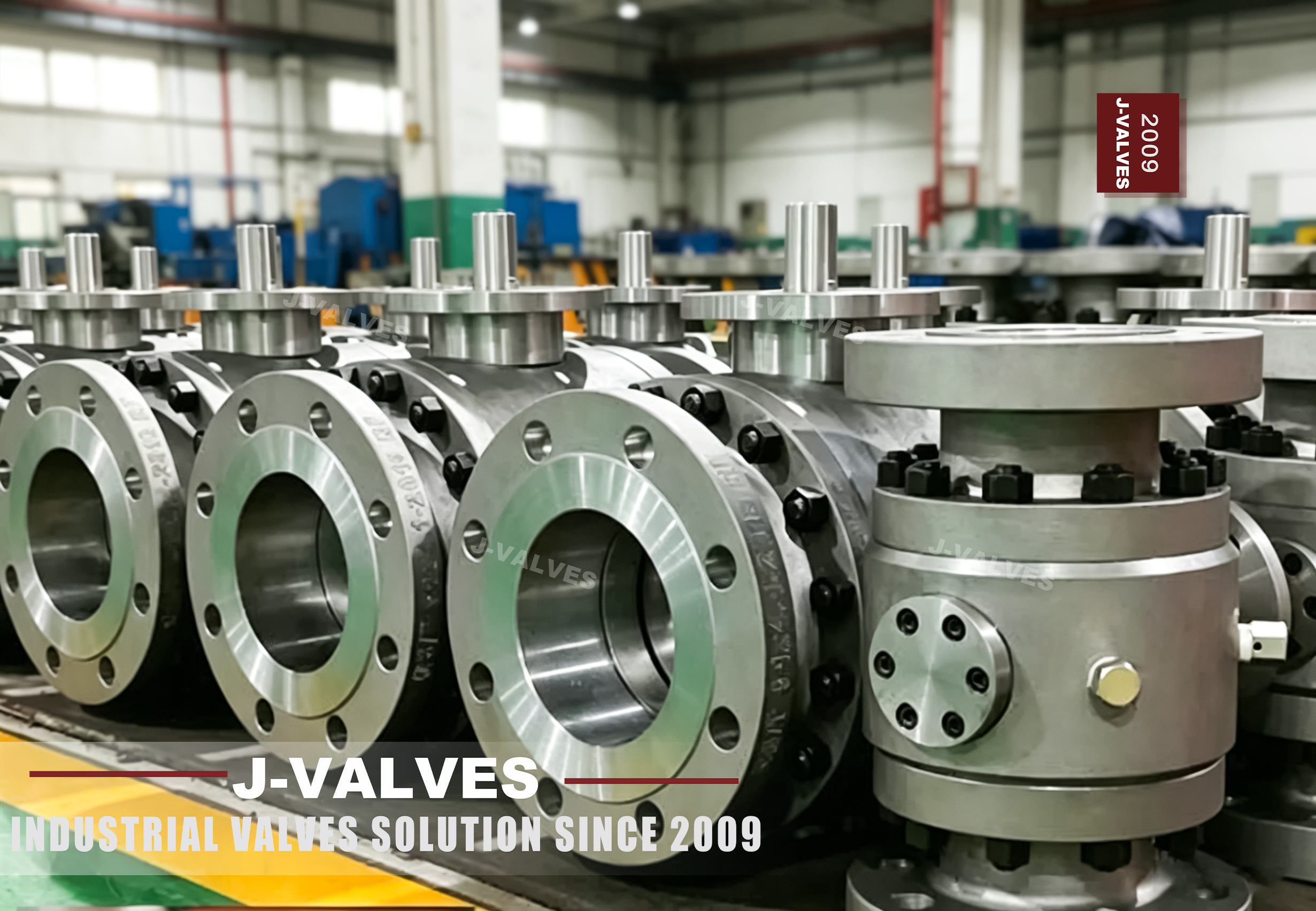
1.1 Innovative Floating Ball Mechanism
The heart of J-Valves' floating ball valves lies in their meticulously engineered floating ball mechanism. This design allows the ball to move slightly under pressure, ensuring a tight seal against the seats. The precision in the ball's movement is achieved through a carefully balanced pressure differential, which not only guarantees zero leakage but also enhances the valve's responsiveness. This mechanism is particularly advantageous in applications where high-pressure and high-temperature conditions are common, such as in oil and gas pipelines.
1.2 Enhanced Quarter-Turn Operation
J-Valves' floating ball valves operate on a quarter-turn mechanism, enabling quick and efficient operation. The valve can be fully opened or closed with a mere 90-degree rotation, significantly reducing the time required for valve actuation. This rapid operation is crucial in applications requiring swift response times, such as emergency shutdowns or rapid cycling processes. The smooth rotation is facilitated by a low-friction design, ensuring minimal wear and tear over time.
2. Superior Sealing Technology
2.1 Advanced Seating Materials
J-Valves has spared no effort in selecting the finest seating materials to ensure impeccable sealing performance. The valves are equipped with seats made from high-grade PTFE (Polytetrafluoroethylene), renowned for its exceptional chemical resistance and low friction coefficient. For applications involving extreme temperatures or abrasive fluids, optional metal seating materials such as stainless steel or specialized alloys are available. These materials not only provide a tight seal but also withstand the rigors of harsh operating conditions.
2.2 Precision Machining and Surface Finish
The sealing performance of a ball valve is heavily dependent on the precision of the ball and seat machining. J-Valves employs state-of-the-art machining techniques to achieve a high level of surface finish on both the ball and the seats. This precision machining ensures uniform contact between the ball and the seat, minimizing the risk of leakage. The smooth surface also reduces the likelihood of debris accumulation, which can compromise the seal in less refined designs.
3. Robust Construction and Durability
3.1 High-Strength Materials
J-Valves' floating ball valves are constructed from high-strength materials to withstand the demands of industrial applications. The valve bodies are typically made from carbon steel or stainless steel, chosen for their excellent mechanical properties and corrosion resistance. These materials ensure that the valves can operate reliably under high pressures and temperatures, making them suitable for a wide range of applications, from water treatment to chemical processing.
3.2 Reinforced Structural Design
The structural integrity of the valve is further enhanced through a reinforced design. J-Valves incorporates additional support structures and optimized geometries to distribute mechanical stresses evenly across the valve body. This design not only prevents deformation under high pressure but also extends the valve's service life. The robust construction also allows the valves to withstand mechanical shocks and vibrations, which are common in industrial environments.4. Customization and Flexibility
4.1 Tailored Solutions for Diverse Applications
Recognizing the diverse needs of different industries, J-Valves offers a wide range of customization options for their floating ball valves. From standard configurations to specialized designs, these valves can be tailored to meet specific application requirements. For instance, valves can be equipped with different actuation options, such as electric, pneumatic, or hydraulic actuators, depending on the desired speed and control precision.
4.2 Compliance with International Standards
J-Valves' floating ball valves are designed to comply with stringent international standards, ensuring their reliability and compatibility with global industrial systems. These valves meet the requirements of API, ANSI, and ISO standards, making them suitable for use in various industries worldwide. Compliance with these standards also guarantees that the valves undergo rigorous testing and quality control, providing users with peace of mind.