


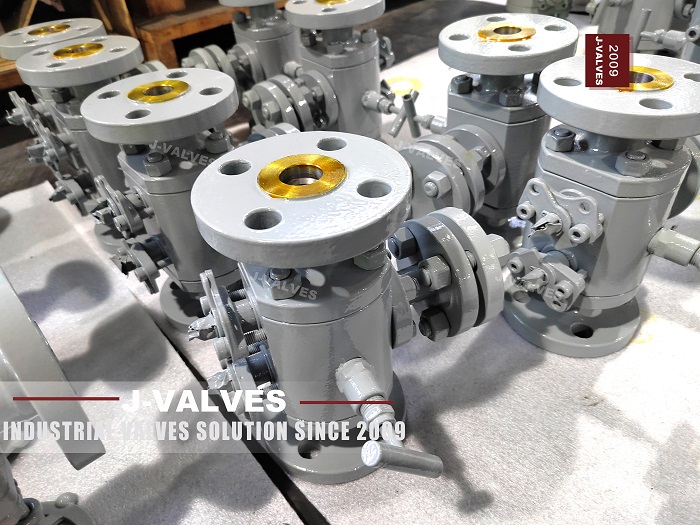
In critical industrial pipeline systems, ensuring absolute isolation and operational safety is not optional—it is essential. The Double Block and Bleed (DBB) Trunnion Ball Valve has become a preferred solution in oil & gas, chemical processing, and high-pressure transmission systems due to its superior sealing reliability and compact functional design.
Based on the valve structure shown in the image, this article explains how a DBB trunnion ball valve works and why it delivers measurable advantages over conventional isolation valves.
What Is a Double Block and Bleed Trunnion Ball Valve?
A DBB trunnion ball valve is designed to provide two independent sealing barriers on both the upstream and downstream sides of the valve, with an additional bleed (vent) port located between them.
Unlike floating ball valves, the trunnion-mounted ball is mechanically anchored at the top and bottom, allowing the valve to handle high pressures and large diameters with reduced operating torque and improved sealing stability.
Core Function: How DBB Trunnion Ball Valves Work
The defining function of a DBB trunnion ball valve lies in its three-step isolation principle:
1. Double Isolation (Block)
Two independent seats create upstream and downstream sealing simultaneously.
Prevents process media from passing in either direction.
Ensures reliable isolation even under fluctuating pressure conditions.
2. Bleed (Pressure Release)
The bleed valve allows controlled venting of the cavity between the two seals.
Confirms seal integrity and removes trapped pressure.
Enhances safety during maintenance or system shutdown.
3. Trunnion-Supported Ball Stability
The ball remains fixed under pressure load.
Reduces seat wear and extends service life.
Maintains consistent sealing performance in high-pressure environments.
Key Benefits of DBB Trunnion Ball Valves
1. Enhanced Operational Safety
By isolating both sides of the pipeline and safely bleeding the cavity, DBB valves significantly reduce the risk of accidental leakage during inspection or repair.
2. Verified Seal Integrity
The bleed port provides a direct method to check whether both seats are sealing properly—something standard single-seat valves cannot offer.
3. Suitable for High-Pressure Applications
Trunnion-mounted design distributes pressure forces efficiently, making the valve ideal for high-pressure, large-diameter pipelines.
4. Reduced Maintenance Costs
Stable ball positioning minimizes seat deformation and wear, extending maintenance intervals and lowering lifecycle costs.
5. Compact System Design
A single DBB trunnion ball valve can replace multiple conventional isolation valves, reducing:
Installation space
Flange connections
Potential leak points
Typical Working Conditions & Applications
DBB trunnion ball valves are commonly used in demanding service conditions, including:
Oil & Gas transmission pipelines
Refining and petrochemical plants
Natural gas and LNG facilities
High-pressure process isolation
Metering and sampling systems
They perform reliably under:
High pressure
Wide temperature ranges
Hazardous or volatile media
Why DBB Trunnion Ball Valves Are Preferred in Critical Systems
As industrial safety standards continue to rise, traditional isolation solutions often fall short of modern requirements. The DBB trunnion ball valve addresses these challenges by combining mechanical stability, functional verification, and system efficiency into a single valve design.
For operators seeking proven isolation performance without increasing system complexity, DBB trunnion ball valves remain a practical and future-ready solution.


