The service life and sealing performance of floating ball valves entirely depend on standardized management in manufacturing workshops. The root cause of failures for many low-cost valves lies in simplified casting, hydrostatic testing and coating procedures. Founded in 2009, J-VALVES has built a dedicated complete production workshop for floating ball valves. We have formulated stringent standardized manufacturing procedures for small-bore WCB floating ball valves ranging from DN25 to DN80. Every valve delivered undergoes inspections across 8 core processes. We are one of the few domestic valve manufacturers that realize full in-house production of small-bore cast steel floating ball valves.
I. 8 Standardized Manufacturing Procedures in Workshop (DN25-DN80 Floating Ball Valves)
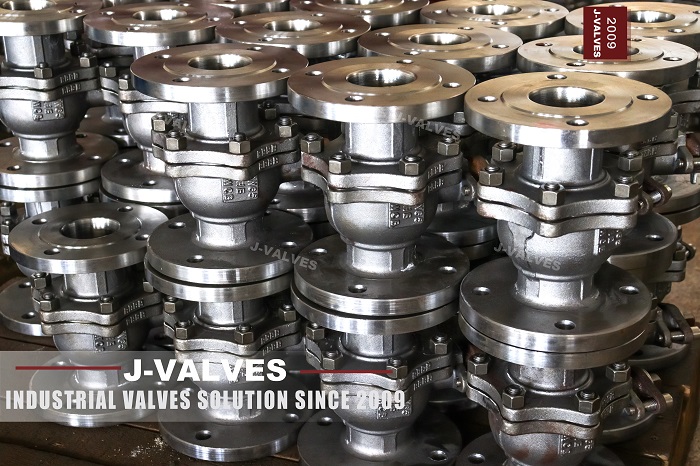
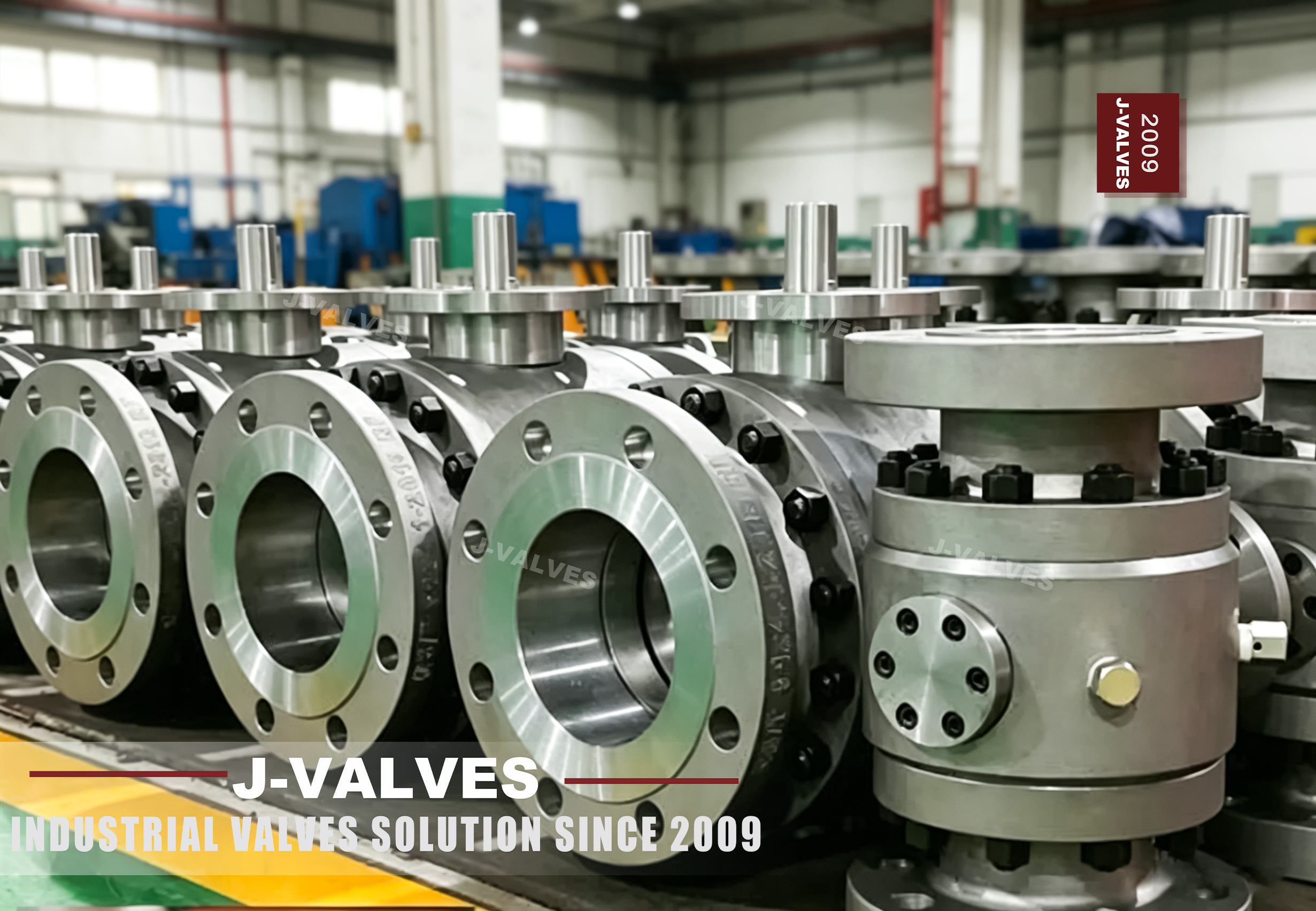
Combined with on-site photos of mass-produced finished valves in the workshop, the complete production workflow is as follows:
Incoming Inspection of WCB Raw Materials: Spectroscopic analysis of incoming carbon steel raw materials to eliminate blanks with substandard material composition.
Precision Casting of Valve Bodies and Balls: Valve bodies are poured in our self-owned sand casting workshop, followed by annealing to relieve casting stress and prevent valve body cracking under high-pressure working conditions.
CNC Precision Machining: Valve balls are mirror-polished to a surface roughness of Ra0.8; valve seat sealing grooves are milled with high precision to ensure perfect sealing fit.
Non-Destructive Testing of Components: Magnetic particle inspection on valve body surfaces to detect casting defects such as blowholes and cracks.
Assembly of Sealing Components: Standardized assembly of PTFE seats, anti-static springs and fire-safe gaskets; uniform calibration of clearances for floating balls.
Shell Hydrostatic Strength Test: Maintain pressure at 1.5 times the nominal pressure for 5 minutes; shells must show no leakage or deformation.
Valve Seat Air Tightness Test: Gas sealing test at 1.1 times the working pressure; valves can only be warehoused after passing bidirectional zero leakage standards.
Anti-Corrosion Coating & Finished Product Storage: Sandblasting for rust removal, followed by three layers of epoxy paint coating. After air-drying, finished valves are neatly stored on pallets, matching the on-site finished product status shown in workshop photos.
The entire set of procedures is completed in a closed-loop manner within our own workshop, with no outsourced machining links. This eliminates quality degradation caused by cost-cutting in outsourced processes.
II. Core Advantages of J-VALVES Workshop Manufacturing vs. Conventional Industry Manufacturers
No Outsourced Procedures: Casting, machining, pressure testing and coating are all completed in-house with full-process production monitoring. Customers may arrange on-site factory audits at any time.
Unified Pressure Testing Standards for All Sizes:Floating ball valves of all DN25 to DN80 specifications follow identical pressure inspection standards; no simplified testing for small-bore models.
Batch Sample Retention Mechanism for Finished Products: Samples are retained long-term for every production batch, enabling rapid traceability of production lots in case of on-site operational issues.
Dedicated In-House QC Team: An independent quality inspection department separate from the production line. Non-conforming valves are sent for rework directly to prevent defective products from entering the market.
Flexible Production Lines: Simultaneous mass production of standard, fire-safe and anti-static floating ball valves with no lengthy downtime for production switching.
III. Successful Industry Application Cases (Long-term Partnerships Built on Workshop Standardized QC)
Case 1: Annual Framework Procurement with a Large Coal Chemical Group
A leading domestic coal chemical enterprise signed an annual framework agreement, with a stable monthly procurement volume of 500 DN32/DN65 WCB floating ball valves. The client visited the J-VALVES production workshop multiple times to observe the full casting and pressure testing processes, and recognized our standardized QC system. We have maintained stable cooperation for 3 consecutive years with zero batch quality complaints.
Case 2: Long-term Export Partnership with Australian Water Treatment Clients
Australian water treatment enterprises purchase 700–1,000 DN25-DN80 floating ball valves annually. Local importers require full production footage and batch test reports from the factory. J-VALVES provides complete video records of the whole manufacturing process, and all products pass re-inspection by local Australian pressure certification authorities. Our cooperation has lasted over 5 years.
Case 3: Urgent Short-cycle Order for Industrial Park Heat Transformation Project
An industrial park heat renovation project had an urgent demand for 600 DN50/DN80 floating ball valves with a tight 20-day delivery schedule. The workshop launched an expedited dedicated production line to complete full casting, machining and pressure testing via overtime work, delivering all valves on schedule. Random on-site pressure testing of all finished valves achieved first-pass qualification with zero rework.
IV. Sourcing & Procurement Recommendations
When purchasing DN25~DN80 Class16 WCB floating ball valves, prioritize original manufacturers with complete self-owned production workshops. Such suppliers support on-site factory audits, full manufacturing traceability and verification of pressure test records.
J-VALVES opens workshop viewing passages for visitors. Domestic and international purchasers and general engineering contractors are welcome to inspect our mass production line for DN25-DN80 floating ball valves. We offer sample pressure testing and one-on-one technical consultation for customized solutions.
Conclusion
Standardized in-house manufacturing and full-process quality control constitute the core competitiveness behind the stable durability of J-VALVES WCB floating ball valves. For Class16 floating ball valves with small bore sizes DN25 to DN80 used in industrial pipelines, we continuously optimize workshop production techniques to balance high-volume fast delivery and strict quality benchmarks, supplying highly reliable cast steel floating ball valves for fluid control projects worldwide.