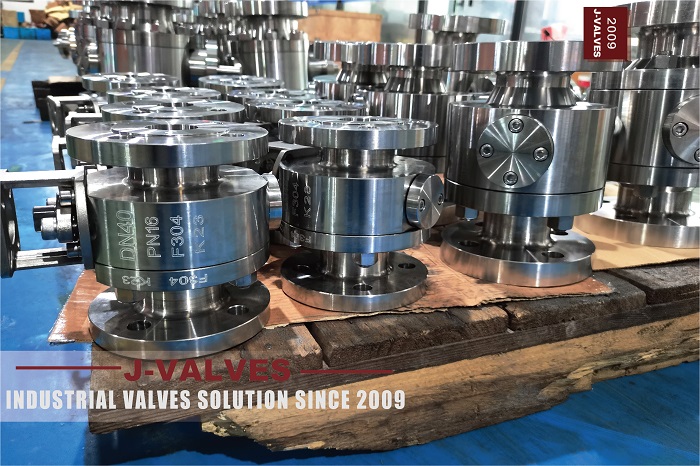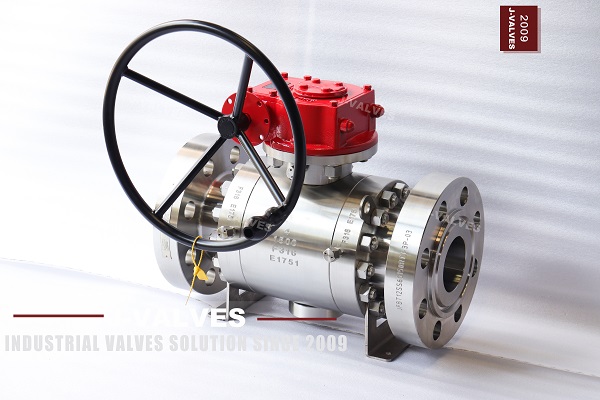


In high-risk industrial applications such as oil & gas, petrochemical, and pipeline transportation systems, safety and isolation reliability are critical. One valve design widely recognized for meeting these stringent requirements is the Double Block and Bleed (DBB) Trunnion Ball Valve. This article provides a professional and in-depth technical explanation of what a DBB trunnion ball valve is, how it works, and why it is essential for critical flow control systems.
Definition of a Double Block and Bleed (DBB) Trunnion Ball Valve
A Double Block and Bleed (DBB) Trunnion Ball Valve is a valve that incorporates two independent sealing surfaces (double block) and a bleed mechanism to safely isolate a section of the pipeline and verify sealing integrity.
When the valve is in the closed position:
The upstream and downstream seats simultaneously block the process media.
A bleed valve or drain port between the two seats allows trapped pressure to be safely vented.
This design ensures positive isolation, prevents pressure buildup in the valve cavity, and allows operators to confirm that both sealing seats are functioning correctly.
How a DBB Trunnion Ball Valve Works
The DBB function is achieved through the trunnion-mounted ball design combined with self-energizing seats.
Operating Principle
Valve Closure
The trunnion-supported ball rotates 90 degrees to the closed position.Double Blocking
The upstream seat blocks incoming pressure.
The downstream seat blocks reverse pressure.
Both seats seal independently against the ball.Bleed Operation
The cavity pressure trapped between the seats is released through a bleed or drain valve, ensuring:Zero internal pressure
Verification of tight shut-off performance
This configuration significantly enhances operational safety compared to standard single-seated valves.
Key Components of a DBB Trunnion Ball Valve
1. Trunnion-Mounted Ball
Supported at both top and bottom by trunnions
Minimizes operating torque
Ensures stable sealing under high pressure and large diameters
2. Dual Independent Seats
Typically spring-loaded or pressure-energized
Seal against both upstream and downstream pressure
Enable true double block isolation
3. Valve Body and Cavity
Designed to safely manage cavity pressure
Often includes automatic pressure relief features
4. Bleed / Drain Port
Located between the two seats
Allows safe venting of trapped fluid or gas
Enables leak detection and seal verification
5. Stem and Actuation System
Compatible with manual, pneumatic, electric, or hydraulic actuators
Designed for smooth and reliable quarter-turn operation
DBB vs DIB: Understanding the Difference
A DBB trunnion ball valve is often compared with a Double Isolation and Bleed (DIB) valve:
Feature | ||
Isolation Method | Two separate seats | Combination of seats |
Cavity Pressure | Released via bleed | May require relief system |
Safety Level | High | Very High (depending on design) |
Typical Standards | API 6D DBB | API 6D DIB-1 / DIB-2 |
DBB valves are preferred where simple verification of sealing and safe cavity venting are required.
Advantages of DBB Trunnion Ball Valves
Enhanced safety through double isolation
Prevention of cavity overpressure
Reduced leakage risk
Lower operating torque compared to floating ball valves
Reliable sealing for high-pressure and large-diameter pipelines
Easy maintenance and inspection
Typical Applications
DBB trunnion ball valves are widely used in:
Oil and gas transmission pipelines
Offshore platforms
Refineries and petrochemical plants
LNG and gas processing facilities
High-pressure process isolation systems
These valves are especially suitable where zero leakage and safe maintenance isolation are mandatory.
Relevant Standards and Certifications
DBB trunnion ball valves are commonly manufactured in compliance with:
API 6D – Pipeline valves
API 608 – Metal ball valves
ASME B16.34
Fire-safe and fugitive emission standards (API 607)
Compliance with these standards ensures reliable performance in demanding environments.
Conclusion
A Double Block and Bleed (DBB) Trunnion Ball Valve is a critical solution for safe and efficient pipeline isolation in high-risk industries. By combining trunnion-mounted ball support, dual independent sealing seats, and a bleed function, this valve design delivers superior safety, pressure control, and operational reliability.
For applications requiring proven isolation, pressure verification, and long-term durability, DBB trunnion ball valves remain one of the most trusted choices in modern flow control systems.