

CHINA J-VALVES Offers Various High-quality I ndustrial Ball Valves
J-VALVES, a distinguished professional ball valve manufacturer rooted in China, takes pride in its extensive product portfolio. Our offerings span a wide range, including trunnion-mounted ball valves, floating ball valves, high-temperature ball valves, high-pressure ball valves, metal-sealed ball valves, ultra-low temperature ball valves, DBB ball valves, Three-way And Four-way Ball Valve, and fully welded ball valves. Each product is a testament to our commitment to precision engineering and reliable performance. Meticulously crafted, they are designed to not only meet but exceed the most stringent industrial demands, ensuring stable operation even under extreme conditions. This enables us to provide our clients with high-value services and makes our valves widely sought-after in industries.
Product Category
Contact Us

-
Q11F
-
MSNL
DIN PN16/40 Flange 2PC Stainless Steel Ball Valve
DIN Stainless Steel Ball Valve design description:
1. Size: 1/2’’~8’’
2. Material: 1.4308, 1.4408, 1.4401, etc.
3. Pressure: PN16/PN25/PN40
4. Floating ball, full bore
5. ISO5211 mounting pad
6. Blow-out proof stem design
7. PTFE/RPTFE seat seal( Seat seal material could be decided by customer’s request or according to valve’s medium & temp. condition)
8. Fire-proof and anti-static design
9. Operation: Hand wheel, Worm wheel, Pneumatic actuator & Electric Actuator.
DIN Stainless Steel Ball Valve technical specification:
1. Design & Manufacture standard: EN13709
2. Face to face dimension standard: EN558
3. Flange standard: EN1092-1
4. Test & Inspect standard: EN12266
DIN Stainless Steel Ball Valve competitive advantage:
1. GOOD QUALITY
2. RESONABLE PRICE
3. ON-TIME DELIVERY
4. STRICT EXAMINATION
5. SINCERE SERVICE
6. DURABLE IN USE
7. PROFESSIONAL EXPORT EXPERIENCE
DIN Stainless Steel Ball Valve, two piece body design and process mounting pad conforming to ISO5211 standard. DIN Stainless Steel Ball Valve use resilient seat with minimum damage, lower operation torque. Standard valve body materials are 1.44081.4308 Stainless Steel and 1.0619 Carbon Steel. Standard trim material for ball and stem is 316 Stainless Steel. For Carbon Steel valves DN65 and up, standard trim is 304 Stainless Steel. DIN Stainless Steel Ball Valve use anti-static stem, to ensure the operation safe.
DIN Stainless Steel Ball Valve material list:
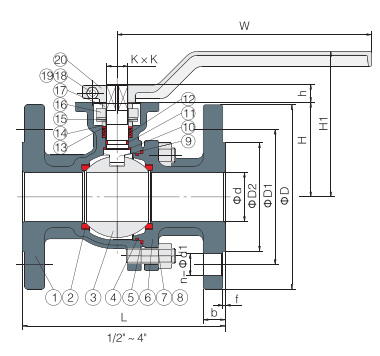

Note All the data should be confirmed with the approved drawings of manufacturer.
Looking forward to strengthening cooperation with various sectors of society to create brilliancy together.
Hot Products


News
From Material To Product: 0.75" 150LB C95800 Top Entry Floating Ball Valve
Explore 0.75 inch Class150 C95800 Nickel Aluminum Bronze top entry floating ball valve. Raw material inspection, precision casting and pressure test for seawater & marine corrosive service.
Read More
API 6D Technical Insights into A105 Trunnion Ball Valve Low Torque
Based on authoritative API 6D pipeline valve standard, explore technical logic behind low‑torque performance of A105 forged trunnion ball valve. Compare with floating ball valve, learn real‑world benefits for oil & gas and petrochemical projects.
Read More
API 608 Guide To Selecting C95800 Floating Ball Valves
In‑depth analysis of C95800 nickel‑aluminum bronze floating ball valve selection following API 608 specification. Cover material compliance, structural parameters, service condition matching and acceptance test for offshore, seawater desalination & coastal chemical projects.
Read More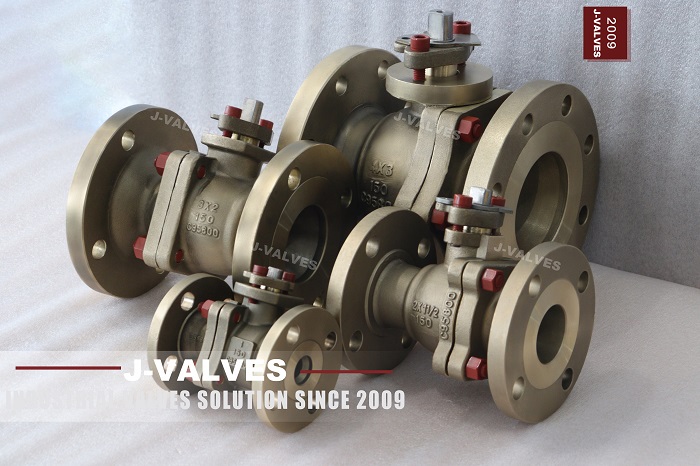
Inside The Valve Factory: 3PC Trunnion Ball Valve Manufacturing
Step‑by‑step factory tour of 3‑piece trunnion mounted ball valve production. Manufactured per API 6D, for oil & gas, chemical high‑pressure pipeline projects. Contact J‑VALVES for quotes.
Read More