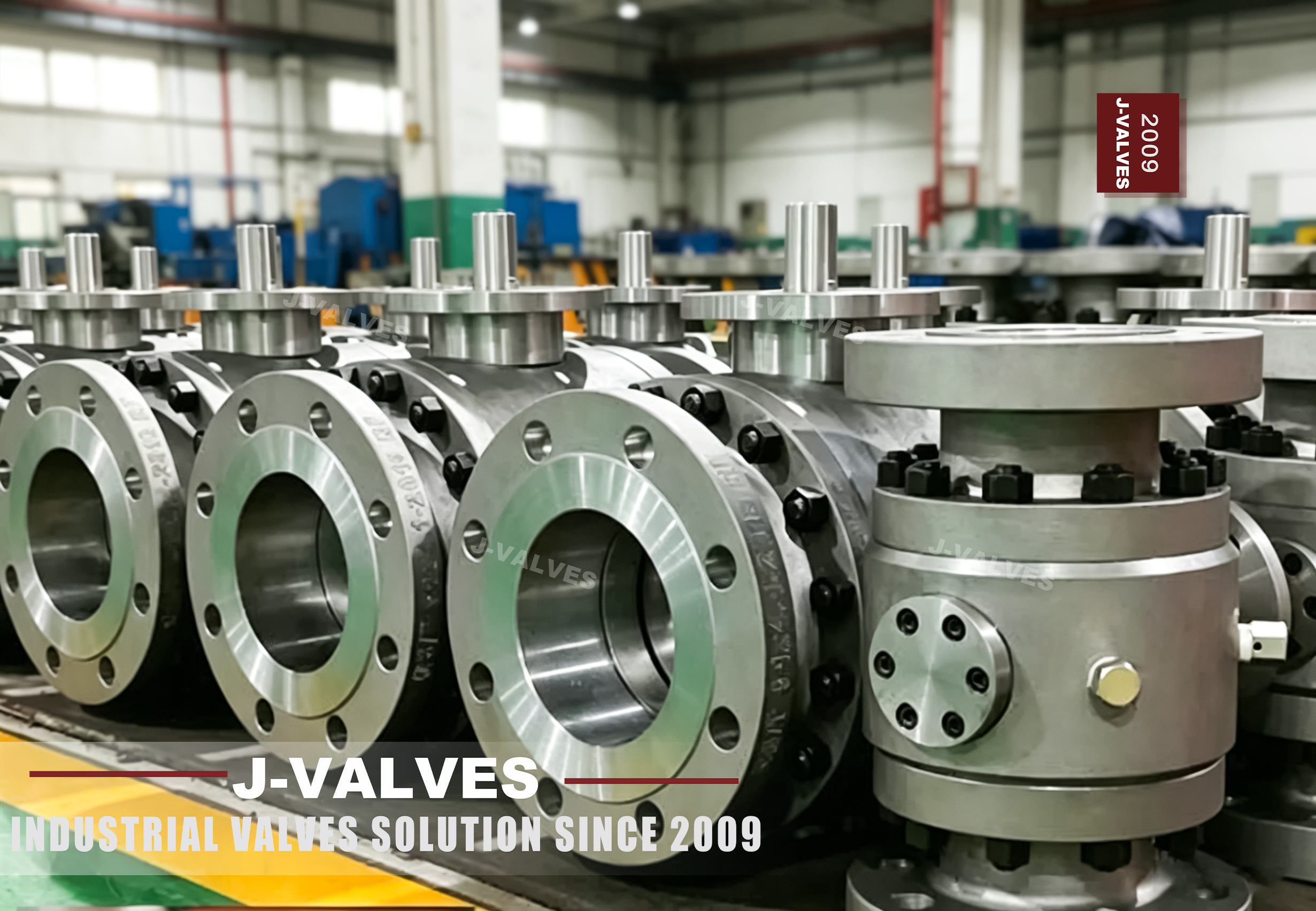
I. Overview of the Sealing Technologies of J-VALVES 2" 2500LB Stainless Steel DBB Ball Valves
J-VALVES 2" 2500LB STAINLESS STEEL DBB BALL VALVES adopt a variety of advanced sealing technologies to ensure their reliability and tightness under high pressure, high temperature and corrosive medium environments. These sealing technologies include but are not limited to:
(1) Combination of Metal Sealing and Soft Sealing
The ball valve adopts a composite sealing structure that combines metal sealing and soft sealing. Metal sealing achieves the sealing of high-pressure fluid through the close fit between the precisely machined valve seat and the ball. Meanwhile, soft sealing materials (such as PTFE, etc.) are ingeniously embedded in the valve seat, further improving the reliability of the sealing. Especially under low temperature and low pressure working conditions, the soft sealing can effectively fill the tiny gaps that may occur in metal sealing and ensure zero leakage.
(2) Floating Valve Seat Design
The floating valve seat is one of the cores of the sealing technology of J-VALVES BALL VALVES. The valve seat can float freely within the valve body. When the valve is closed, the fluid pressure will push the valve seat to move towards the ball, making the valve seat closely fit with the ball. This design not only improves the sealing effect but also can automatically compensate for the tiny deformations of the sealing surface caused by temperature changes or machining errors, thus prolonging the service life of the valve.
(3) Fireproof and Antistatic Design
Considering the safety requirements in industrial environments, the J-VALVES 2" 2500LB STAINLESS STEEL DBB BALL VALVE incorporates fireproof and antistatic designs into its sealing structure. The valve seat and sealing materials have undergone special treatment. Even in extreme situations such as fires, the valve can still maintain a certain sealing performance to prevent fluid leakage from causing greater danger. Meanwhile, the antistatic design can effectively eliminate the electrostatic accumulation generated by fluid flow and reduce the risk of fire or explosion caused by electrostatic discharge.
II. Comparative Analysis: Sealing Performance of J-VALVES and Other Similar Ball Valves
To display the advantages of the sealing technology of J-VALVES 2" 2500LB stainless steel DBB ball valves more intuitively, we have conducted a comparative analysis with other similar ball valves. The following are the comparison results:
| Comparison Items | J-VALVES 2" 2500LB Stainless Steel DBB Ball Valve | Conventional Similar Ball Valves |
Sealing Structure | Metal Sealing + Soft Sealing | Single Metal Sealing or Single Soft Sealing |
Floating Valve Seat Design | Yes | No or Some Brands Have |
Fireproof Performance | Complies with International Fire Standards | Some Brands Comply, Some Don't |
Antistatic Performance | Complies with International Standards | Some Brands Comply, Some Don't |
Sealing Reliability | Zero Leakage, Applicable to Extreme Working Conditions | May Leak under High Pressure, High Temperature or Corrosive Media |
Service Life | Long, Automatically Compensates for Deformation of Sealing Surface | Short, Frequent Maintenance Required after Deformation of Sealing Surface |
It can be seen from the above table that the J-VALVES 2" 2500LB stainless steel DBB ball valve is superior to conventional similar ball valves in terms of the complexity, reliability and safety of the sealing structure. Its composite sealing structure and floating valve seat design enable it to maintain excellent sealing performance under various working conditions, and the fireproof and antistatic designs further enhance its applicability in industrial environments.
III. Analysis of Practical Application Cases
J-VALVES 2" 2500LB STAINLESS STEEL DBB BALL VALVES have been widely used in industries such as petroleum, chemical engineering and natural gas. For example, in a large-scale oil exploration project, these ball valves were installed on high-pressure natural gas transmission pipelines. Thanks to their excellent sealing performance, even in environments with high pressure, low temperature and corrosive gases, the valves could still maintain zero leakage, ensuring the safe transmission of natural gas and reducing energy waste and environmental pollution caused by leakage at the same time.
In the chemical industry, these ball valves are used in pipeline systems for transporting corrosive media such as strong acids and alkalis. Their stainless steel materials and advanced sealing technologies enable them to resist the erosion of chemical media and effectively prevent safety accidents and equipment damage caused by medium leakage. Through long-term practical applications, it has been proved that the sealing technologies of J-VALVES 2" 2500LB STAINLESS STEEL DBB BALL VALVES are not only reliable but also highly economical and practical.
IV. Summary
The key sealing technologies of J-VALVES 2" 2500LB STAINLESS STEEL DBB BALL VALVES are the core competitiveness that makes them stand out in the market. Through the combination of metal sealing and soft sealing, the floating valve seat design and the integration of fireproof and antistatic functions, these ball valves perform excellently in terms of sealing reliability, safety and service life. In comparison with similar products, the J-VALVES BALL VALVES have obvious advantages in sealing performance and can meet the strict requirements of the industrial field for high-end ball valves. With the continuous development of industrial automation and intelligence, J-VALVES 2" 2500LB stainless steel DBB ball valves will play an important role in more fields and provide reliable solutions for industrial fluid control by virtue of their excellent sealing technologies.